

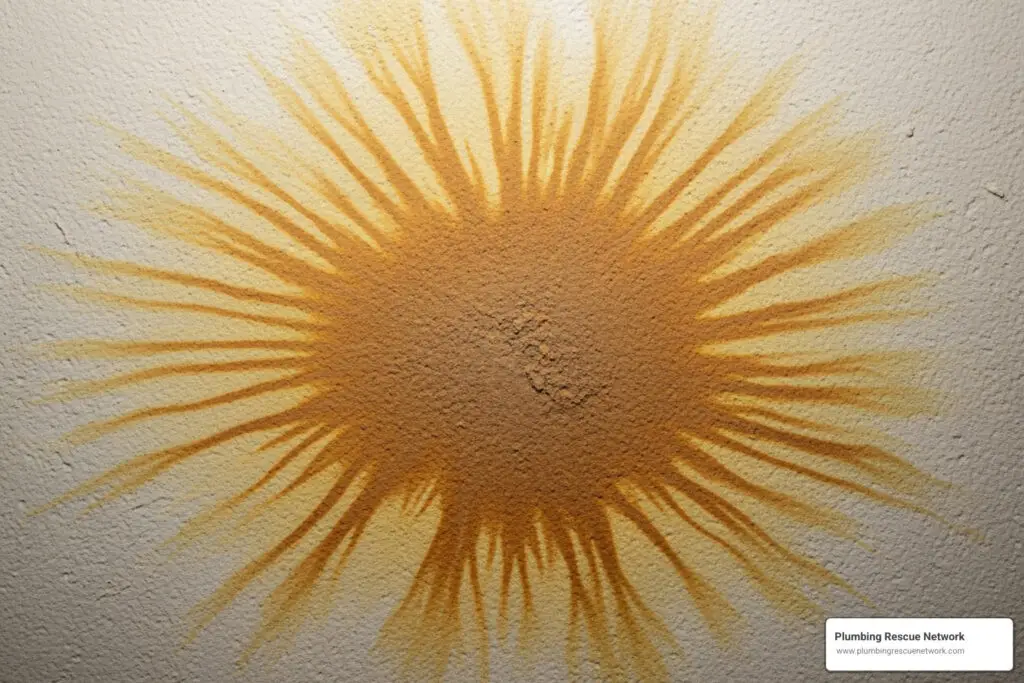
Identifying a Council Bluffs Water Leak in Your Home
Finding a council bluffs water leak isn’t always as obvious as a geyser in the front yard. Sometimes, the house gives you subtle hints—a musty smell in the basement or a carpet that feels mysteriously damp underfoot. Recognizing these signs early is the difference between a quick pipe patch and a full-scale floor replacement.

Common Signs of Indoor Leaks
Most leaks start small. You might notice a faucet that won’t stop dripping, no matter how hard you crank the handle. While it seems like a minor annoyance, that “drip-drip-drip” can waste hundreds of gallons a month.
Another frequent culprit is the “phantom flush.” If you hear your toilet refill when no one has used it, you likely have a leak in the tank. Other red flags include:
- Wall Discoloration: Yellow or brown stains on the drywall or ceiling.
- Peeling Wallpaper or Paint: Moisture behind the surface causes adhesives to fail.
- Soft Spots: If your linoleum or wood flooring feels “squishy,” water is likely trapped underneath.
- Musty Odors: That “old basement” smell is often actually the scent of mold growing behind your baseboards due to a slow pinhole leak.
Recognizing Main Line and Service Issues
Sometimes the leak isn’t under your sink; it’s under your lawn. A break in your main water line (the pipe that brings water from the city street to your house) can cause unique problems. You might notice your water looks rusty or cloudy—a sign that dirt or corrosion is entering the pipe.
In your yard, look for “super-green” patches of grass that grow faster than the rest of the lawn, or persistent puddles even when it hasn’t rained. If you see water bubbling up through the cracks in the pavement or pooling in the gutter, it’s time to check the Frequently Asked Questions on the city website to see if a neighborhood main break has been reported.
| Feature | Surface Leak (Faucets/Pipes) | Hidden Slab Leak (Under Foundation) |
|---|---|---|
| Visibility | Puddles under sinks or spots on ceilings | Often invisible; floors may feel warm |
| Sound | Dripping or rushing water | Faint hissing or humming in the walls |
| Water Bill | Gradual increase | Sudden, massive spike in usage |
| Risk Level | Localized water damage/mold | Structural foundation shifts/cracking |
Immediate Steps to Take During a Plumbing Emergency
When you realize you have a council bluffs water leak, your primary goal is “containment.” Every minute the water runs is more moisture soaking into your subfloors and framing.
How to Detect a Hidden Council Bluffs Water Leak
If you suspect a leak but can’t see it, we recommend the “Meter Test.” This is a foolproof way to confirm if water is escaping your system.
- Turn off everything: Ensure no faucets are running, the dishwasher is off, and the ice maker is lifted to the “off” position.
- Check the meter: Locate your water meter (usually in the basement or a pit near the street). Look at the dial or the digital display.
- Wait: Don’t use any water for at least 30 minutes (overnight is even better for tiny leaks).
- Re-check: If the numbers have moved, you have a leak.
For toilet leaks, use the food coloring trick. Drop a few bits of dark food coloring into the tank (not the bowl). Wait 15 minutes. If the color appears in the bowl without flushing, your flapper valve is leaking. For more details on reading your bill to spot trends, visit the Billing and General FAQ – Council Bluffs Water Works.
Shutting Off Your Water Supply
You must know where your main shut-off valve is before an emergency happens. In Council Bluffs, these are typically located in the basement where the water line enters the foundation.
- Gate Valves: Look like a round wheel; turn clockwise until it stops.
- Ball Valves: Have a lever handle; turn it 90 degrees so it is perpendicular to the pipe.
If you can’t find the main valve, look for “isolation valves” under the specific leaking sink or behind the toilet. Turning these small handles clockwise will stop the flow to that specific fixture, allowing you to keep the water on for the rest of the house while you wait for us to arrive.
Reporting Issues to Council Bluffs Water Works
Not every council bluffs water leak is the homeowner’s responsibility. If the leak is occurring before the water reaches your meter—such as a massive crack in the street or a bubbling parkway—it is a city issue.
Handling Post-Outage Water Issues
After a main break is repaired by the city, you might experience “hissing” or “spurting” when you first turn on your taps. This is just air trapped in the lines. To fix this, we suggest running a faucet that doesn’t have an aerator screen—like a bathtub or an outdoor hose bib—slowly for a few minutes.
If your water looks cloudy, it’s usually just tiny air bubbles or harmless sediment dislodged during the repair. Let it run for 1-2 minutes. If it doesn’t clear up, or if you have extremely low pressure throughout the house, contact Customer Service – Council Bluffs Water Works for assistance. You can also check for current repair updates on their Water Outage Information page.
Understanding Utility vs. Private Responsibility
A common point of confusion is who pays for what.
- The City’s Job: They handle the large water mains under the street and the service connection up to a certain point (usually the property line or the curb stop).
- Your Job: You are responsible for the “service line” that runs from the property line into your home, as well as all the plumbing inside the house.
If a leak occurs on your side of the line, you are responsible for the repair costs and the cost of the wasted water. This is why rapid detection is so critical for your wallet!
Long-Term Risks and Prevention Strategies
Ignoring a council bluffs water leak is a recipe for a “money pit” scenario. Water is patient; it will slowly rot the wooden studs in your walls and weaken the very foundation of your home.
Costs and Risks of Ignoring a Council Bluffs Water Leak
The most immediate risk after a leak is mold. In the humid Iowa summers, mold can begin to colonize damp drywall in as little as 24 to 48 hours. Beyond health risks, persistent leaks can lead to:
- Structural Rot: Water saturates floor joists, leading to sagging floors.
- Foundation Shifts: In areas with heavy clay soil like Council Bluffs, a significant underground leak can cause the soil to expand and put pressure on your foundation walls.
- Pest Infestations: Termites and cockroaches are attracted to the moisture provided by slow leaks.
For information on how the city manages larger drainage issues, you can review the Sewer Maintenance | Council Bluffs, IA resources.
Preventing Future Plumbing Failures
We always tell our customers that an ounce of prevention is worth a gallon of cure. To protect your home from future leaks:
- Install a Pressure Regulator: High water pressure (over 80 psi) can stress your pipes and cause premature failure.
- Winterize Outdoor Taps: Disconnect hoses before the first Council Bluffs frost to prevent pipes from bursting inside your walls.
- Replace Old Hoses: Upgrade your washing machine and dishwasher hoses to braided stainless steel every 5 years.
- Smart Leak Detectors: Consider installing WiFi-enabled sensors near your water heater and sump pump that alert your phone the second they detect moisture.
Frequently Asked Questions about Local Leaks
How do I check for a leak after a water outage?
Once service is restored, check your water meter. If the “low flow” indicator (often a small triangle or star) is spinning while all your taps are closed, you may have a leak that was triggered by the pressure change when the water was turned back on. Also, check your aerator screens on your faucets; sediment from the outage can clog them, mimicking a low-pressure leak.
Is a slab leak covered by homeowners insurance in Iowa?
This depends on your specific policy. Generally, many policies cover the ensuing damage (the ruined carpet or drywall) but may not cover the actual pipe repair unless you have specific “service line” or “plumbing” endorsements. Always document the leak with photos and call your agent immediately.
Why is my water cloudy after a Council Bluffs main break?
Cloudy water is almost always caused by air being forced into the pipes during the repair process. It is not harmful. Fill a glass with water and let it sit; if the “cloud” moves from the bottom up and disappears, it’s just air. If it settles at the bottom, it’s sediment, and you should flush your cold water lines for a few minutes.
Conclusion
A council bluffs water leak can be a stressful experience, but you don’t have to handle it alone. Whether it’s a burst pipe in the middle of a blizzard or a mysterious damp spot in your basement, taking fast action is the key to minimizing damage. Remember to shut off your water, document the situation, and call in the experts.
At Plumbing Rescue Network, we specialize in rapid response. We connect you with local Council Bluffs technicians who are ready 24/7 to tackle everything from slab leaks to water heater failures. We know the local infrastructure and the specific challenges our climate poses to your plumbing.
Don’t let a small drip turn into a big disaster. If you suspect a leak or need emergency repairs, we are here to help you get your home back to normal.
More info about leak repair services
Dealing With This Yourself? Talk to a Licensed Plumber.
Skip the guesswork — get a straight answer from a local pro. Available 24/7, no forms, no waiting.
Call Now: (888) 686-0698