
When Your Basement Floor Drain Backs Up: What It Means and What to Do
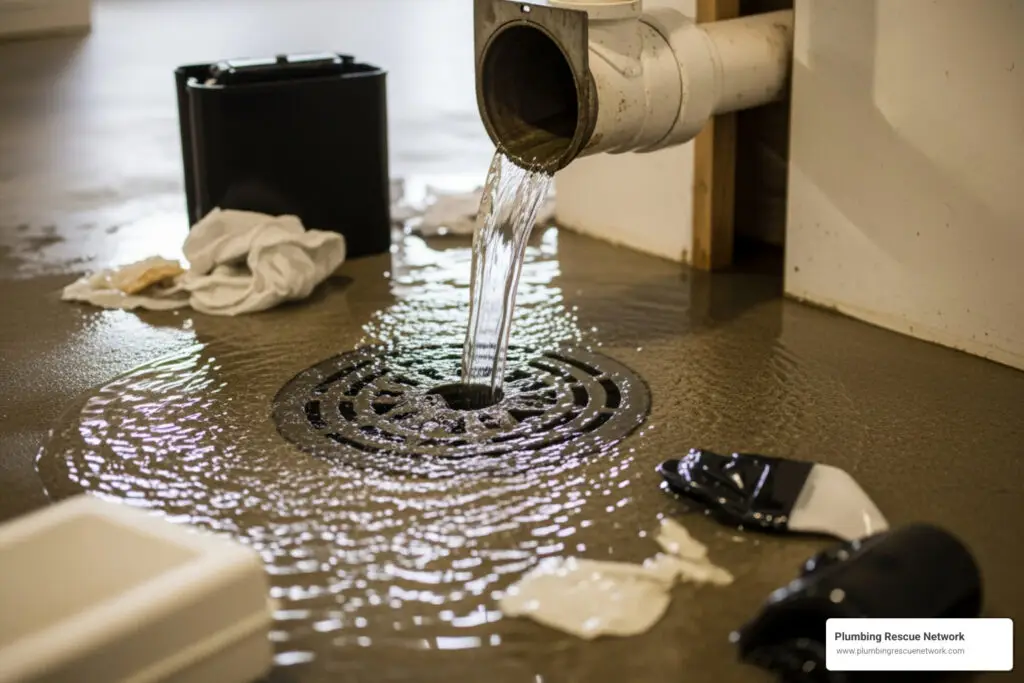
A basement floor drain backed up is one of the most stressful plumbing problems a homeowner can face — and it almost always means something bigger is going on deeper in your pipes.
Quick answer: Why is your basement floor drain backing up?
| Cause | What You’ll Notice |
|---|---|
| Main sewer line clog | Multiple drains slow or backing up at once |
| Tree root infiltration | Recurring backups, often in older homes |
| Grease or debris buildup | Slow drain that worsens over time |
| Heavy rain / saturated soil | Backup happens during or after storms |
| Pipe sag, offset, or break | Rapid re-clogging after a professional cleaning |
The basement floor drain is the lowest point in your home’s plumbing system. That means it’s the first place wastewater overflows when something is blocking the main line. So if you’re seeing dirty water — or worse, raw sewage — rising up from that drain, your house is essentially signaling a backup from somewhere further down the line.
One minute your basement floor is dry. The next, water and debris are creeping across the concrete, threatening stored belongings, flooring, and even your home’s foundation.
The good news: this problem is solvable. But the fix depends on what’s causing it — and that’s exactly what this guide covers.
I’m Ben Smith, a digital marketing strategist with over 25 years of experience working with home service businesses, including plumbing companies tackling everything from routine drain maintenance to emergency cases of a basement floor drain backed up. I’ll walk you through exactly what’s happening, what you can try yourself, and when it’s time to call in a pro.
Understanding Your Basement Floor Drain and How It Works
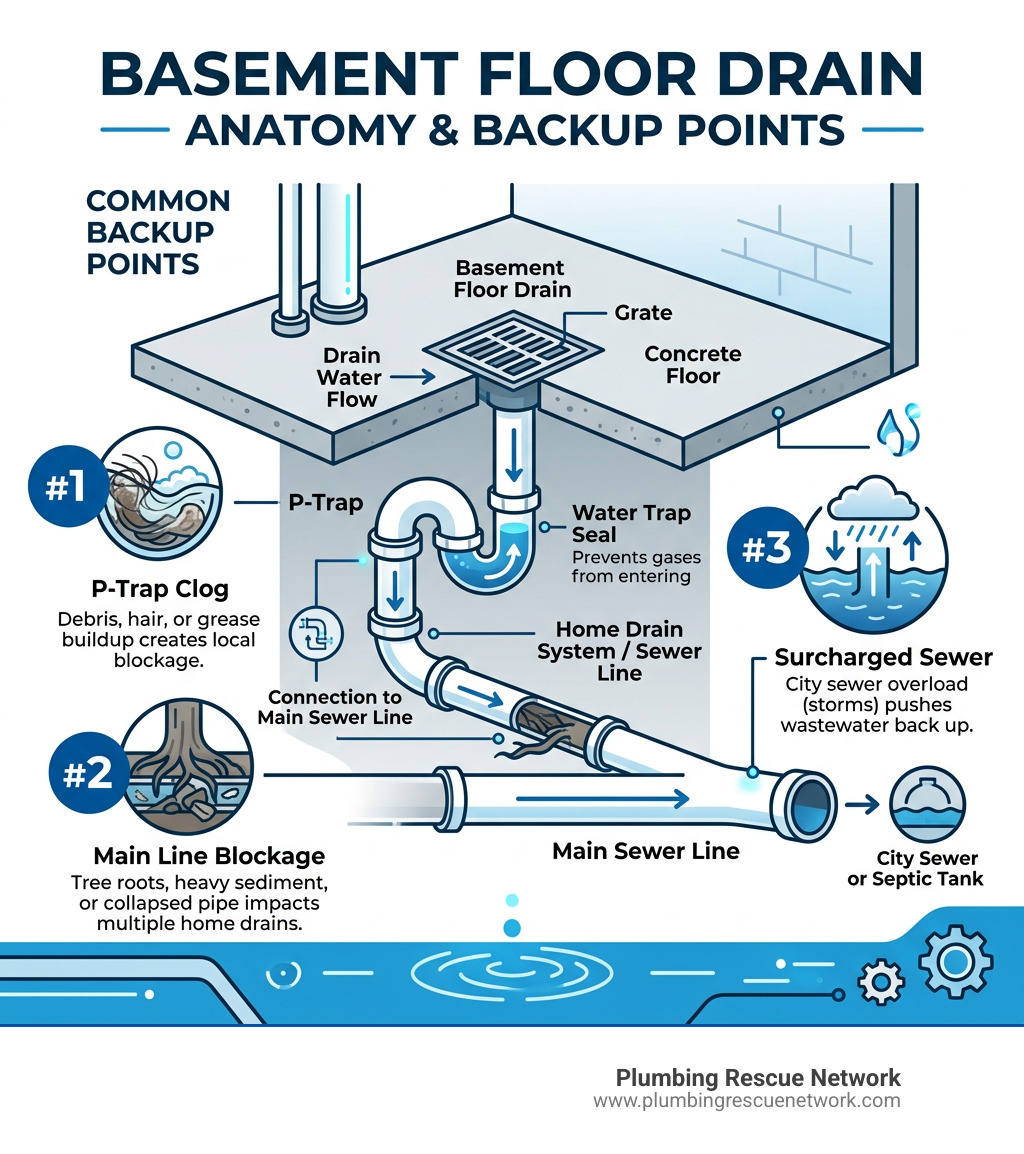
To understand why your basement floor drain backed up, we first need to look at what’s happening beneath the concrete. Most homeowners think of that drain as just a hole in the floor, but it’s actually a sophisticated piece of your home’s defense system.
The Mighty P-Trap
Every floor drain features a U-shaped pipe known as a P-trap. Its primary job is to hold a small amount of water at all times. This water acts as a literal seal, preventing foul-smelling and potentially dangerous sewer gases from drifting into your living space. If you notice a “rotten egg” smell but don’t see water, your trap might have simply dried out.
The Trap Primer
In many Council Bluffs homes, especially newer builds, there is a device called a trap primer. This small line adds a tiny bit of water to the floor drain every time you use a nearby fixture (like a sink or toilet). This ensures the trap stays full and the sewer gas stays out.
The Lowest Point Principle
Think of your plumbing like a tree. Your sinks, showers, and toilets are the branches, and they all lead to the trunk—your main sewer line. Because the basement floor drain is at the lowest physical point in the house, it acts like a pressure relief valve. When the “trunk” of the tree is blocked, gravity pulls all that wastewater to the lowest exit. That’s why your basement floor drain backed up is often the first sign of a much larger problem.
According to HUD safety standards, these drains are essential for removing water from flooding or leaks. When they fail, the risk to your property increases exponentially.
Common Causes of a Basement Floor Drain Backed Up
If you are staring at a puddle in your utility room, you’re likely wondering how it got there. In our experience serving the Council Bluffs area, the culprits usually fall into a few specific categories.
Tree Root Infiltration: Nature’s Hidden Intruder
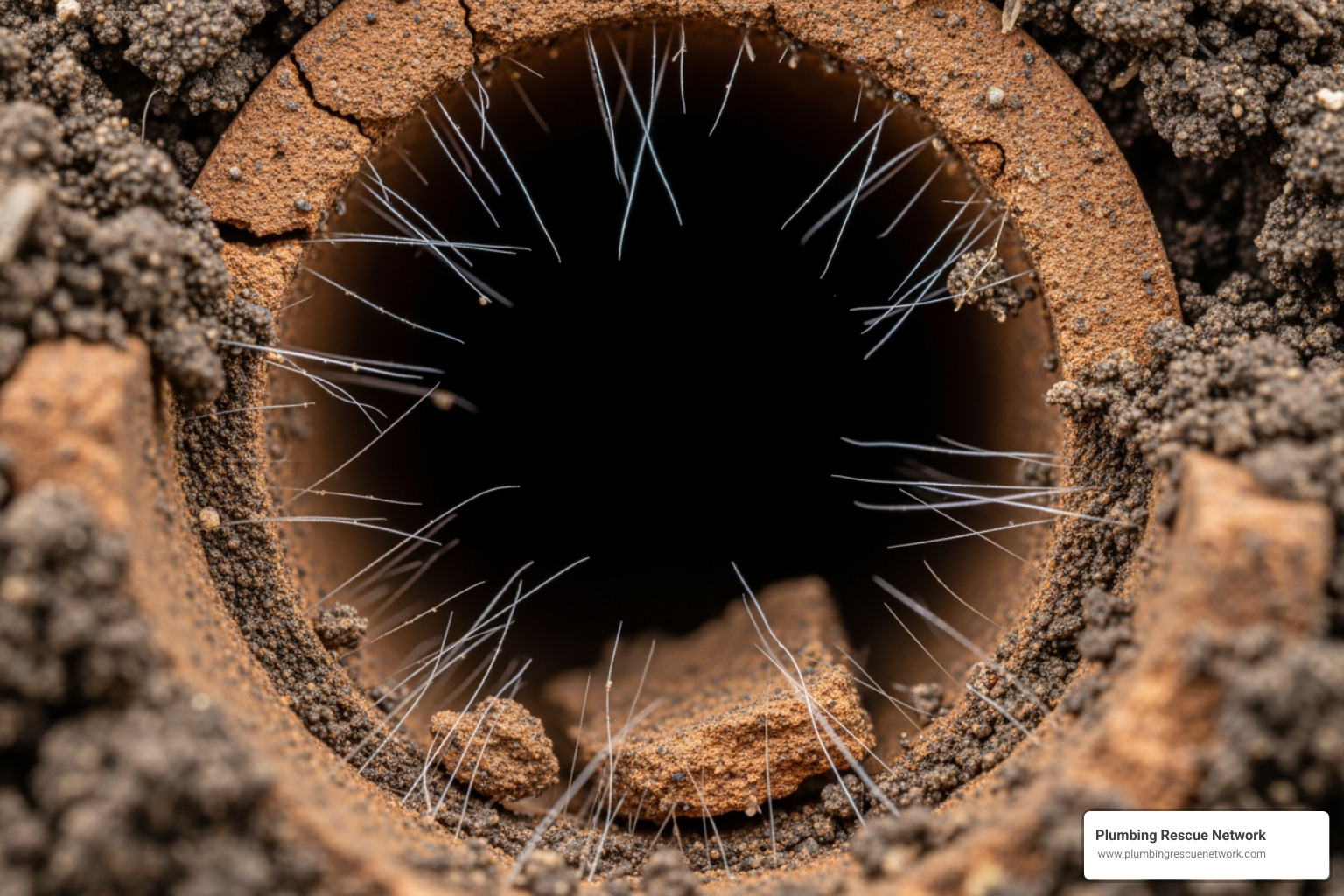
This is a massive issue in older neighborhoods with mature trees. Roots are naturally drawn to the moisture and nutrients inside sewer pipes. They can push through microscopic cracks in old clay or cast iron pipes. Once inside, they grow into a thick “curtain” that catches toilet paper and grease, eventually causing a total blockage.
The “Flushable” Myth and Grease Buildup
We see it all the time: “flushable” wipes that don’t actually dissolve. These, along with paper towels and feminine hygiene products, are a nightmare for basement drains. Additionally, if you pour cooking grease down your kitchen sink, it eventually cools and hardens in the cooler pipes under your basement floor, acting like “plumbing cholesterol” that narrows the passage.
Heavy Rain and Seasonal Factors
In Council Bluffs, heavy spring rains can saturate the soil. This causes groundwater to seep into cracked sewer lines (infiltration) or overwhelms the municipal sewer system. When the city’s main line is full, the excess water has nowhere to go but back up into the lowest drains in nearby homes.
Pipe Sags and Structural Issues
Over time, the ground beneath your home can shift, causing a section of the pipe to “belly” or sag. Water and solids pool in these low spots, leading to frequent clogs.
Local Clog vs. Main Sewer Line Issues
| Feature | Local Floor Drain Clog | Main Sewer Line Issue |
|---|---|---|
| Scope | Only the floor drain is slow | Multiple fixtures (toilets, tubs) are slow |
| Reaction | Water stays in the drain | Flushing a toilet makes the floor drain gurgle |
| Material | Usually hair, lint, or dust | Usually sewage, toilet paper, or roots |
| Severity | Low – DIY often works | High – Requires professional equipment |
Why the basement floor drain backed up after a recent cleaning
It’s incredibly frustrating: you pay to have your lines cleared, and 24 hours later, the basement floor drain backed up again. This usually happens for a few reasons:
- Clay Tile Offsets: Older homes often use clay pipes. If one section has shifted, it creates a “lip” or a 1/4″ offset. A plumber’s snake might pass over it, but solids like toilet paper will immediately snag on that lip and start a new clog.
- Cast Iron Scaling: As cast iron pipes age, the inside becomes rough and “scaled.” This friction catches debris immediately after the line is “cleared.”
- The “Hole” Method: Basic snaking sometimes only pokes a small hole through a soft clog (like grease or roots). The water drains for a day, but the hole quickly closes back up.
Troubleshooting and Fixing a Backup at Home
If the backup is minor and doesn’t involve raw sewage, you might be able to clear it yourself. Here is how we recommend approaching a DIY fix.
1. The Bellows Plunger
Don’t use a standard sink plunger. A bellows-style plunger (the one with the accordion-like folds) creates much more pressure. Ensure there is enough water to cover the head of the plunger to create a vacuum seal, and give it several vigorous pumps.
2. The Natural Fizz
For slow drains caused by soap scum or light grease, try the classic baking soda and vinegar method.
- Pour half a box of baking soda down the drain.
- Follow it with a cup of white vinegar.
- Let it fizz for 15 minutes to break up organic material.
- Flush with a gallon of boiling water (only if you don’t have PVC pipes, as boiling water can soften some plastics).
3. Use a Wet-Dry Vac
Sometimes the clog is just a bunch of hair and lint sitting right under the grate. Remove the drain cover and use a wet-dry vacuum to suck out any visible debris. You’d be surprised how often this simple step restores flow.
4. Manual Drain Auger
If you’re feeling adventurous, a hand-cranked drain snake (auger) can reach 15-25 feet into the line. Feed the cable in until you hit resistance, then crank the handle to “chew” through the blockage.
For a visual guide on these techniques, check out this helpful video on clearing floor drains.
When to stop DIY and call for a basement floor drain backed up
Know your limits. You should put down the tools and call a professional if:
- You see raw sewage: This is a biohazard. It contains bacteria and pathogens that require professional cleanup and specialized equipment.
- Gurgling sounds: If your floor drain “talks” to you when you flush the toilet or run the laundry, the blockage is in the main stack.
- Multiple fixtures are involved: If the kitchen sink and the floor drain are both backed up, a hand snake won’t reach the problem.
- Foul Odors: Persistent sewer smells indicate a broken trap or a deep-seated venting issue.
Professional Diagnostics and Long-Term Prevention
When the DIY methods fail, we bring in the heavy hitters. Modern plumbing technology has made it much easier to find and fix the root cause of a basement floor drain backed up.
Sewer Camera Inspections
We don’t like to guess. By feeding a high-definition, waterproof camera into your lines, we can see exactly what’s happening. Whether it’s a 1/4″ lip in a clay pipe, a thick mass of tree roots, or a collapsed section of cast iron, the camera tells the truth. This is the only way to ensure the problem won’t return next week.
Hydro Jetting
If snaking is like a haircut, hydro jetting is like a deep-cleaning power wash. We use high-pressure water (up to 4,000 PSI) to blast away grease, scale, and even heavy tree roots. It cleans the entire diameter of the pipe, restoring it to nearly new condition.
Long-Term Solutions
- Backwater Valves: This one-way valve allows water to flow out of your house but automatically closes if sewage tries to flow back in from the city main.
- PVC Replacement: If your old clay or cast iron pipes are structurally compromised, replacing them with modern PVC is the permanent fix. PVC is smooth, durable, and virtually root-proof.
- Trap Maintenance: Simply pouring a quart of water into your floor drain once a month ensures the P-trap stays sealed.
Frequently Asked Questions about Basement Backups
Is it safe to run the washing machine during a backup?
No. The washing machine discharges a massive volume of water very quickly. If your main line is restricted, that water will have nowhere to go but out of your basement floor drain, potentially flooding your basement in minutes.
How do tree roots get into my basement pipes?
Roots can sense the “vapor” of water escaping through tiny cracks or loose joints in old pipes. Once they find a way in, the nutrient-rich environment of a sewer line acts like fertilizer, causing them to grow rapidly and fill the pipe.
Can I use chemical cleaners on a floor drain?
We generally advise against it. Chemical cleaners are highly corrosive and can damage older metal pipes. Furthermore, if they don’t clear the clog, you’re left with a pool of toxic chemicals that a plumber will eventually have to work around, creating a safety hazard.
Conclusion
A basement floor drain backed up is more than just a mess; it’s a signal that your home’s “underground” health needs attention. Whether it’s a simple lint clog or a complex tree root intrusion, addressing it quickly is the key to preventing mold, structural damage, and health risks.
At Plumbing Rescue Network, we specialize in these “underground” mysteries. We provide 24/7 emergency plumbing services in Council Bluffs, IA, including expert drain cleaning and rapid-response repairs for clogs and sewer backups. Our rapid call routing ensures you get a local technician at your door exactly when you need them—day or night.
Don’t wait for the water to rise further. Schedule expert drain cleaning now and let us restore your peace of mind.
Dealing With This Yourself? Get Connected With a Local Plumber.
Skip the guesswork — one call connects you with a local plumbing provider. Available 24/7, no forms.
Call Now: (888) 686-0698