

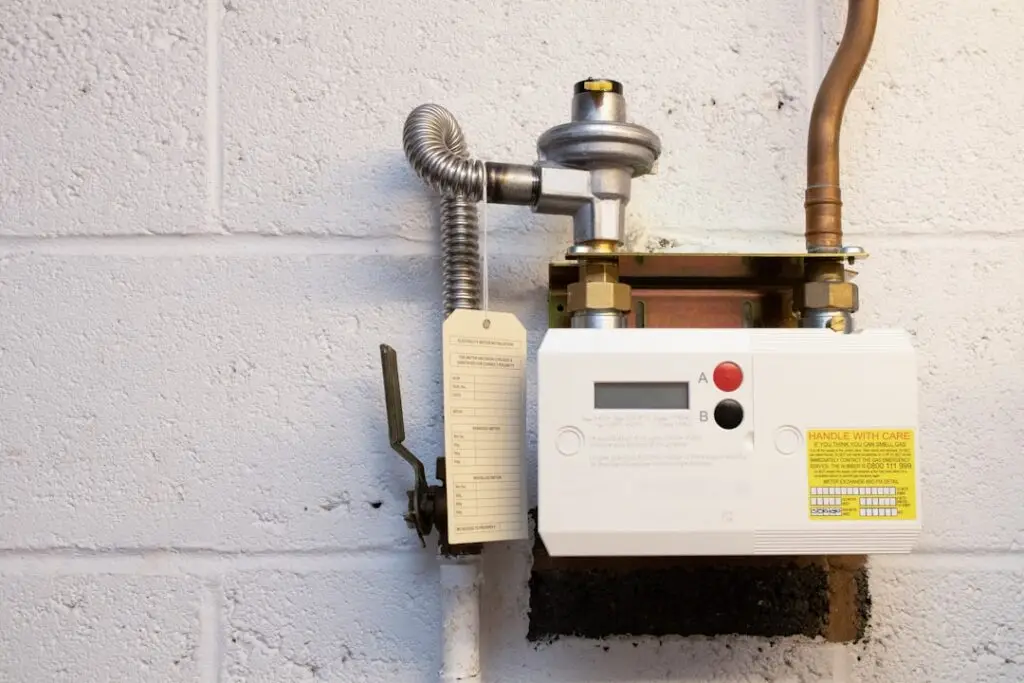
Is Your Electric Tankless Water Heater Broken? Start Here
Electric tankless water heater repair often comes down to a handful of common problems — most of which have clear solutions.
Quick answer: The most common electric tankless water heater repairs include:
- Tripped circuit breaker — Reset the breaker; if it trips again immediately, call a pro
- Blown fuses — Check and replace fuses; warm fuses may signal a loose connection
- Sediment or scale buildup — Flush and descale the unit annually
- Faulty heating element — Test with a multimeter; replacement requires a licensed plumber
- Failed flow sensor — Causes lukewarm or no hot water; needs professional diagnosis
- Error codes on display — Check your manual for the specific fault code and follow the recommended steps
Most simple checks (breaker, fuses, temperature settings) are safe for homeowners to try first. Anything involving internal wiring, control boards, or heating elements should be handled by a licensed plumber.
Tankless units are more complex than traditional tank water heaters. They heat water on demand using electric heating elements, which means when something goes wrong, you lose hot water immediately — no backup supply sitting in a tank. That urgency is real, especially when you’re mid-shower or running a household.
I’m Ben Smith, a digital marketing strategist with over 25 years of experience helping home service businesses — including plumbing companies specializing in electric tankless water heater repair — connect homeowners with the right solutions fast. In this guide, I’ll walk you through everything you need to know to diagnose, fix, or hand off the problem to the right professional.

Easy electric tankless water heater repair word list:
Common Issues Requiring Electric Tankless Water Heater Repair

The good news is that electric tankless heaters are efficient and compact. The less-good news is that when they act up, the cause is often electrical, electronic, or mineral-related. In plain English: not usually a “smack it and hope” appliance.
Here are the most common problems we see with electric tankless water heater repair calls.
Tripped breakers or blown fuses
Electric tankless units draw a lot of power and often use dedicated breakers or even multiple branch circuits. If one breaker trips, the unit may stop heating or only produce lukewarm water.
Start by checking your electrical panel. If the breaker is tripped, reset it once. If it trips again right away, stop there. Repeated tripping can point to a short, a failing heating element, or an unsafe wiring issue.
Warm fuses can also hint at loose electrical connections, which create resistance and heat. That is not a DIY adventure we recommend.
Sediment and scale buildup
Hard water is rough on tankless systems. Mineral deposits can collect on heating elements and inside water passages, making the unit work harder and heat less effectively. Over time, this can cause:
- Reduced hot water output
- Fluctuating temperatures
- Lower flow
- Overheating errors
- Premature element failure
If you want a broader overview of heater issues, our guide on common water heater repairs and solutions is a useful companion.
Faulty heating elements
In electric models, heating elements do the heavy lifting. If one fails, you may get no hot water, not enough hot water, or water that turns cold during use. Testing elements with a multimeter is possible, but replacement usually belongs in professional hands because the unit contains high-voltage components.
Flow sensor problems
Tankless heaters only activate when enough water moves through the unit. Some models require a minimum flow rate around 0.55 gallons per minute to turn on. If the flow sensor is dirty, failing, or the inlet filter is clogged, the heater may not fire properly.
This can show up as:
- Water that never gets fully hot
- Hot water that cuts in and out
- Unit works at one faucet but not another
- Better performance when only one fixture runs
Temperature setting issues
Sometimes the problem is not a broken part at all. If the temperature is set too high, some units reduce flow to keep up with demand, which can make pressure feel weak. In other cases, a setpoint that is too low simply produces lukewarm water.
A 120 degrees F setting is a smart starting point for both comfort and scald protection.
Error codes on the display
Many newer electric tankless units have self-diagnostics. If your display shows a code, your user manual is your first stop. Some manuals include specific steps for overheat faults, thermistor issues, and sensor problems.
If you still have your manual, use it. If not, the ARISTON 10.5kW Electric Tankless Water Heaters User Guide shows the kind of model-specific safety and service information manufacturers provide.
Leaks
Tankless units leak less often than storage tanks, but leaks still happen. Common sources include:
- Loose connections
- Worn seals
- Pressure problems
- Internal damage from scale
- Cracked components
If water has entered the electrical section, shut off power and call a professional. Water and high voltage are a famously terrible couple.
Troubleshooting and DIY Fixes

Homeowners can do some basic troubleshooting safely. The trick is knowing where basic ends and dangerous begins.
If you want a general repair primer first, see How to Fix a Broken Electric Heater.
Use this step-by-step process:
1. Confirm the unit has power
Check:
- Dedicated breaker or breakers
- Any disconnect switch near the unit
- Fuses, if your setup uses them
- Display panel lights or indicators
Reset a tripped breaker once. If it trips again, stop troubleshooting and call a licensed plumber or electrician.
2. Check for an error code
If the unit has a digital display, write down the exact code before doing anything else. Your manual may tell you whether the issue is:
- Overheating
- Thermistor failure
- Flow problem
- Sensor fault
Some manufacturers recommend powering the unit off, running water through it for several minutes, and then restarting only after the unit cools. Follow the model-specific instructions, not guesswork.
3. Verify water flow
Run one hot faucet only and see whether performance improves. If the unit works better with just one fixture open, the issue may be:
- Insufficient flow rate
- Undersized unit for current demand
- Dirty inlet filter
- Scale buildup
- Flow sensor trouble
4. Review the temperature setting
Check the setpoint on the unit. If it is unusually low, raise it carefully. If it is very high, lower it closer to 120 degrees F and test again.
This can solve a surprising number of “sort of hot, sort of not” complaints.
5. Clean the inlet water filter
Many electric tankless heaters have a small inlet screen or filter that catches debris. If it clogs, water flow drops and the heater may not activate properly.
General steps:
- Turn off power to the heater.
- Shut off the water supply.
- Follow your model instructions to access the inlet filter.
- Rinse debris from the screen.
- Reinstall it securely.
- Restore water, check for leaks, then restore power.
Always check your manual first. Manufacturer instructions differ, and some units are less DIY-friendly than others.
6. Locate and press the reset button, if equipped
Some units have a reset button for overheat protection. Pressing it may restore operation if the problem was temporary.
But if it immediately trips again, that usually means the unit is overheating or has an electrical fault. That is your cue to stop.
7. Inspect visually only
Without opening electrical compartments, look for:
- Obvious water leaks
- Burn marks
- Melted insulation
- Corrosion
- Loose plumbing connections
If you see any sign of burning or moisture near electrical parts, turn the power off and call for service.
DIY vs professional repair table
| Task | Usually OK for homeowner? | Best left to a pro? |
|---|---|---|
| Reset breaker once | Yes | No |
| Check display for error code | Yes | No |
| Adjust temperature setting | Yes | No |
| Clean accessible inlet filter | Yes, if manual allows | No |
| Flush/descale with proper kit | Sometimes | Often better with a pro |
| Test voltage or continuity | Only if trained | Yes for most homeowners |
| Replace heating element | No | Yes |
| Repair wiring or breaker issues | No | Yes |
| Replace flow sensor or control board | No | Yes |
| Diagnose repeated overheating | No | Yes |
Professional Electric Tankless Water Heater Repair vs. DIY
Electric tankless units are compact, but inside they are busy little machines: sensors, boards, relays, elements, and high-amperage wiring all packed together. That is why most real repairs should be handled by a pro.
For hiring tips, read How to Hire the Best Electric Heater Repair Pros Nearby.
Call a licensed plumber if you notice any of these signs:
- Breaker trips repeatedly
- Unit has power but makes no hot water
- Water is consistently lukewarm after basic checks
- The display shows recurring error codes
- You suspect a failed heating element
- There is leaking inside the cabinet
- The control board may be bad
- Wiring looks scorched, loose, or corroded
- The unit is under warranty and you do not want to risk voiding coverage
Professional service also matters for warranty protection. Many manufacturers require qualified service for internal component repair. DIY element or board replacement can create a second problem: paying for the repair twice.
Safety Protocols for Electric Tankless Water Heater Repair
This is the part where we sound a little like your cautious relative, because the stakes are real.
Electric tankless heaters combine water, high voltage, and scalding temperatures. Before touching anything beyond basic controls, follow these safety rules.
Shut off all power
Many units use more than one breaker. Do not assume flipping one switch makes the heater safe. Manufacturer literature for electric water heaters and tankless systems repeatedly warns that multiple branch circuits may need to be disconnected before service.
Use a non-contact circuit tester
Before working near wiring, confirm the power is actually off. Never trust labels alone. A non-contact tester is a simple, smart safety step.
For more technical safety guidance on electric water heater servicing, see this manufacturer use and care guide.
Let hot components cool
If the unit overheated, give it time to cool and run water through it if the manufacturer recommends that step. Heating elements and internal components can stay hot after shutdown.
Prevent scalding
Water temperature matters. Research and manufacturer guidance consistently support 120 degrees F as a safer household setting. Hotter water increases scald risk dramatically, especially for children, older adults, and anyone with reduced sensitivity.
Never open sealed electrical areas unless you are qualified
This is where DIY should usually stop. Internal repairs may involve:
- High-amperage terminals
- Control board diagnostics
- Element testing
- Resistance readings
- Wire gauge verification
- Multi-circuit lockout procedures
If that list feels more “service technician” than “Saturday project,” trust that instinct.
Shut the unit down if you see water intrusion
If the heater has been exposed to flooding, heavy leaks, or obvious internal moisture, do not attempt to restart it. Water intrusion can damage controls and create shock risk.
Maintenance and Florida Repair Costs
Even though Plumbing Rescue serves Austin, Denver, Indianapolis, and Phoenix, Florida pricing is widely cited in industry content, so it is useful as a benchmark if you are comparing repair economics nationally.

How often should electric tankless water heaters be maintained?
Once a year is the standard recommendation. In hard water areas, twice a year is often smarter. That matters in places where mineral-heavy water is common, because scale is one of the biggest causes of declining performance and early part failure.
A typical maintenance visit takes about 60 to 90 minutes.
What maintenance can homeowners do themselves?
Depending on the model and your comfort level, homeowners can usually handle:
- Checking for visible leaks
- Monitoring for error codes
- Cleaning accessible inlet filters
- Verifying temperature settings
- Scheduling or performing a flush if the manufacturer allows it
For general upkeep guidance, our easy hot water heater manual is a helpful resource.
What should a professional maintenance visit include?
A proper service visit may include:
- Descaling or flushing the heat exchanger area
- Inspecting heating elements for wear or scale
- Checking wiring and terminal connections
- Testing sensors and controls
- Verifying safe temperature output
- Looking for leaks or pressure issues
- Reviewing error history where available
What does repair cost?
Florida benchmark data shows tankless water heater repair commonly ranges from about $150 to $800+, with an average cost of $603. Diagnostic or trip charges often apply before the repair itself.
Those numbers are not a guaranteed price in Austin, Denver, Indianapolis, or Phoenix, but they are a useful planning range. Actual cost depends on:
- Brand and model
- Age of the unit
- Whether the issue is electrical, plumbing, or control-related
- Part availability
- Warranty status
- Emergency or after-hours service
If your unit is old and repair costs keep stacking up, compare the math with replacement. Our guide to affordable water heater repair can help frame that decision.
Repair or replace?
Replacement becomes more likely when:
- The unit has frequent breakdowns
- Major components like the control board have failed
- There are repeated scale-related issues
- Repair costs are approaching a large share of replacement cost
- The unit no longer meets your household demand
Most tankless installations take about 2 to 4 hours for a straightforward job, though upgrades to electrical service can add time.
Frequently Asked Questions
How long do electric tankless water heaters typically last?
With proper maintenance, electric tankless water heaters can last 20 years or more. That longer lifespan is one of their biggest advantages over many traditional tank models.
The key phrase there is “with proper maintenance.” Scale buildup, neglected filters, bad water quality, and repeated overheating all shorten life expectancy.
If you are deciding whether to fix an aging unit or swap it out, our water heater replacement guide can help you weigh the options.
How often should I service my tankless water heater in Florida?
Industry guidance recommends annual service for most homes and twice-yearly service in hard water areas. Even though our active service areas are Austin, Denver, Indianapolis, and Phoenix, that maintenance logic applies anywhere hard water is present.
If you notice reduced flow, inconsistent temperature, or rising energy use, do not wait for the yearly mark. Those are signs the unit may already be due for service.
Why is my electric tankless water heater producing lukewarm water?
Lukewarm water usually points to one of a few causes:
- Temperature set too low
- Dirty inlet filter reducing activation flow
- Failed or weakening heating element
- Flow sensor issue
- Scale buildup on elements
- Too many hot water fixtures running at once
- Hot and cold water crossover somewhere in the plumbing
Start simple:
- Check the setpoint.
- Run only one hot faucet.
- Clean the inlet filter if your manual allows.
- Look for error codes.
- If the problem continues, call a pro.
When should I call a professional plumber instead of trying a DIY repair?
Call right away if:
- The breaker trips more than once
- You suspect internal electrical damage
- There is any burning smell
- The display shows recurring fault codes
- You see leaking inside the unit
- You need a heating element, sensor, or board replaced
- The unit is still under warranty
In general, basic troubleshooting is DIY territory. Actual repair is usually professional territory.
How do I choose a qualified plumber for tankless water heater repair?
Look for a company that:
- Works on electric tankless systems specifically
- Offers clear, written pricing
- Can explain the diagnosis in plain language
- Has experience with troubleshooting electrical and control issues
- Understands warranty requirements
- Can respond quickly for no-hot-water emergencies
We also recommend getting a clear scope of work before approving repairs, especially if expensive parts are involved.
Conclusion
Electric tankless water heaters are efficient, long-lasting, and wonderfully space-saving, but they are not the simplest appliances to repair. The most common issues are tripped breakers, failed elements, scale buildup, sensor problems, and error-code faults. Homeowners can safely handle basic checks like power, settings, and filter cleaning, but internal repairs usually belong with a licensed professional.
If you need help now, Plumbing Rescue offers 24/7 emergency plumbing support and rapid routing to local technicians in our service areas. For fast help with water heater issues, contact us for professional water heater repair and installation.
Dealing With This Yourself? Talk to a Licensed Plumber.
Skip the guesswork — get a straight answer from a local pro. Available 24/7, no forms, no waiting.
Call Now: (888) 686-0698