
That Sinking Feeling: What to Do When Your Bathroom Tub Drain Is Clogged
Don’t Let Your Bath Stall: Fixing a Clogged Tub

A bathroom tub drain clogged with hair, soap scum, or mineral buildup is one of the most common plumbing problems homeowners face — and one of the most fixable.
Here’s how to unclog a bathtub drain fast:
- Remove the drain stopper and pull out any visible hair by hand or with a zip-it tool
- Plunge the drain after blocking the overflow hole with a wet rag
- Snake through the overflow plate using a 1/4-inch drain cable to reach the P-trap
- Flush with hot water for 2-3 minutes to clear loosened debris
- Call a plumber if multiple drains are slow, water backs up, or the clog keeps returning
Most tub clogs clear in under 30 minutes using basic tools. You likely don’t need a plumber — yet.
Standing in ankle-deep water during a shower is more than annoying. It’s a signal your drain needs attention right now, before a slow drain turns into a complete blockage or a smelly, bacteria-filled backup.
Bathrooms have more drains than any other room in the house, which means more chances for something to go wrong. Hair is the biggest offender — it tangles around the stopper, catches soap scum, and slowly cements into a dense mat that water can barely pass through. Left alone, what starts as a slightly slow drain becomes a tub full of standing water.
The good news? Most clogs sit within the first few feet of pipe and are completely fixable without calling anyone.
I’m Ben Smith, a digital marketing consultant with over 25 years of experience helping home service businesses — including plumbing companies — communicate complex topics like bathroom tub drain clogged fixes in ways that actually help homeowners solve problems fast. I’ll walk you through exactly what’s causing your clog and how to clear it step by step.
Simple bathroom tub drain clogged word guide:
Why is Your Bathroom Tub Drain Clogged?
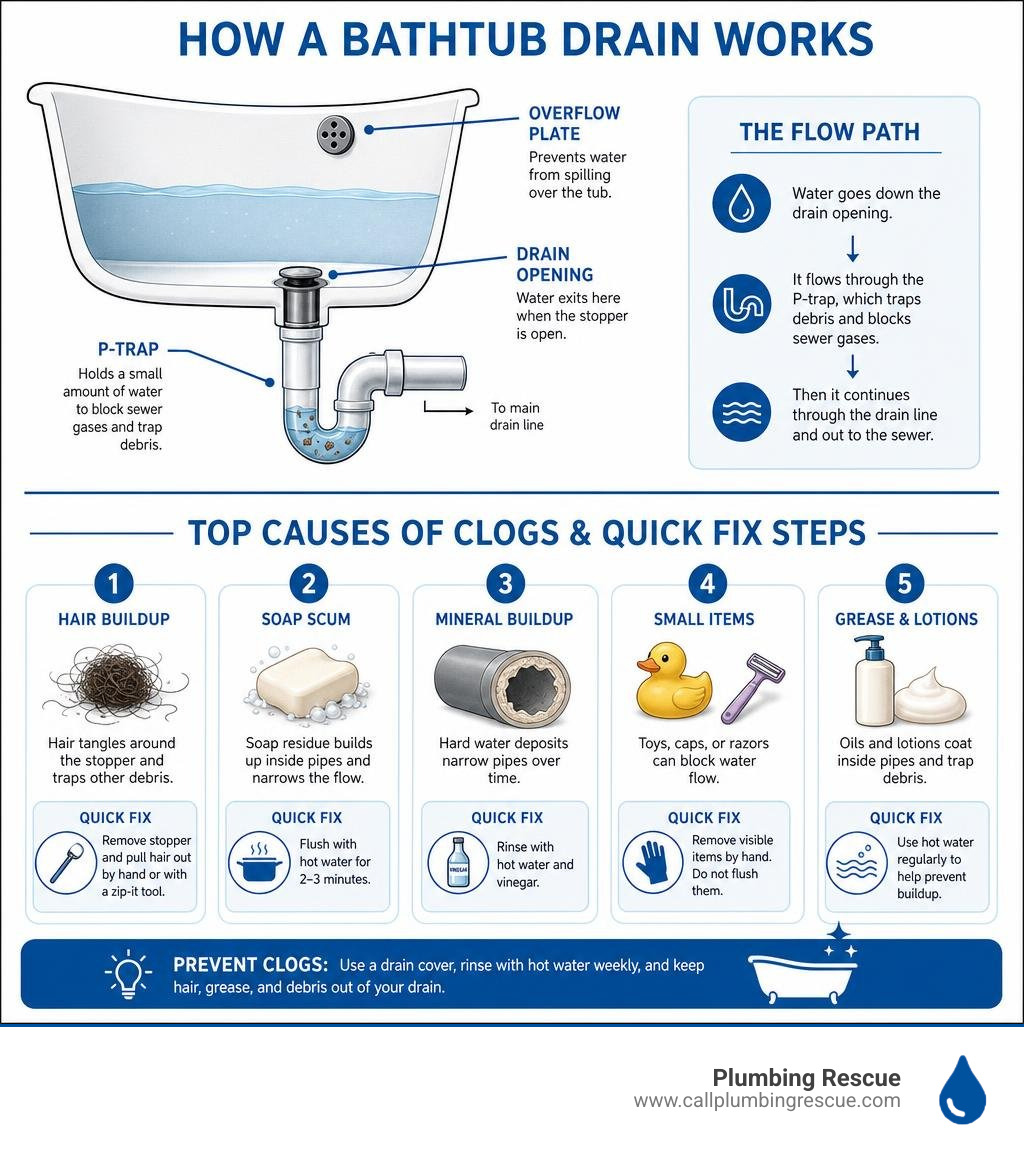
To successfully clear a clog, we must first understand what we are fighting. Bathtub drains are highly vulnerable because they handle a messy cocktail of hair, heavy body oils, sticky soaps, and mineral-heavy water.
Here are the primary culprits behind a slow or stopped tub:
- Hair Buildup: This is the undisputed champion of bathroom clogs. Every time you wash your hair or shave in the shower, hundreds of tiny strands slip down the drain. Because hair doesn’t dissolve, it catches on the drain crossbars, the stopper linkage, or rough spots inside the metal pipes.
- Soap Scum: Traditional bar soaps are made with fats and oils. When these fats mix with the minerals in your water, they create a sticky, chalky film known as soap scum. This film coats the interior walls of your pipes, narrowing the drain opening over time.
- Hard Water and Mineral Deposits: If you live in a hard-water area like Austin, Denver, or Phoenix, your water is packed with dissolved calcium and magnesium. Over time, these minerals crystallize inside your pipes, creating a rough, scale-like surface that hair and soap scum easily cling to.
- Biofilm and Mold: The warm, wet environment inside a drain is a breeding ground for bacteria and mold. They feed on skin cells and soap residue, forming a thick, slimy biofilm. This sludge not only smells like rotten eggs (thanks to hydrogen sulfide gas), but it acts like glue, binding loose hair into a dense, solid mass.
To help you diagnose what is currently sitting in your pipes, here is a quick comparison:
| Characteristic | Hair Clogs | Soap Scum & Biofilm |
|---|---|---|
| Primary Texture | Fibrous, stringy, and tough | Sticky, slimy, and greasy |
| Location | Usually caught on the stopper or crossbars | Coated along pipe walls and inside the P-trap |
| Odor | Mildly musty | Strong, sulfurous, or sour smell |
| Draining Speed | Causes sudden, severe blockages | Causes a gradual slowdown over several months |
| Best Fix | Mechanical removal (Zip-it tool or snake) | Dissolving agents (Baking soda/vinegar or enzymes) |
If you want to dive deeper into why your shower is holding onto water, check out our guide on Why Your Shower is Turning Into a Foot Bath.
Essential Tools and Step-by-Step DIY Methods
Before you run to the store or grab the phone to call us, you can resolve about 80% of tub clogs yourself. It takes a little patience, some basic safety gear, and about 30 minutes of your Saturday.
Essential Tools for DIY Drain Clearing
You don’t need a professional plumber’s truck to fix a standard clog. Collect these household tools before you start:
- Rubber Gloves & Eye Protection: Trust us, you do not want drain sludge touching your skin or splashing into your eyes.
- Screwdriver: Needed to remove the drain strainer or overflow plate.
- Plastic Zip-It Tool: A cheap, barbed plastic strip that is incredibly effective at pulling out hair.
- Cup Plunger: Standard sink/tub plunger (avoid the flange plungers used for toilets).
- Hand-Crank Drain Snake (Auger): A 1/4-inch manual snake is perfect for navigating tight bathtub bends.
- Wet Rag or Duct Tape: Crucial for sealing the overflow drain during plunging.
- Bucket and Towels: To collect standing water and protect your tub’s finish from scratches.
Step 1: Remove the Drain Stopper or Strainer
To get any tool into the drain, you have to bypass the stopper. Different tubs use different stopper designs, so find yours below:
- Drop / Lift-and-Turn Stopper: Set the stopper to the “open” position. Lift it up and turn it counterclockwise. If it spins without unscrewing, look closely under the cap — there is usually a tiny set screw you need to loosen with a flathead screwdriver or hex key.
- Push-Pull Stopper: Hold the base of the stopper with one hand and unscrew the top knob counterclockwise. Once the knob is off, use a screwdriver to remove the brass insert underneath.
- Pop-Up / Trip-Lever Stopper: These are connected to a metal linkage rod inside the overflow pipe. Move the lever to the open position, then pull the stopper straight up and out. The curved metal linkage assembly should slide out of the drain opening along with it.
- Simple Strainer Grate: If you just have a metal grate, look for a single screw in the center. Remove it, and carefully pry the grate off using a flathead screwdriver.
Once the stopper is out, wipe away any visible hair or black grime clinging to it. You might find that simply cleaning the stopper solves your slow-draining issue!
Step 2: Clear a Bathroom Tub Drain Clogged with Hair
Most bathtub blockages live within the first 12 to 18 inches of the drain, right around the crossbars. This is where a plastic hair removal tool (often called a Zip-it tool) shines.
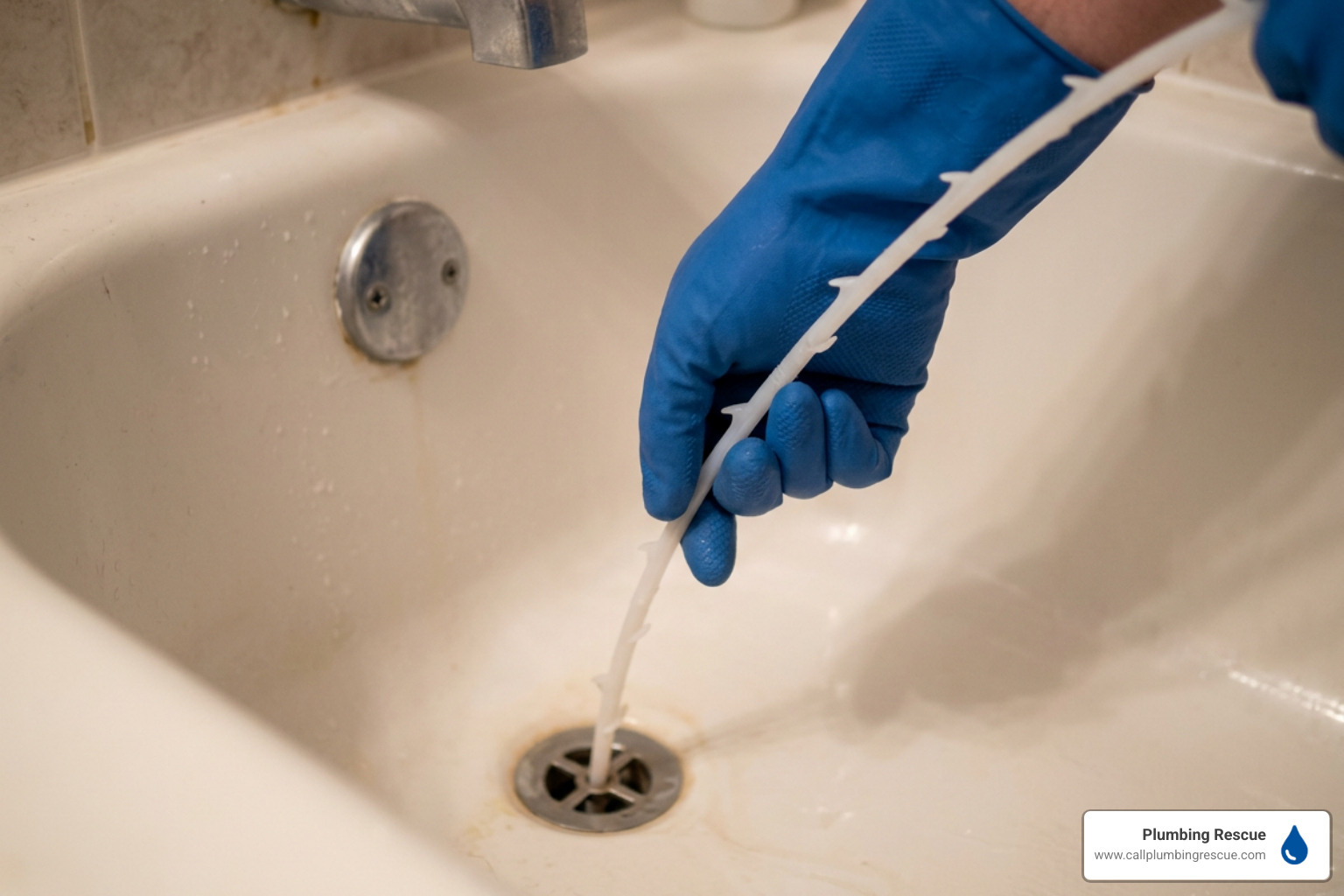
- Put on your heavy rubber gloves.
- Slowly feed the flexible plastic barbed wand straight down into the drain opening.
- Push it past the metal crossbars as far as it will go.
- Gently twist the tool to catch loose fibers, then pull it straight up.
- Warning: Prepare your stomach. You will likely pull up a wet, slimy, dark mat of hair and soap scum. Drop this straight into a trash bag.
- Repeat this process at different angles until the tool comes up clean.
For a detailed explanation of why hair and soap scum form such stubborn blockages, read more about Bathtub Drain Clogged With Hair and Soap Scum Causes.
Step 3: Use a Plunger for Stubborn Blockages
If the hair tool didn’t clear the blockage, it has likely traveled deeper into the P-trap. It’s time to plunge. However, plunging a bathtub requires a specific trick: you must block the overflow drain.
Bathtubs have an overflow opening high up on the tub wall. If you try to plunge the main drain without sealing this opening, the air and water pressure will simply escape out of the overflow plate, rendering your plunging useless.
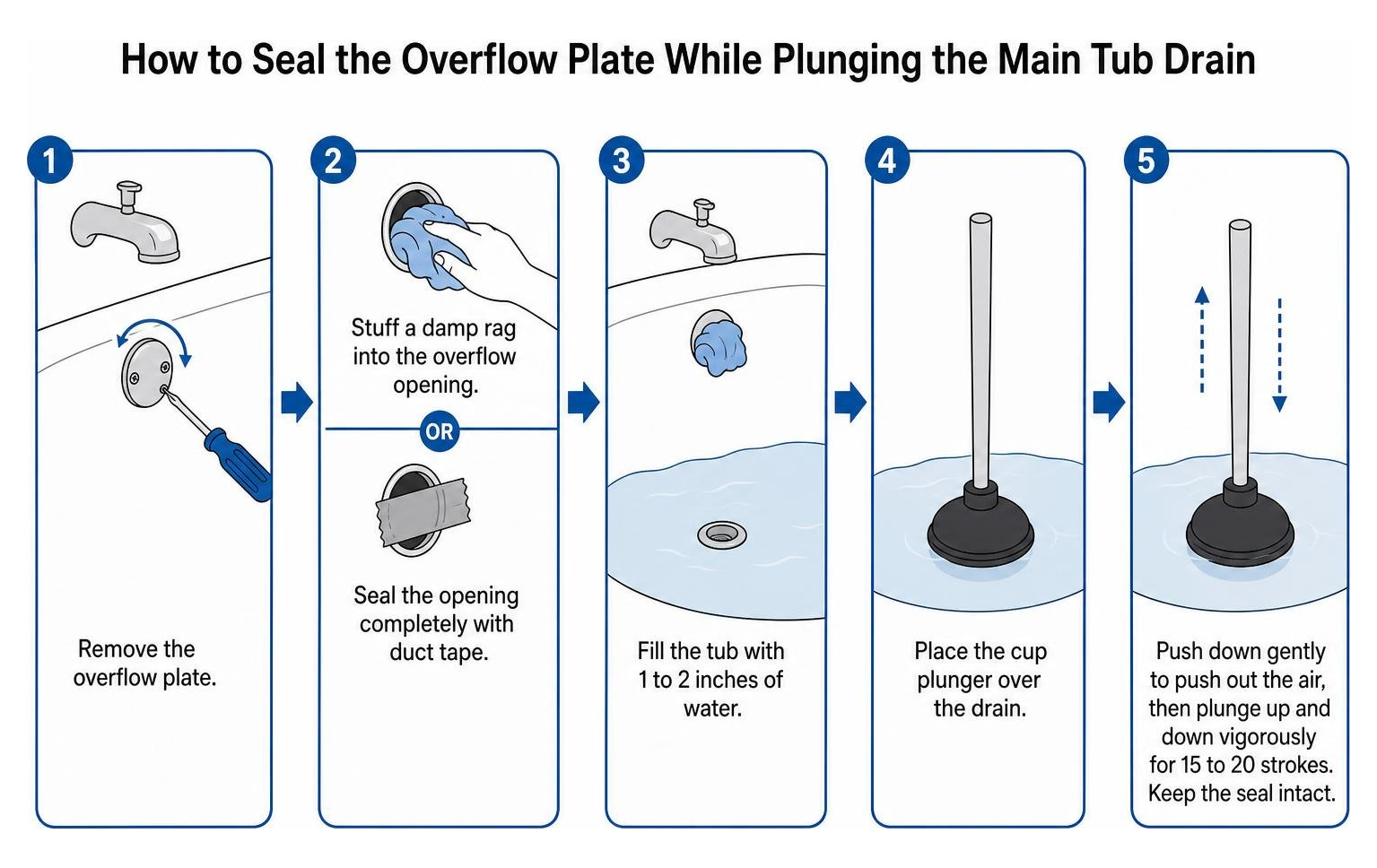
- Remove the overflow plate (usually secured by one or two screws on the tub wall below the faucet).
- Stuff a damp rag tightly into the overflow opening to block all airflow. Alternatively, seal it completely with heavy duct tape.
- Fill the tub with 1 to 2 inches of water so the rubber cup of your plunger is fully submerged. This creates an airtight seal around the main drain.
- Place the cup plunger over the drain opening.
- Push down gently to push out the air, then plunge up and down vigorously for 15 to 20 strokes. Keep the seal intact.
- Pull the plunger away quickly. If the clog has cleared, the standing water should rush down the drain immediately.
Step 4: Snake the Drain Through the Overflow Tube
If plunging fails, you need to use a manual drain snake. Do not snake through the floor drain. Trying to force a snake through the tight, sharp bends of a floor drain’s waste shoe can scratch your tub, damage your pipes, or cause the snake to get stuck.
Instead, always feed your snake through the overflow opening. This provides a direct, straight-line path down to the P-trap where the clog is hiding.
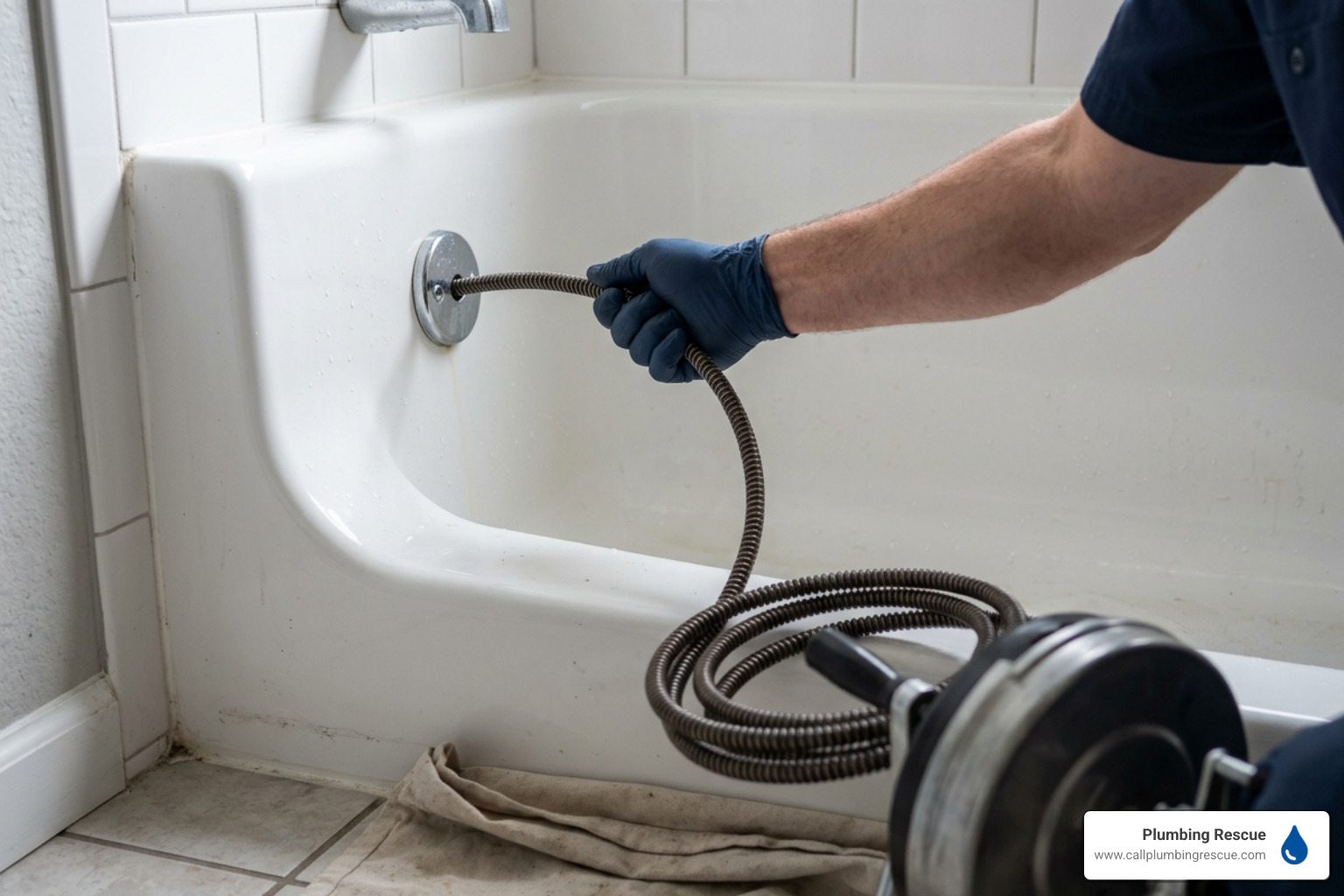
- Lay an old towel in the bottom of your tub to protect the porcelain or acrylic finish from metal scratches.
- Ensure the overflow plate and linkage are completely removed.
- Manually feed the 1/4-inch plumbing snake cable down into the overflow tube.
- When you feel resistance, you have hit either a tight bend or the clog itself.
- Crank the handle of your snake clockwise while applying gentle forward pressure. This rotation helps the cable navigate the P-trap and chew through hair mats.
- Once the snake passes through the resistance, feed another 12 to 18 inches of cable to make sure you have fully cleared the P-trap.
- Slowly retrieve the cable, wiping it down with a rag as it emerges. Clean off any retrieved hair clogs.
- Reinstall the overflow plate and flush the drain with hot water for 3 minutes to clear out any remaining loose debris.
Natural Remedies vs. Chemical Cleaners
Once you have cleared the bulk of the physical clog, you may still have sticky soap scum or grease lining the pipe walls. How you choose to clean those walls matters for the long-term health of your plumbing.
Natural Solutions for a Bathroom Tub Drain Clogged with Soap Scum
Before reaching for harsh chemicals, we highly recommend trying a natural, foaming baking soda and vinegar flush. It is eco-friendly, completely safe for all pipe materials, and doubles as an excellent deodorizer.
- Pour 1/2 cup of baking soda down the drain opening.
- Follow it immediately with 1 cup of white vinegar.
- Cover the drain with a stopper or rag to keep the chemical reaction contained inside the pipe. Let it fizz and bubble for 15 to 30 minutes.
- Boil a kettle of water (if you have metal pipes) or run your tap at its hottest temperature, and flush the drain to wash away the dissolved soap scum.
This natural fizzing action breaks down grease, body oils, and organic matter without damaging your home. For more natural, DIY-friendly household tips, see our detailed guide on Bathroom Drain Clog Fixes That Actually Work.
When to Use Chemical or Enzyme Cleaners
Store-bought chemical drain cleaners (like liquid bleach or caustic acid formulas) are incredibly popular, but professional plumbers almost universally advise against them.
Here is why:
- Pipe Damage: Caustic chemicals work by generating extreme heat to dissolve blockages. This intense heat can easily warp or melt modern PVC plastic pipes. In older homes with cast iron pipes, the acids will eat away at the metal, causing pinhole leaks.
- Standing Water Hazard: If you pour chemical cleaner into a completely blocked tub with standing water, it won’t clear the clog. Instead, you end up with a tub full of highly acidic, toxic water. If you eventually have to call a plumber, they will have to work around dangerous chemicals that can burn their skin and eyes.
If you want to use a pour-in product, choose an enzyme-based drain cleaner. Enzyme cleaners use natural bacteria to consume hair, soap fats, and organic waste. They are slower than chemical alternatives, but they are 100% safe for your pipes, your septic system, and the environment.
To find the safest options for your home, take a look at The Ultimate Guide to the Best Drain Cleaners on the Market.
Dealing with Standing Water and Deeper Main Line Issues
If you are staring at a tub full of dirty, cold water that refuses to budge, your approach needs to change slightly.
First, do not pour chemicals into standing water. If you must attempt a DIY fix, you need to manually bail out the water using a bucket and pour it down a working toilet or sink. Once the tub is empty, you can safely remove the stopper and attempt to plunge or snake the line. For a step-by-step walkthrough on managing this mess, read How to Unclog a Bathtub Drain with Standing Water – Archute.
Signs of a Deeper Sewer Line Clog
Sometimes, a clogged bathtub isn’t actually a bathtub problem at all. Because bathtubs sit at the lowest point of your home’s main bathroom branch lines, they are usually the first fixture to show symptoms of a deeper main sewer line blockage.
Watch out for these critical warning signs:
- Multiple Slow Fixtures: If your bathroom sink, toilet, and shower are all draining slowly at the same time, the clog is deeper in the branch line.
- Gurgling Toilet: If your toilet bubbles, gurgles, or rises when you run the bathtub (or vice versa), air is trapped in your plumbing system because of a blockage.
- Water Backups: If running your washing machine or bathroom sink causes water to push up into your dry bathtub, your main sewer line is blocked.
If you suspect the issue is far deeper than your P-trap, do not keep plunging. You need to read The Ultimate Guide to Clearing a Blockage in Your Main Sewer Line to understand how professional sewer cleaning works.
Frequently Asked Questions about Bathtub Clogs
Can I use boiling water to clear a slow tub drain?
It depends entirely on your pipes. If your home has older, copper or cast iron drain lines, boiling water is highly effective at melting soap scum. However, if your home has modern PVC plastic pipes, do not use boiling water. PVC pipes are rated to handle temperatures up to 140°F. Boiling water (212°F) can soften the plastic, melt the glue at pipe joints, and cause catastrophic hidden leaks behind your walls. Stick to hot tap water instead.
How do I prevent future bathtub drain clogs?
You can easily prevent 95% of future bathtub clogs by building these simple habits:
- Install a Hair Catcher: A silicone or stainless-steel drain screen (like a TubShroom) sits over or inside your drain to catch hair before it ever enters your pipes. Clean it weekly.
- Switch to Liquid Soap: Liquid body washes and shower gels do not contain the binding fats found in traditional bar soaps, drastically reducing soap scum buildup.
- Weekly Hot Water Flush: Once a week, run your bathtub tap on full hot for 2 to 3 minutes to melt away fresh oils and soap residue before they solidify.
For a complete guide to maintaining unstoppable plumbing, check out The Ultimate Council Bluffs Guide to Unstoppable Drains.
Why does my bathtub drain gurgle when the sink runs?
This is a classic sign of a shared branch line or vent pipe issue. Your bathroom sink and bathtub typically share a single drain line before connecting to your home’s main stack. If a partial clog forms in that shared line, the air pushed down by the sink water cannot escape. It struggles past the bathtub’s P-trap, creating a gurgling sound.
Alternatively, your plumbing vent pipe (which goes up through your roof to let sewer gas escape) might be blocked by leaves or bird nests, creating a vacuum that pulls air through your tub’s P-trap. Learn more about how these interconnected systems function in Bathtub Won’t Drain | The Plumbing Directory.
Conclusion
A bathroom tub drain clogged with hair and soap scum can quickly turn a peaceful home into a stressful mess. While most minor clogs can be cleared in under 30 minutes using a plunger, a zip-it tool, or a manual snake, deeper blockages require professional tools and expertise.
If you have tried snaking and plunging and your tub still won’t drain, or if you are dealing with multiple clogged fixtures and water backing up into your basement, do not risk damaging your pipes with harsh chemical cleaners.
At Plumbing Rescue, we provide 24/7 emergency plumbing and professional drain cleaning services across our service areas, including Austin, TX, Denver, CO, Indianapolis, IN, and Phoenix, AZ. No matter the time of day or night, our rapid call routing connects you to a local, trusted technician in your area who can clear your drains safely and efficiently.
Don’t let a stubborn clog ruin your day. If life gets backed up, we are here to help. Check out our 24 Hr Drain Service for When Life Gets Clogged or visit us online to Schedule Professional Drain Cleaning today!
Dealing With This Yourself? Talk to a Licensed Plumber.
Skip the guesswork — get a straight answer from a local pro. Available 24/7, no forms, no waiting.
Call Now: (888) 686-0698