
Why Your Bathroom Drain Is Slow (And What to Do About It)
Bathroom drain cleaning is something most homeowners only think about after the water starts pooling at their feet.
Here’s a quick answer if you’re in a hurry:
How to clean a bathroom drain in 5 steps:
- Remove the stopper and pull out any visible hair or debris
- Pour 1/2 cup of baking soda into the drain
- Follow with 1/2 cup of white vinegar and cover the drain
- Wait 10–15 minutes, then flush with hot (not boiling) water
- Use a Zip-It tool or drain snake if the drain is still slow
For ongoing maintenance, repeat monthly. If multiple drains are slow or water backs up into other fixtures, call a plumber.
Over 60% of homeowners deal with a slow bathroom drain at least once a year, and clogged drains account for roughly 40% of all residential plumbing service calls. The culprits are almost always the same: hair, soap scum, toothpaste residue, and a slimy layer of biofilm that builds up quietly inside your pipes over time. Left alone, a sluggish drain can turn into a full blockage — and that’s when a simple maintenance task becomes an expensive emergency.
This guide covers everything you need to know: what causes clogs, how to clear them safely, which tools actually work, and when it’s time to stop DIY-ing and call a professional.
I’m Ben Smith, a digital marketing strategist with over 25 years of experience helping home service businesses — including plumbing companies — educate homeowners on topics like bathroom drain cleaning through clear, practical content. I’ve worked closely with plumbing professionals to understand what homeowners actually need to know to protect their homes and avoid costly repairs.
Bathroom drain cleaning further reading:
Why Bathroom Drains Clog and Smell Over Time
Understanding why your bathroom sink, shower, or tub drain slows down is the first step toward keeping your pipes clear. Unlike kitchen sinks, which primarily deal with food scraps and cooking grease, your bathroom plumbing faces a unique cocktail of organic and chemical materials daily.
When you wash your hands, brush your teeth, or take a shower, several substances enter your pipes and begin to accumulate:
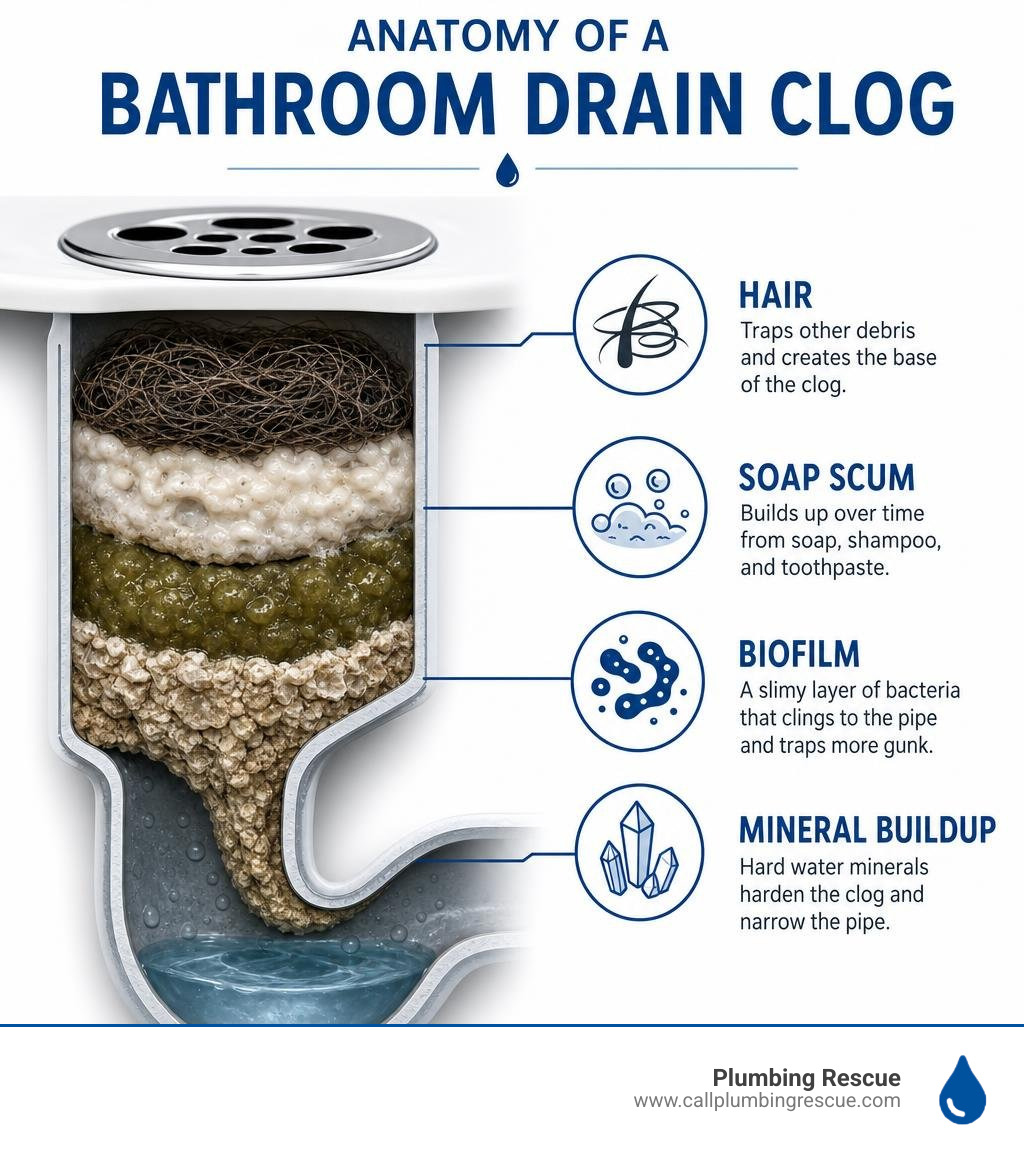
- Hair: This is the primary driver of bathroom blockages. Human hair, particularly long strands, gets caught on the drain stopper mechanism, the pivot rod, or the rough internal surfaces of the pipes. Once a few strands catch, they act as a net, trapping everything else that flows down the drain.
- Soap Scum: Traditional bar soaps are made with fats and oils. When these oils mix with the minerals in hard water, they form a sticky, solid residue known as soap scum. This wax-like substance coats the inside of your pipes, narrowing the passageway.
- Toothpaste Residue: Modern toothpastes are thick and often contain binding agents that do not dissolve instantly. If you do not run enough water to flush toothpaste completely through the trap, it settles in the bottom of the pipe, drying into a sticky paste that grabs onto hair and soap scum.
- Biofilm and “Black Sludge”: Have you ever noticed a dark, slimy substance coating your drain stopper? That is biofilm. Biofilm is a living ecosystem of bacteria, mold, and fungi that thrives in the damp, dark environment of your drains. It feeds on soap residue, skin cells, and organic waste, creating a sticky black sludge that emits a distinct musty or sour odor.
- Mineral Deposits: If you live in an area with hard water, minerals like calcium and magnesium will gradually precipitate out of the water and bind to the pipe walls. This creates a rough surface that accelerates the accumulation of hair and soap scum.
Over time, these materials combine to form a dense, sticky mass. As the passageway narrows, water drains slower and slower. This stagnant water allows the biofilm to grow faster, resulting in those unpleasant smells that waft up from your sink. If you are noticing your shower water rising around your ankles, you might be experiencing a classic bathroom clog; you can read more about this in our guide on Why Your Shower is Turning Into a Foot Bath.
The Science and Effectiveness of Baking Soda and Vinegar
The combination of baking soda and vinegar is one of the most widely recommended DIY home remedies for clearing slow drains. But how does it actually work, and is it as effective as people claim?
To understand this method, we have to look at the chemistry. Baking soda is sodium bicarbonate, which is a mild base. White vinegar contains acetic acid. When you mix these two substances together, they undergo an acid-base chemical reaction. This reaction immediately produces carbon dioxide gas, water, and sodium acetate (a salt).
The rapid production of carbon dioxide gas is what causes the mixture to fizz and bubble violently. When this reaction occurs inside the confined space of a drain pipe, the expanding bubbles create physical pressure. This mechanical action can help loosen soft debris, break up soap scum, and dislodge minor toothpaste blockages from the pipe walls. Additionally, the mild abrasive nature of undissolved baking soda helps scrub the interior surfaces of the pipe when flushed.
However, it is important to understand the limitations of this method:
- It does not dissolve hair: The chemical reaction between baking soda and vinegar is not strong enough to break down the keratin protein in human hair. If your drain is completely blocked by a dense hairball, baking soda and vinegar will not clear it on its own.
- The end products are weak: Once the fizzing stops, the remaining liquid is essentially salt water. Salt water has no surfactant or degreasing properties, meaning it cannot dissolve heavy grease or stubborn biofilm layers once the active reaction is over.
- It is best for maintenance: This method is highly effective for keeping relatively clean drains free of minor organic buildup and neutralizing odors, but it is not a cure-all for severe, compacted clogs.
For a detailed look at how to use this method safely as part of your regular home care routine, check out this practical guide on How to Unclog a Bathroom Drain with Baking Soda: A Practical 2026 Guide – sprucebath.com. You can also learn more about the mechanics of pipe cleaning with our resource on How to Clean Your Pipes Using Baking Soda and Hot Water.
Step-by-Step Guide to Baking Soda and Vinegar for Bathroom Drain Cleaning
If your bathroom drain is running slightly slow or emitting a sour odor, follow these steps to perform a natural flush:
- Dry the Drain Opening: Start by wiping down the sink or tub basin around the drain. Removing excess standing water ensures that the baking soda goes directly down into the pipe rather than dissolving in the basin.
- Pour in the Baking Soda: Measure 1/2 cup of dry baking soda and pour it directly down the drain opening. If you have a pop-up stopper that cannot be easily removed, use a small funnel or spoon to help guide the powder past the stopper.
- Add the White Vinegar: Pour 1/2 cup of distilled white vinegar down the drain immediately after the baking soda.
- Cover the Drain: Quickly cover the drain opening with a drain plug, a wet washcloth, or a cup. Covering the opening forces the expanding carbon dioxide gas downward into the plumbing system where the clog is located, rather than letting it escape harmlessly into your bathroom. Let the mixture sit and fizz for 10 to 15 minutes.
- Flush with Hot Water: Boil a kettle of water (if you have metal pipes) or run your tap until it is as hot as possible (if you have PVC pipes). Pour the hot water down the drain to flush away the loosened debris, soap scum, and chemical residue.
If the drain is still slightly sluggish, you can repeat this process a second time. This natural method is also useful for maintaining other fixtures in your home; for instance, you can read our guide on How to Unblock a Toilet Using Baking Soda and Vinegar to see how the same principles apply elsewhere.
Safe and Effective Tools for Bathroom Drain Cleaning
When natural chemical reactions are not enough to clear a physical blockage, mechanical tools are your best line of defense. Since approximately 90% of shower and tub drain clogs are located within the first 24 inches of the drain opening, physical removal is often highly successful.
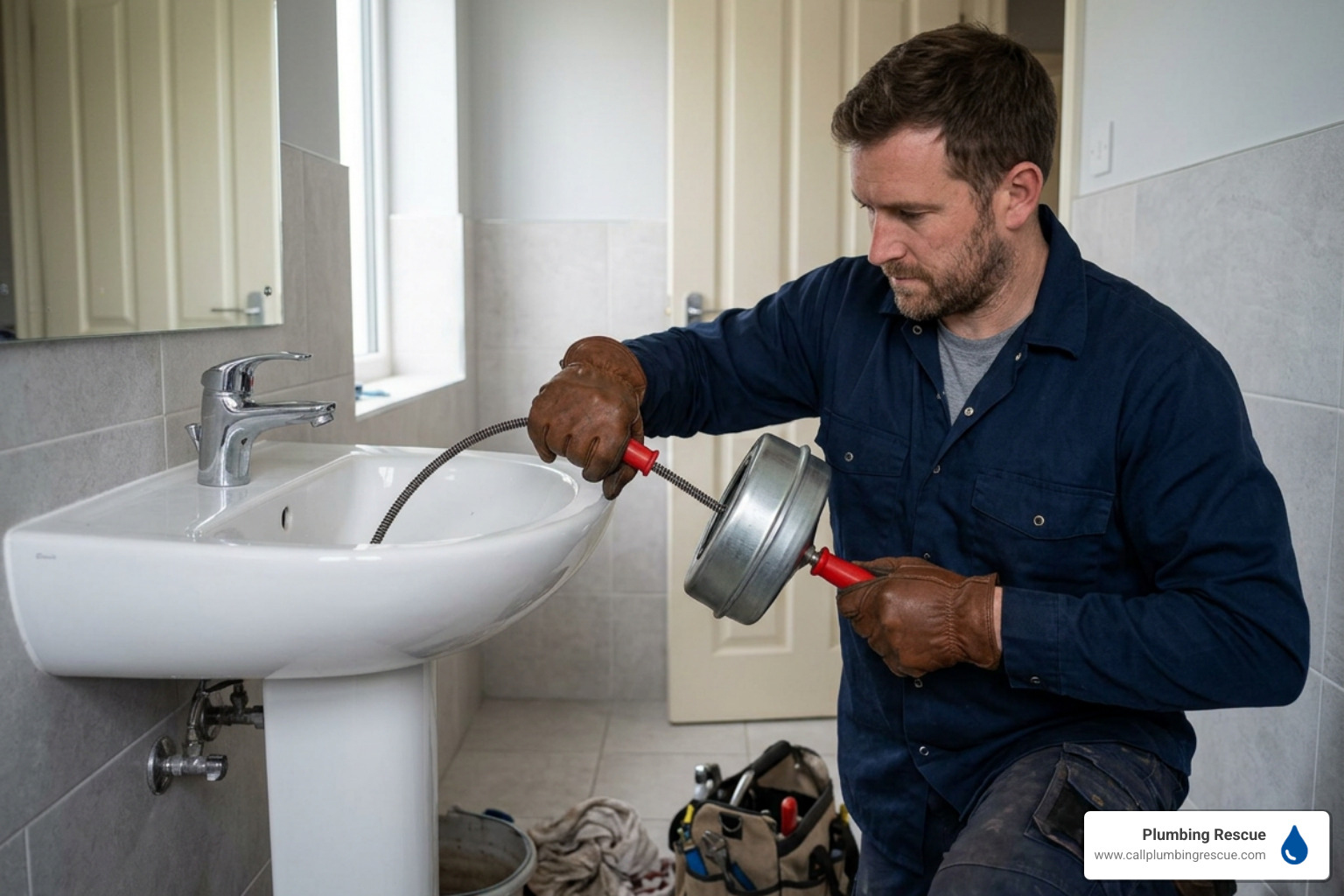
Here are the most recommended tools for DIY bathroom drain cleaning:
- The Zip-It Tool (Plastic Hair Snare): This is a thin, flexible plastic strip with backward-facing barbs along its edges. It costs only a few dollars and is incredibly effective for bathroom sinks and showers. You simply insert the tool as far as it will go into the drain, twist it slightly, and pull it out. The barbs catch onto hair masses and pull them straight out of the pipe.
- Tube Brushes: A long, flexible wire brush (often called a bottle or tube brush) is excellent for scrubbing the internal walls of your drain pipe down to the P-trap. It physically scrapes away biofilm, black sludge, and soap scum that chemical flushes might miss.
- Hand Drum Auger (Drain Snake): For clogs that sit deeper in the waste line (usually between 5 and 15 feet from the fixture), a hand-cranked drum auger is the standard tool. It features a steel cable with a corkscrew tip that you feed manually into the pipe. When you hit resistance, you lock the cable and rotate the drum clockwise to latch onto the clog or break it apart.
- Toilet Auger: Specifically designed for toilets, this tool features a rigid handle and a rubber sleeve at the bend to protect the porcelain bowl from scratches. Never use a standard drain snake in a toilet, as it can easily crack or permanently scar the porcelain. If you are using advanced tools, always consult professional instructions, such as the Tourniquet hybride K-6P : Mode d’emploi for powered augers.
To learn more about selecting the right tool for your specific clog, read our guide on Bathroom Drain Clog Fixes That Actually Work. For step-by-step instructions on handling a snake like a professional, see this How to Snake a Drain: Professional Drain Cleaning Guide.
Mechanical Methods vs. Chemical Products in Bathroom Drain Cleaning
Many homeowners instinctively reach for a bottle of liquid drain cleaner when faced with standing water. However, professional plumbers almost universally advise against using harsh chemical drain cleaners.
Liquid drain cleaners typically rely on strong acids (like sulfuric acid) or caustic bases (like sodium hydroxide, found in products like Drano or Liquid-Plumr). These chemicals work by generating intense heat and chemical reactions to dissolve organic matter. While this may clear a minor clog, it introduces significant risks to your home’s plumbing system:
- Pipe Damage: The intense heat generated by chemical drain cleaners can soften or warp PVC and ABS plastic pipes, leading to joint failures and leaks. In older homes with cast-iron or brass pipes, caustic chemicals accelerate corrosion, leading to thin spots and structural failure.
- Hazardous Failures: If the chemical cleaner fails to clear the clog, you are left with a sink or tub full of highly corrosive, toxic water. This makes mechanical removal incredibly dangerous for anyone who has to disassemble the pipes later, as a splash can cause severe skin burns or permanent eye injuries.
- Environmental Impact: Caustic chemicals eventually wash down into the municipal water system or your septic tank, where they kill beneficial bacteria and pollute local waterways.
In contrast, mechanical methods like snaking, plunging, or using a hair snare physically extract or break up the blockage without introducing heat or corrosive materials to your pipes. Mechanical cleaning is safe for all pipe materials, including PVC, copper, and iron. For a comprehensive breakdown of the various products available and why mechanical or enzymatic options are superior, read The Ultimate Guide to the Best Drain Cleaners on the Market.
How to Safely Clean Your P-Trap and Sink Stopper
If your bathroom sink is draining slowly and a hair snare did not solve the problem, the blockage is likely inside the sink stopper assembly or the P-trap. The P-trap is the U-shaped pipe beneath your sink designed to hold a small amount of water, which acts as a seal to prevent sewer gases from entering your home.
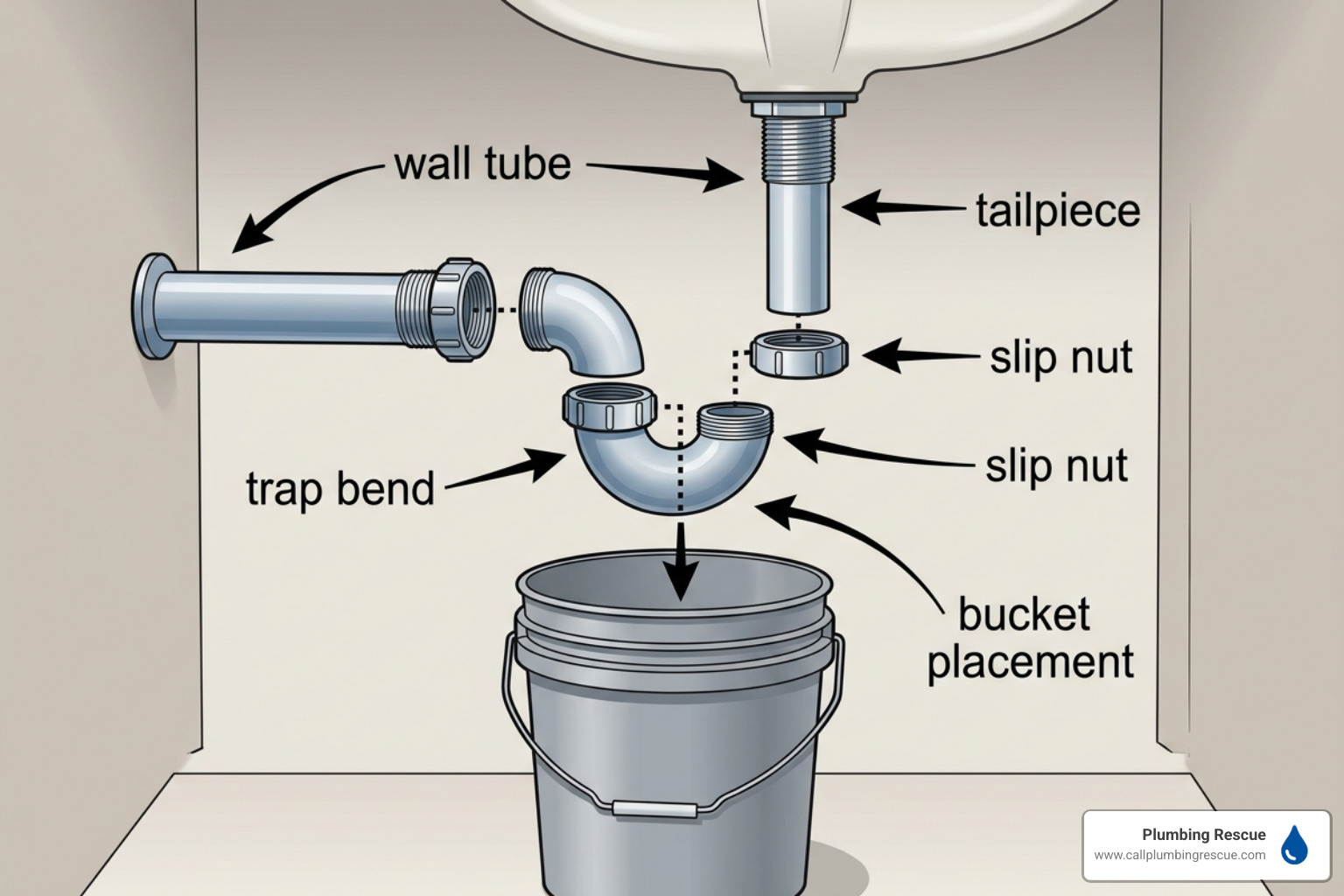
Cleaning these components manually is the most thorough way to restore perfect flow. Here is how to do it safely:
- Prepare the Area: Clear out the cabinet under your sink. Place a medium-sized bucket directly beneath the P-trap to catch the water that is trapped inside the bend. Keep some old rags nearby to clean up spills.
- Remove the Sink Stopper: Many modern pop-up stoppers can be removed by pulling them straight up and twisting them counter-clockwise. However, some are secured by a pivot rod under the sink. To remove this type:
- Locate the horizontal metal rod entering the back of your drain pipe under the sink.
- Squeeze the metal spring clip to slide the rod out of the vertical lift strap.
- Unscrew the retaining nut that holds the pivot rod inside the drain pipe.
- Pull the pivot rod straight back. This releases the bottom of the stopper, allowing you to pull the stopper out from the top of the sink.
- Scrape off the accumulated hair, soap scum, and black biofilm, then scrub the stopper clean with soap and water.
- Loosen the Slip Nuts: The P-trap is held in place by two slip nuts located at either end of the U-shaped pipe. In most modern PVC systems, you can loosen these nuts by turning them counter-clockwise by hand. If they are tight, or if you have metal pipes, use channel lock pliers. Wrap a rag around metal nuts to protect the finish from the pliers’ teeth.
- Remove and Clean the P-Trap: Carefully pull the P-trap straight down off the sink tailpiece and tilt it to empty the trapped water and debris into your bucket. Take the P-trap to another sink or utility tub and thoroughly clean the interior using a tube brush or an old toothbrush.
- Reassemble the Pipes: Slide the P-trap back onto the vertical tailpiece and the horizontal wall pipe. Hand-tighten the slip nuts clockwise. If you used pliers to loosen them, give them an extra quarter-turn with the pliers, but do not overtighten, as this can crack plastic threads.
- Test for Leaks: Reinstall the sink stopper and pivot rod. Run warm water down the drain for several minutes while watching the joints under the sink closely. Wipe the joints with a dry paper towel to check for slow, hard-to-see leaks.
Preventative Maintenance and Non-Chemical Alternatives
When it comes to plumbing, preventative maintenance can reduce the likelihood of major clogs by up to 80%. Rather than waiting for your sink to fill with standing water, establishing a simple routine will keep your drains clear and odor-free.
- Install Hair Catchers: Since hair is the primary cause of bathroom blockages, preventing it from entering the drain in the first place is crucial. Use stainless steel or silicone mesh drain screens over your shower and tub drains. Empty them after every shower.
- Weekly Hot Water Flush: Once a week, run hot tap water down your bathroom drains for 60 seconds. This helps melt away fresh soap scum and flushes down soft toothpaste residue before it has a chance to solidify.
- Monthly Enzymatic Treatments: Instead of using harsh chemical drain openers, use an enzyme-based maintainer like Drano® Max Build-Up Remover. Enzymatic cleaners contain natural bacteria and enzymes that digest organic materials like hair, soap scum, and biofilm without damaging your pipes or harming septic systems.
- Brush Your Drains: Keep a dedicated long-handled tube brush in your cleaning supply closet. Every few weeks, remove your sink stopper and run the brush down the pipe to physically break up biofilm before it can turn into thick black sludge.
By implementing these small habits, you can keep your home’s drainage system running smoothly and minimize the need for emergency services. For more ideas on managing your home’s plumbing health, explore our guide on Smart Solutions for Every Blocked Drainage System.
Frequently Asked Questions About Bathroom Drains
Is boiling water safe for PVC bathroom pipes?
No, you should never pour boiling water (212°F) directly down a bathroom sink or shower drain if your home uses PVC or ABS plastic pipes.
While copper, brass, and cast-iron pipes can handle boiling water easily, standard residential plastic pipes are rated for maximum temperatures of around 140°F (for PVC) to 180°F (for CPVC). Boiling water can soften the plastic, warp the pipe walls, and weaken the glued joints, leading to hidden leaks behind your walls or beneath your floors. Instead, use hot tap water (typically around 120°F to 130°F), which is hot enough to melt soap scum but completely safe for plastic plumbing.
What are the risks of using chemical drain cleaners like Drano?
Chemical drain cleaners rely on high-temperature chemical reactions to dissolve clogs. The primary risks include:
- Pipe Damage: The intense heat generated can melt or warp PVC pipes and crack porcelain toilet bowls. The caustic chemicals can also corrode metal pipes, especially older iron or brass lines.
- Severe Burns: If the cleaner splashes, it can cause severe chemical burns to your skin and permanent damage to your eyes.
- Toxic Fumes: Mixing different chemical cleaners, or mixing them with household bleach or ammonia, can produce toxic chloramine or chlorine gas, which is highly hazardous to inhale.
- Plumber Safety: If you eventually have to call a plumber to clear the line, they will have to work with pipes filled with acid, creating a significant safety hazard.
What should I do if my bathroom drain is severely clogged?
If your drain is completely backed up and DIY methods like baking soda, hot water, or a plastic hair snare fail to restore flow, you should:
- Stop running water: Avoid adding more water to the basin, as this increases pressure and can cause dirty water to back up into other fixtures.
- Try a cup plunger: Ensure there is enough water to submerge the rubber cup of the plunger. Block the sink’s overflow drain with a wet rag to create a tight seal, then plunge firmly up and down.
- Clean the P-trap: If the clog is localized to a single sink, disassemble and clean the P-trap as outlined above.
- Call a professional: If multiple drains are backing up simultaneously, or if water bubbles up in your shower when you flush the toilet, you are likely dealing with a main sewer line blockage. This requires professional equipment like hydro jetting or heavy-duty motorized snakes.
Conclusion
Keeping your bathroom drains clean and functional does not require harsh chemicals or constant emergency plumbing calls. By understanding what causes clogs, using safe mechanical tools, and performing natural monthly maintenance with baking soda and vinegar, you can protect your pipes and keep your home smelling fresh.
However, plumbing emergencies do happen. If you are dealing with a stubborn, deep blockage, or if multiple fixtures in your home are backing up, our team at Plumbing Rescue is here to help. We provide 24/7 emergency plumbing services across the United States — including Austin, TX, Denver, CO, Indianapolis, IN, and Phoenix, AZ. Our rapid call routing connects you to trusted local technicians who can resolve your leak, burst pipe, or severe clog day or night.
If you need professional assistance, don’t wait for a slow drain to become a major flood.
- Read more about our emergency options: 24 Hr Drain Service for When Life Gets Clogged
- Contact us today to get help from a local expert near you: Schedule Professional Drain Cleaning Services
Dealing With This Yourself? Talk to a Licensed Plumber.
Skip the guesswork — get a straight answer from a local pro. Available 24/7, no forms, no waiting.
Call Now: (888) 686-0698