

A Clogged Toilet? Here’s What You Need to Know First
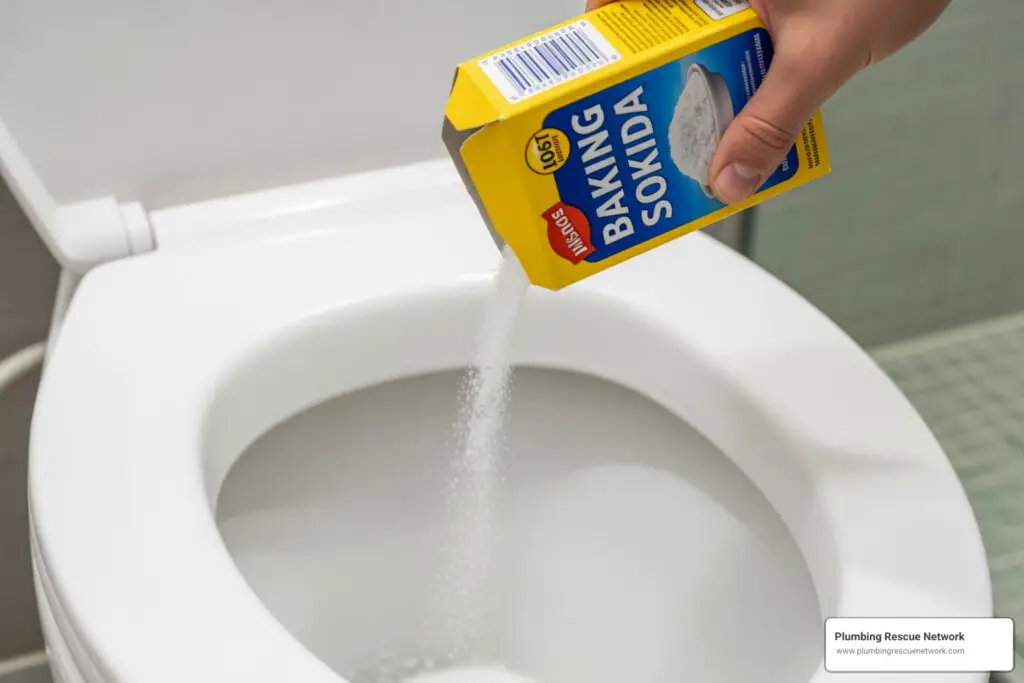
Baking soda for unclogging toilets is a proven DIY fix that works for minor to moderate clogs. Here’s how to do it fast:
- Pour 1 cup of baking soda into the toilet bowl
- Add 1 cup of white vinegar slowly
- Wait 30 minutes for the fizzing reaction to break down the clog
- Flush with hot (not boiling) water to clear the blockage
Works best on: toilet paper buildup, organic waste, and minor blockages. Not effective for clogs caused by foreign objects.
A clogged toilet is stressful — especially when it’s your only one and the clock is ticking. The good news? You may already have everything you need to fix it sitting in your kitchen cabinet.
Baking soda and white vinegar are cheap, safe, and surprisingly effective for many common toilet clogs. Together, they create a fizzing chemical reaction that breaks down blockages and helps clear your pipes — without reaching for harsh chemical drain cleaners or calling a plumber right away.
I’m Ben Smith, a digital marketing and home services consultant with over 25 years of experience helping homeowners find practical, reliable solutions — including research-backed methods like baking soda for unclogging toilets. In the sections below, I’ll walk you through exactly how this method works, when to use it, and when it’s time to call in a pro.

Does Baking Soda for Unclogging Toilets Actually Work?
The short answer is yes, but with some important caveats. Using baking soda for unclogging toilets is a time-honored tradition among DIY enthusiasts and professional cleaners alike. While it won’t magically dissolve a plastic toy or a thick bundle of “flushable” wipes, it is remarkably effective at tackling the most common culprit: excessive toilet paper and organic waste.

When we look at How to Unclog a Drain With Baking Soda, the principles remain the same whether you’re working on a kitchen sink or a bathroom throne. The combination creates a dynamic environment inside the pipes that traditional plunging sometimes can’t achieve.
The Science Behind Baking Soda for Unclogging Toilets
The magic happens thanks to a basic acid-base reaction. Baking soda (sodium bicarbonate) is a base, while white vinegar (acetic acid) is an acid. When they meet, they immediately react to form carbonic acid, which is highly unstable. This almost instantly decomposes into water and carbon dioxide gas.
This reaction creates the famous “volcano effect.” The rapid expansion of carbon dioxide gas creates physical pressure within the confines of the toilet trap. This pressure, combined with the fizzing action, creates a mechanical “scrubbing” effect that can break apart the edges of a clog, allowing water to finally push through.
When to Use Baking Soda for Unclogging Toilets
We recommend reaching for the pantry staples in the following scenarios:
- Minor Clogs: When the water drains slowly but doesn’t overflow.
- Toilet Paper Overload: If you know the kids used half a roll in one sitting.
- Organic Waste: For clogs composed of natural materials that can be softened.
- Maintenance: Using this method every six months can help keep your pipes clear of mineral buildup.
Step-by-Step Guide: The Baking Soda and Vinegar Process
Before you begin, ensure your water level is manageable. If the bowl is filled to the absolute brim, you must bail some water out first, or the “volcano” will erupt onto your bathroom floor.
| Clog Severity | Baking Soda Amount | Vinegar Amount | Wait Time |
|---|---|---|---|
| Minor/Slow Drain | 1/2 Cup | 1/2 Cup | 20 Minutes |
| Standard Clog | 1 Cup | 1 Cup | 30 Minutes |
| Severe/Stubborn | 1 Cup (in increments) | 2 Cups (slowly) | 2 Hours or Overnight |
1. Adjust the Water Level: The bowl should be about half-full. Too much water dilutes the mixture; too little means the reaction won’t reach the clog in the trap. 2. Add the Baking Soda: Sprinkle 1 cup of baking soda directly into the water, aiming for the drain hole. 3. Pour the Vinegar: Slowly pour 1 cup of white vinegar. Do this in stages if the fizzing gets too high. 4. The Waiting Game: Let the mixture sit for at least 30 minutes. For very stubborn clogs, we’ve seen success by letting it sit for two hours or even overnight. 5. The Hot Water Flush: This is the secret ingredient that many people skip.
The Critical Role of Hot Water
Hot water acts as a catalyst. It causes thermal expansion, which can help shift the clog, and it works to break down any grease or fats that might be binding the toilet paper together. However, never use boiling water. Extremely high temperatures can crack the porcelain of your toilet bowl, turning a $5 fix into a $500 replacement. Aim for the temperature of a hot cup of tea.
How Much to Use for Different Clog Severities
For severe blockages, don’t dump everything in at once. Use 1/4 cup increments of each. This controlled approach prevents a messy overflow and ensures that the “fizz” stays concentrated near the blockage rather than dissipating in the main bowl.
Safety Precautions and Common Mistakes to Avoid
Even though these are kitchen items, they require respect. Always wear rubber gloves and perhaps some eye protection. You are dealing with a splash-prone area, and the reaction can sometimes be vigorous.
Can You Use Baking Soda After Chemical Drain Cleaners?
WARNING: Never use baking soda and vinegar if you have recently poured a commercial drain cleaner (like Drano or Liquid-Plumr) into the toilet. These products often contain sodium hydroxide or sulfuric acid. Mixing vinegar (an acid) with these chemicals can create toxic chlorine gas or cause a violent splash-back reaction that can burn your skin and eyes. If you’ve used a chemical cleaner, wait at least 24 hours and flush the line thoroughly with water before trying the baking soda method.
Why Water Level Matters Before You Start
If the toilet is overflowing, adding baking soda and vinegar will only make the mess worse. The reaction adds volume. If the bowl is full, use a small bucket or disposable cup to remove water until the level is at the halfway mark. This provides a “buffer zone” for the foam to expand safely.
What to Do When the Baking Soda Method Fails
Sometimes, DIY isn’t enough. If you’ve tried the process twice and the water still won’t budge, it’s time to change tactics.
- The Accordion Plunger: Unlike standard bell-shaped plungers, accordion plungers are designed specifically for toilets. They create a much stronger vacuum and can often dislodge what a chemical reaction cannot.
- The Toilet Auger (Snake): If you suspect a physical obstruction, a manual auger can reach deep into the “S” trap of the toilet. Ensure you use one with a rubber sleeve to avoid scratching the porcelain.
- Professional Help: If you hear gurgling in your shower or sink when you flush, the problem isn’t just your toilet—it’s a main line clog.
Frequently Asked Questions about Baking Soda and Toilets
Is baking soda and vinegar safe for PVC and septic systems?
Yes! One of the biggest advantages of this method is that it is non-corrosive. Unlike harsh acids found in commercial cleaners, baking soda and vinegar won’t eat away at your PVC pipes or the wax ring under your toilet. Furthermore, it is completely septic-safe and won’t kill the beneficial bacteria needed for your septic tank to function.
How long should I let the mixture sit for the best results?
While 30 minutes is the standard, time is your friend. If you have a second bathroom, let the mixture sit overnight. This gives the acetic acid more time to permeate and soften the organic matter.
Can this method fix clogs caused by foreign objects like toys?
Unfortunately, no. Baking soda and vinegar cannot dissolve plastic, metal, or wood. If a toddler flushed a toy car or a toothbrush fell in, you will almost certainly need a mechanical solution like an auger or a professional to pull the toilet.
Conclusion
Mastering the use of baking soda for unclogging toilets is a great way to save money and protect your plumbing from harsh chemicals. By following the right ratios and giving the reaction time to work, you can handle most household clogs with ease.
However, if you’re in Council Bluffs, IA, and find yourself facing a midnight plumbing disaster that won’t budge, don’t panic. At Plumbing Rescue Network, we specialize in rapid call routing to local technicians who can handle everything from stubborn clogs to burst pipes. Whether it’s a holiday, a weekend, or 3 AM, we are here to help.
Need a pro right now? Check out our Emergency Plumbing Services to get a local expert on the way to your home in Council Bluffs today!
Dealing With This Yourself? Talk to a Licensed Plumber.
Skip the guesswork — get a straight answer from a local pro. Available 24/7, no forms, no waiting.
Call Now: (888) 686-0698