
What to Do When You Need to Emergency Shut Off Your Water Heater
Knowing how to emergency shut off your water heater could be the difference between a quick fix and thousands of dollars in water damage.
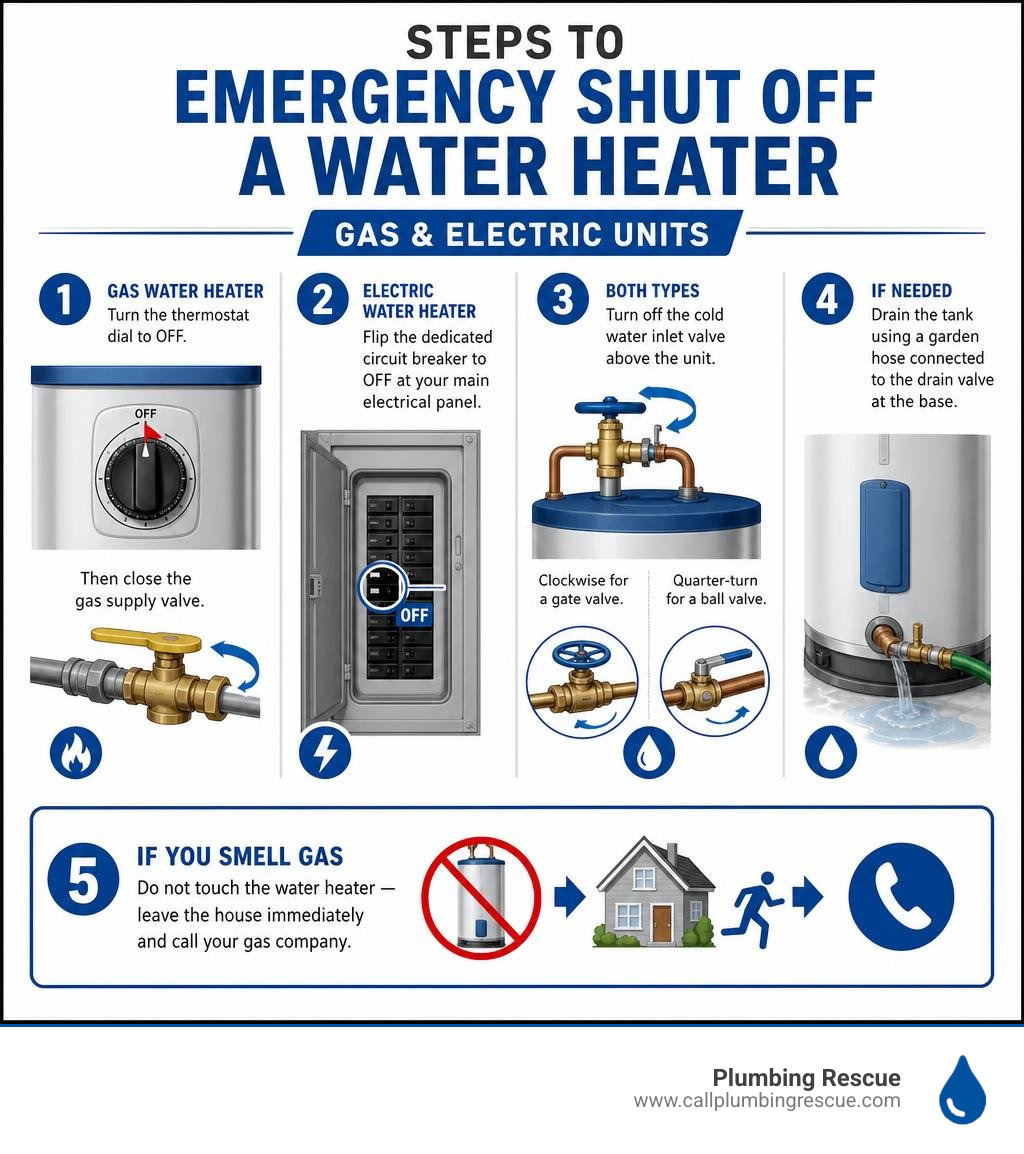
Here’s the short answer — how to shut off your water heater in an emergency:
- Gas water heater: Turn the thermostat dial to OFF, then close the gas supply valve.
- Electric water heater: Flip the dedicated circuit breaker to OFF at your main electrical panel.
- Both types: Turn off the cold water inlet valve above the unit (clockwise for a gate valve, quarter-turn for a ball valve).
- If needed: Drain the tank using a garden hose connected to the drain valve at the base.
- If you smell gas: Do not touch the water heater — leave the house immediately and call your gas company.
Water heaters are quietly working around the clock in the background — until something goes wrong. A sudden leak, a strange smell, or pooling water on the floor can turn a normal evening into a stressful emergency fast. The good news? Shutting down your water heater safely is a straightforward process once you know the steps.
Water heaters are typically installed in utility closets, garages, or basements — places most homeowners rarely visit. That’s exactly why so many people freeze up when something goes wrong. A few minutes of preparation now can save you from a very expensive, very stressful situation later.
I’m Ben Smith, a digital marketing strategist with over 25 years of experience helping home service businesses like Plumbing Rescue connect homeowners with the right emergency plumbing information — including critical guides on how to emergency shut off a water heater safely. In this guide, I’ll walk you through every step, whether you have a gas, electric, or tankless unit.
Learn more about emergency shut off water heater:
Why You Must Know How to Shut Down Your Water Heater
Imagine waking up at 2:00 AM to the sound of rushing water, only to find your utility room or basement slowly transforming into an indoor swimming pool. When a water heater fails, it doesn’t just stop producing hot water; it can release dozens of gallons of pressurized, scalding water directly into your home.
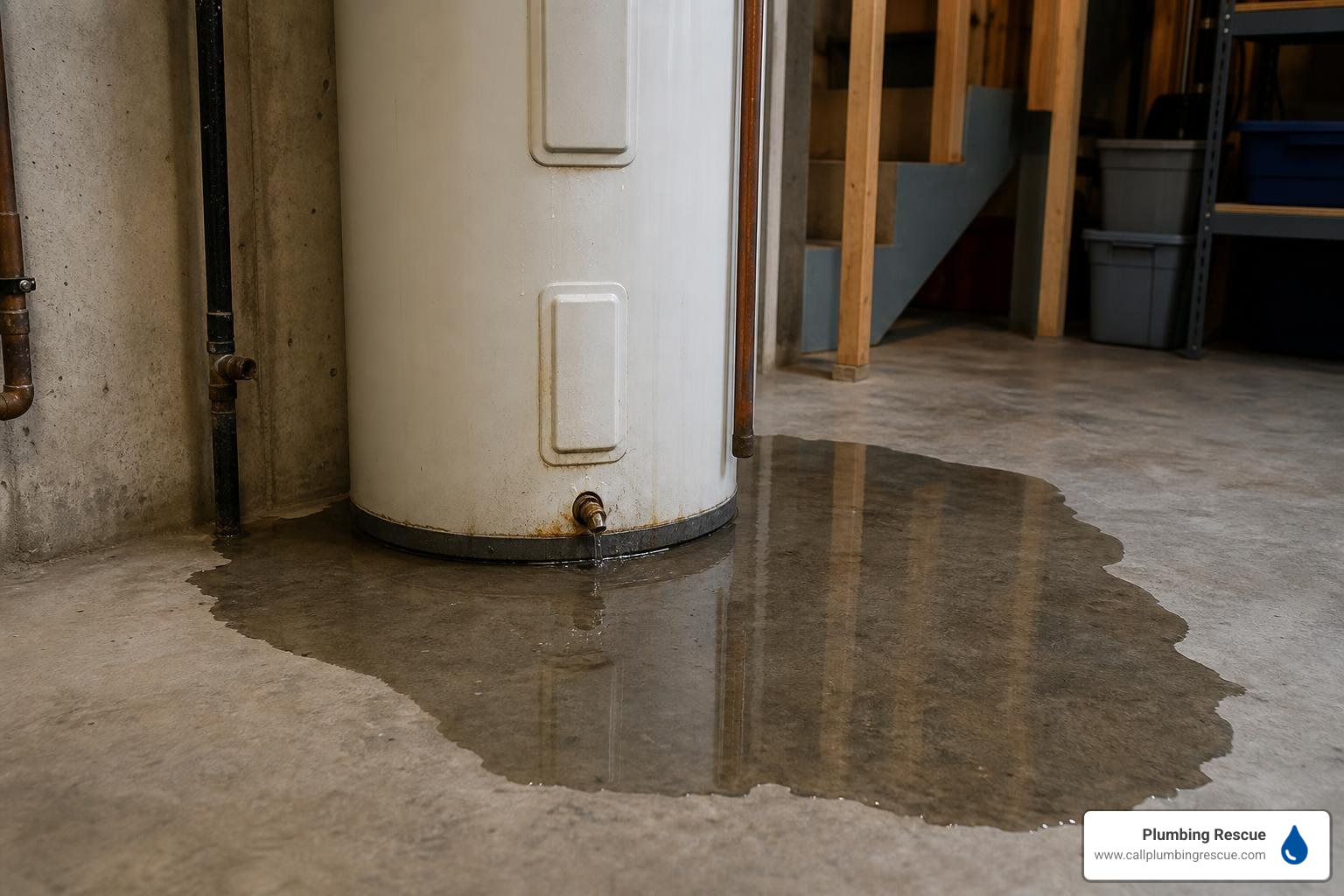
Knowing how to execute an emergency shut off water heater procedure is one of the most critical home management skills you can possess. The primary reason is simple: damage control. A standard water heater tank holds anywhere from 30 to 80 gallons of water under constant pressure. If the tank ruptures, that water will keep flowing indefinitely until you manually shut off the supply. By acting fast, you can prevent structural damage, ruined flooring, and mold growth, which can start in as little as 24 to 48 hours.
Beyond property damage, there is a major safety aspect to consider. Water heaters operate at high temperatures. In fact, Water temperatures above 125°F (52°C) can cause severe burns or death from scalding. If a pressurized tank is leaking hot water, trying to inspect or clean it up without shutting down the system exposes you to severe burn risks. Additionally, understanding these systems helps you identify and troubleshoot Common Water Heater Problems and How to Solve Them before they escalate into catastrophic failures.
When to Perform an Emergency Shut Off Water Heater Procedure
How do you know when it’s time to stop trying to troubleshoot and instead execute a full emergency shutdown? There are several clear indicators:
- Active Leaking: If you see water actively pooling around the base of the tank, dripping from the bottom, or spraying from the plumbing connections.
- Physical Damage: If the tank is visibly dented, rusted through, or has buckled due to pressure spikes.
- Strange Noises: Loud popping, knocking, or sizzling sounds coming from the unit, which can indicate severe sediment buildup or an overheating element that is boiling the water inside the tank.
- No Hot Water Coupled with Leaking: If your hot water suddenly stops and you find moisture near the unit.
Learning how to shut off your water heater in an emergency is the single best way to stabilize your home while you wait for a professional technician to arrive.
What to Do If You Smell Gas Near Your Water Heater
If you have a gas water heater and you smell natural gas (which has a distinct “rotten egg” odor due to added mercaptan) near the unit, do not attempt to shut off the water heater yourself.
Natural gas is highly explosive. Flipping a light switch, using your phone, or turning a metal valve that might spark can ignite the gas in the air.
- Evacuate immediately: Get all people and pets out of the house.
- Do not use electronics: Do not turn lights on or off, do not unplug appliances, and do not use your phone inside the building.
- Call for help from a safe distance: Once you are safely away from the property, call your local gas utility company or 911.
- Contact an emergency plumber: After the gas company has shut off the gas supply and declared the area safe, you can reach out for professional help, such as scheduling an emergency plumbing repair to inspect and repair the gas line and water heater.
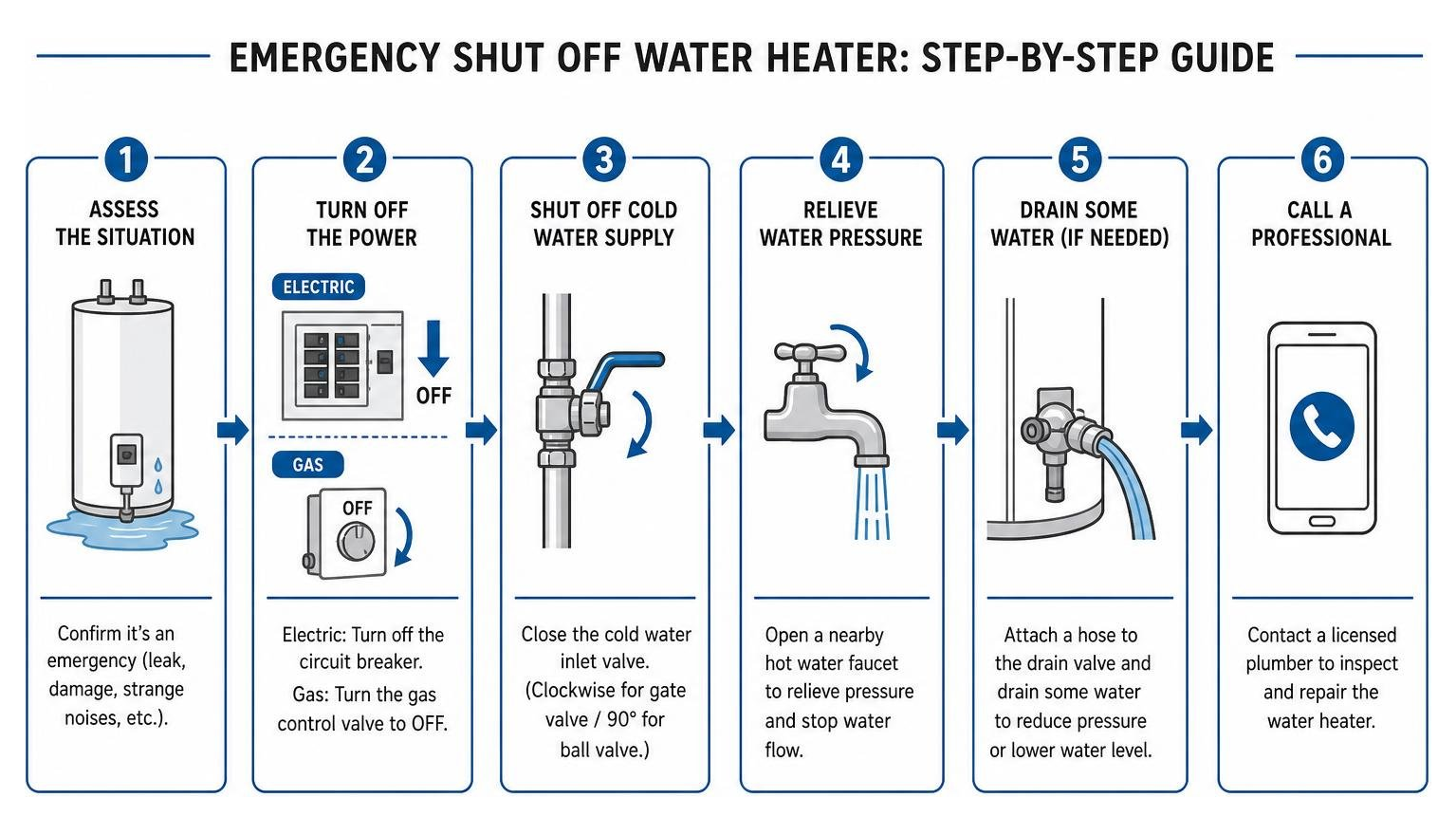
Step-by-Step Emergency Shut Off Water Heater Guide
When an emergency strikes, having a clear, structured plan prevents panic. Below is our comprehensive, step-by-step guide to shutting down your water heater safely.
Before we dive into the steps, it helps to understand what kind of valves you are dealing with. Water heaters typically use one of two types of shut-off valves on the cold water inlet line:
| Valve Type | Visual Appearance | How to Turn Off |
|---|---|---|
| Gate Valve | Looks like a round wheel or faucet handle. | Turn it clockwise (to the right) repeatedly until it stops. |
| Ball Valve | Looks like a straight lever handle. | Turn the lever a quarter-turn so it is perpendicular (at a 90-degree angle) to the pipe. |
Knowing this distinction is incredibly helpful during a high-stress emergency. For more details on maintaining these components, you can refer to The Easy Fix Hot Water Heater Manual.
Safety Precautions Before an Emergency Shut Off Water Heater Process
Before you touch any part of your water heater, you must prioritize your physical safety.
- Avoid Standing Water: If there is standing water around your water heater, do not walk into it if the electrical power is still connected. Standing water near an active electric water heater poses a major risk of electrical shock. If necessary, locate your main home electrical panel and shut off the main breaker before stepping into the water.
- Prevent Dry-Firing: Never shut off the water supply to an electric water heater before turning off the power. If the heating elements turn on while the tank is empty or partially empty, they will quickly burn out (a process known as dry-firing), which permanently destroys the elements and can damage the tank.
- Beware of Scalding Water: Always assume the water inside the tank is hot enough to cause instant burns. Wear heavy-duty gloves and safety goggles if you plan to drain any water.
Always consult your manufacturer’s safety instructions, such as those found in general Water Heaters documentation, to understand your unit’s specific built-in safety features.
Step 1: Shut Off the Power Source (Gas or Electric)
The very first step is to cut off the energy supply to the water heater.
- For Electric Water Heaters: Locate your home’s main breaker box. Find the double-pole circuit breaker labeled “Water Heater” (usually a 30-amp or 40-amp breaker) and switch it completely to the OFF position. If you are unsure how to handle electric heating components safely, read our guide on How to Fix a Broken Electric Heater.
- For Gas Water Heaters: Locate the gas control valve/thermostat dial near the bottom of the tank. Turn the dial from “ON” to the “OFF” or “PILOT” position. Next, locate the manual gas shut-off valve on the gas supply line leading to the heater (usually a small lever) and turn it perpendicular to the pipe to stop the flow of gas.
Step 2: Turn Off the Water Supply
Once the power is safely disconnected, you need to stop additional water from entering the tank.
Look at the top of your water heater. You will see two pipes: one is the cold water inlet (often marked with a blue ring or cap) and the other is the hot water outlet (marked with a red ring). Locate the valve on the cold water inlet pipe.
- If it is a gate valve (round wheel handle), turn it clockwise until it stops turning. Note: Older gate valves can become rusted or stuck. If it resists, do not force it too hard, as it could break. If you cannot turn it, you may need to shut off your home’s main water valve instead.
- If it is a ball valve (lever handle), turn the lever 90 degrees so it is perpendicular to the pipe.
For visual instructions on operating these valves, check out standard emergency shutdown instructions.
Step 3: Drain the Water Heater Tank (Optional)
If your water heater tank is actively leaking from the bottom, shutting off the water supply stops new water from entering, but the existing 30 to 80 gallons inside the tank will continue to leak out onto your floor. To prevent this, you may want to drain the tank.
- Attach a Hose: Connect a standard garden hose to the brass or plastic drain valve located at the very bottom of the water heater tank.
- Route the Hose: Run the other end of the hose to a safe drainage area, such as a floor drain, a driveway, or outside. Tip: Avoid draining hot water directly onto green grass or delicate plants, as the high temperature can kill them.
- Open a Hot Water Faucet: Go to the nearest sink and turn on the hot water tap. This allows air to enter the plumbing system, breaking the vacuum seal inside the tank and allowing the water to drain smoothly.
- Open the Drain Valve: Carefully turn the drain valve handle counter-clockwise (or use a flat-head screwdriver if it is a slot-style valve) to start the water flow.
- Open the T&P Valve (If needed): If the water is draining slowly, you can gently lift the lever on the Temperature and Pressure (T&P) relief valve near the top of the tank to let more air in.
Draining the tank is highly effective at stopping active flooding. If you need help with repairs after draining, read about how to Fix Your Tank for Less with Affordable Water Heater Repair.
How to Shut Off Tankless Water Heaters in an Emergency
Tankless water heaters, also known as on-demand systems, do not store water in a large tank. Instead, they heat water instantly as it flows through a heat exchanger. However, they can still experience leaks, electrical issues, or gas line problems that require an emergency shutdown.
Shutting Off an Electric Tankless Water Heater
Electric tankless water heaters draw a massive amount of electrical current when operating.
- Turn off the power: Because these units use multiple heating elements, they are often connected to two or three double-pole circuit breakers in your main electrical panel. Switch all breakers labeled for the tankless water heater to the OFF position.
- Turn off the water supply: Locate the cold water inlet valve directly beneath the unit and turn it to the closed position.
If you are dealing with a malfunctioning tankless unit, check out The Ultimate Bosch Tankless Water Heater Maintenance Guide for troubleshooting advice, or learn How to Repair Your Electric Tankless Heater safely.
Shutting Off a Gas Tankless Water Heater
Gas tankless units use a gas burner and an electronic control board to manage heating.
- Turn off the power: Unplug the unit’s electrical power cord from the wall outlet, or shut off the dedicated circuit breaker.
- Shut off the gas supply: Locate the gas shut-off valve on the yellow or black gas line connected to the bottom of the unit and turn the lever perpendicular to the pipe.
- Shut off the water supply: Close the main cold water valve leading into the unit.
For specific instructions on gas-powered tankless models, you can read our guide on Fixing Your EcoSmart Tankless Water Heater.
Accessing Emergency Drinking Water from Your Water Heater Tank
In the event of a natural disaster, major storm, or prolonged municipal water outage, finding clean drinking water becomes your number one priority. Many homeowners don’t realize that their traditional tank water heater is actually a built-in emergency reservoir holding 30 to 80 gallons of clean, treated water.

This water is perfectly safe for drinking, cooking, and hygiene, provided you harvest it correctly. You cannot access emergency water from a tankless water heater, as they do not store water. If you own a hybrid heat pump system, you can learn more about its tank features in the Hybrid Electric manual.
Steps to Safely Harvest Water from the Tank
To access this water without contaminating it or damaging your system, follow these steps:
- Shut off the Power: Turn off the electricity at the breaker or turn your gas control valve to “PILOT” or “OFF”. This is critical. If the tank empties while the power is still on, the heating elements will destroy themselves.
- Isolate your Home’s Plumbing: Locate and shut off your home’s main water shut-off valve. This prevents contaminated water from the municipal grid from entering your home’s pipes during a disaster.
- Let the Water Cool: If the heater was running recently, the water inside will be scalding hot. Let it sit and cool down before attempting to harvest it.
- Open the Highest Faucet: Turn on a hot water faucet on the highest floor of your home (or the highest sink/shower head in a single-story home). This lets air into the pipes, creating a gravity-fed flow.
- Drain and Collect: Place a clean, food-grade container under the drain valve at the bottom of the water heater. Open the drain valve slowly. The first gallon or two may contain sediment or rust particles from the bottom of the tank — discard this water or use it for flushing toilets, then collect the clear water that follows.
For more details on operating your specific tank safely during a disaster, refer to this Water Heaters guide.
Common Mistakes to Avoid When Draining for Water
- Forgetting to Turn Off the Power: Again, operating or draining a water heater without water inside will destroy the heating elements in an electric unit or damage the tank in a gas unit.
- Using Contaminated Collection Containers: Only use clean, sanitized, food-grade buckets or bottles to store your drinking water.
- Ignoring Hydrogen Gas Buildup: If a hot water system has been idle or shut down for a long period (typically two weeks or more), highly flammable hydrogen gas can build up inside the tank. Before using any electrical appliances or open flames near the faucets, open a hot water tap for several minutes to safely vent any trapped gas.
Always review the safety warnings in your manufacturer’s manual, such as those in these Water Heaters documents, to avoid dangerous mistakes.
Frequently Asked Questions About Water Heater Emergencies
How long does it take to drain a water heater completely?
Typically, it takes between 10 to 30 minutes to drain a standard 40-to-50-gallon water heater tank completely. The exact time depends on the size of your tank, the amount of sediment settled at the bottom (which can clog the drain valve), and whether you have opened a hot water faucet upstairs to break the vacuum seal.
What is the difference between a gate valve and a ball valve?
A gate valve features a round, wheel-style handle (like a garden spigot) and requires multiple clockwise turns to close. A ball valve features a straight lever handle and only requires a quick quarter-turn (90 degrees) to fully open or close. Ball valves are much more reliable and less prone to sticking over time.
Can I get emergency drinking water from a tankless water heater?
No. Tankless water heaters operate on an on-demand system and do not have a storage tank. They only hold a tiny fraction of a gallon of water inside their internal heat exchanger at any given time, meaning they cannot be used as an emergency water reservoir.
Conclusion
Dealing with a water heater emergency can be incredibly stressful, but knowing how to perform an emergency shut off water heater procedure gives you the power to protect your home and your family. By cutting the power, shutting off the water supply, and draining the tank if necessary, you can stop active flooding and minimize damage before professional help arrives.
When a plumbing disaster strikes in Austin, TX, Denver, CO, Indianapolis, IN, or Phoenix, AZ, you don’t have to handle it alone. At Plumbing Rescue, we provide 24/7 emergency plumbing services, routing your call rapidly to local, highly skilled technicians who can be at your door day or night. Whether you need an urgent repair, a complete Water Heater Replacement, or help stabilizing a leak, we’ve got you covered.
Don’t wait for a small drip to turn into a major flood. Contact Plumbing Rescue for Emergency Services today, and let our expert team restore your peace of mind!
Dealing With This Yourself? Talk to a Licensed Plumber.
Skip the guesswork — get a straight answer from a local pro. Available 24/7, no forms, no waiting.
Call Now: (888) 686-0698