
When the Hot Water Quits: What to Do Right Now
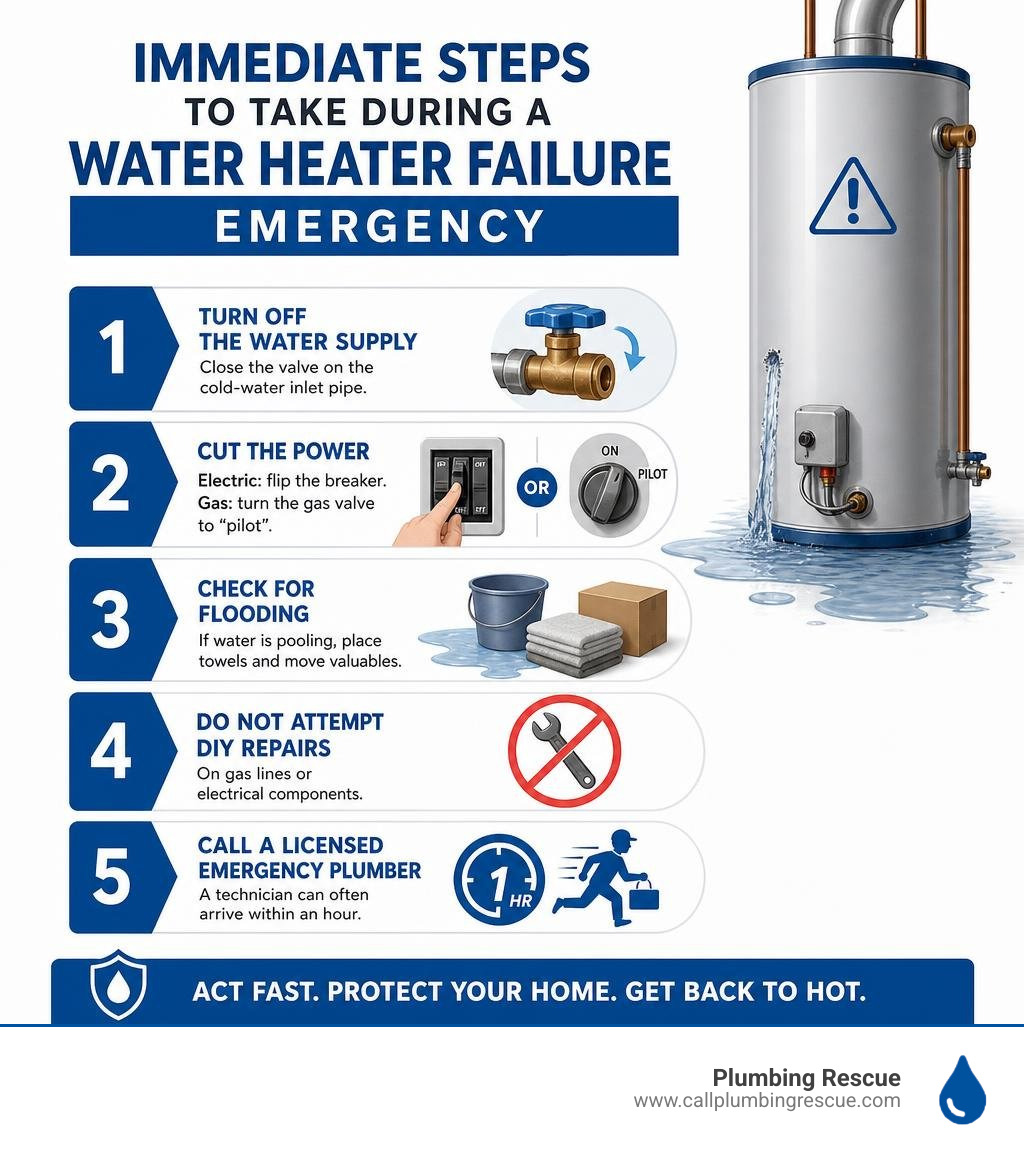
If you need 24 hour water heater repair, here’s what to do immediately:
- Turn off the water supply to the heater (the valve on the cold-water inlet pipe)
- Cut the power — flip the breaker for electric units, or turn the gas valve to “pilot” for gas units
- Check for flooding — if water is pooling, place towels and move valuables
- Do not attempt DIY repairs on gas lines or electrical components
- Call a licensed emergency plumber — a technician can often arrive within an hour
Hot water disappearing without warning is one of the most disruptive things that can happen at home. You step into the shower, the water turns ice cold, and suddenly your whole morning — maybe your whole day — is thrown off.
It’s not just uncomfortable. A leaking or failing water heater can waste more than 3,600 gallons of water per year from even a small drip, and left unchecked, it can cause serious water damage to your home.
The good news? You don’t have to wait until morning. Emergency water heater repair is available around the clock — and getting help fast is the single most important thing you can do right now.
My name is Ben Smith, and I’m a digital marketing strategist who has spent over 25 years helping home service businesses — including emergency plumbing and 24 hour water heater repair providers — connect homeowners with fast, reliable help. In this guide, I’ll walk you through everything you need to know to get your hot water back on as quickly as possible.
Relevant articles related to 24 hour water heater repair:
Critical Signs You Need Emergency 24 Hour Water Heater Repair
When your water heater acts up, it rarely does so in complete silence. Usually, it drops a few hints before completely giving up. Recognizing these signs early can save you from a flooded basement or a freezing cold shower. If you notice any of these red flags, it is time to call for professional 24 hour water heater repair before a minor glitch turns into a major disaster.
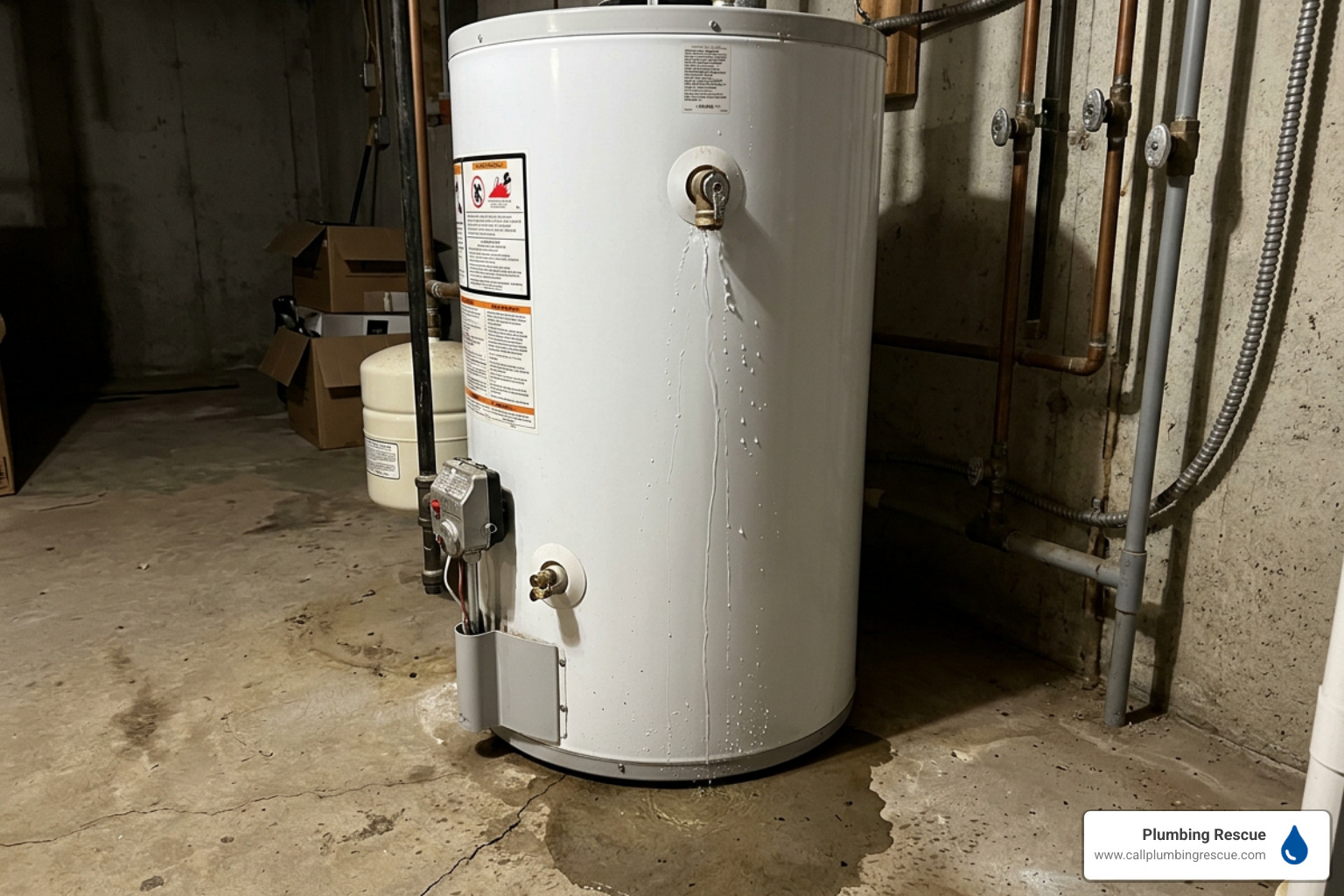
- Active Leaking and Water Pooling: If you see water pooling around the base of your unit, you have an emergency. While a tiny drip might seem minor, even a small hot water heater leak can waste over 10 gallons of water a day. This adds up to more than 3,600 gallons a year! More importantly, a pooling tank often indicates a fractured inner lining, which can lead to a catastrophic burst.
- Rusty or Discolored Water: Turning on your hot water tap only to see a rusty, brown stream is a clear sign of trouble. This usually indicates that the sacrificial anode rod—which is designed to attract corrosive elements and protect your tank—has completely degraded. Once the anode rod is gone, the water starts attacking the steel tank walls.
- Rotten Egg or Sulfur Odor: If your hot water smells like sulfur or rotten eggs, you are likely dealing with sulfur bacteria inside the tank. This bacteria reacts with the magnesium or aluminum anode rod, producing hydrogen sulfide gas. It is a highly unpleasant issue that requires professional flushing and treatment.
- Loud Rumbling, Popping, or Whining Noises: Have you started hearing strange knocking or rumbling sounds coming from your utility closet? This is caused by sediment buildup. Over time, hard water minerals settle at the bottom of the tank, forming a thick layer of scale. When the heating element heats the water, steam bubbles struggle to escape through this crust, creating loud popping and rumbling noises. This sediment layer also acts as an insulator, forcing your heater to work twice as hard and dramatically reducing its efficiency.
To dive deeper into identifying these symptoms, check out our guide on common water heater problems and how to solve them or reference the easy fix hot water heater manual for simple diagnostics.
What Causes a Water Heater to Stop Working Suddenly?
A sudden loss of hot water can feel like a magic trick where the punchline is a freezing cold shower. When a water heater stops working instantly, it is usually due to one of these common mechanical or electrical failures:
- Tripped Circuit Breaker: For electric water heaters, a sudden shutdown is frequently caused by a tripped breaker. High electrical demand or a failing heating element can cause the system to draw too much power, shutting down the circuit to prevent an electrical fire.
- Faulty Heating Elements: Electric models rely on upper and lower heating elements. If one or both burn out, your water will either be lukewarm or entirely cold.
- Pilot Light Failure: Gas water heaters rely on a small, continuously burning flame called a pilot light. If a draft blows it out, or if the gas supply is interrupted, the burner will not ignite, and your water will remain cold.
- Broken Thermocouple: The thermocouple is a vital safety device on gas water heaters. It senses whether the pilot light is lit. If it fails, it will shut off the gas flow entirely to prevent dangerous gas leaks. If you are dealing with thermocouple issues, you can learn more about how they work by reading about replacing your ao smith thermocouple a step by step guide or fixing your bosch aquastar 125b thermocouple.
What to Do While Waiting for a 24 Hour Water Heater Repair Technician
While you wait for our emergency technician to arrive at your home, you can take several proactive steps to protect your property and ensure a safe, speedy repair.
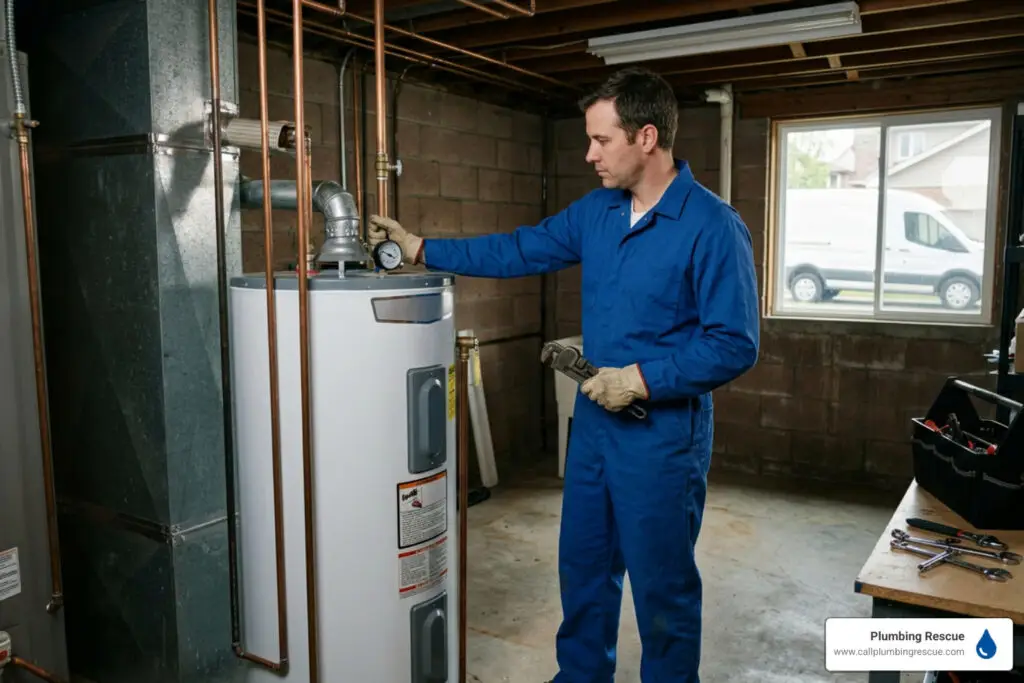
First, locate the cold water inlet valve on top of your water heater and turn it clockwise to shut off the water supply. This will stop the flow of water into a leaking or ruptured tank, minimizing potential water damage.
Next, turn off the power source. For an electric unit, find your home’s main electrical panel and switch off the dedicated circuit breaker for the water heater. For a gas unit, locate the thermostat dial on the front of the heater and turn it to the “OFF” or “PILOT” position. If you smell gas, do not touch any electrical switches; evacuate your home immediately and call for emergency services.
If you are located in the Austin area, our local teams are ready to be dispatched immediately to assist you.
Repair vs. Replacement: Making the Right Choice Under Pressure
When your water heater breaks down, you are often forced to make a fast decision: should you pay to repair the existing unit, or is it time to invest in a complete replacement? To make this choice easier, we recommend using the 50% Rule.
If your water heater is close to or past its expected lifespan, and the cost of the repair exceeds 50% of the price of a brand-new unit, replacement is almost always the smarter, more cost-effective choice.
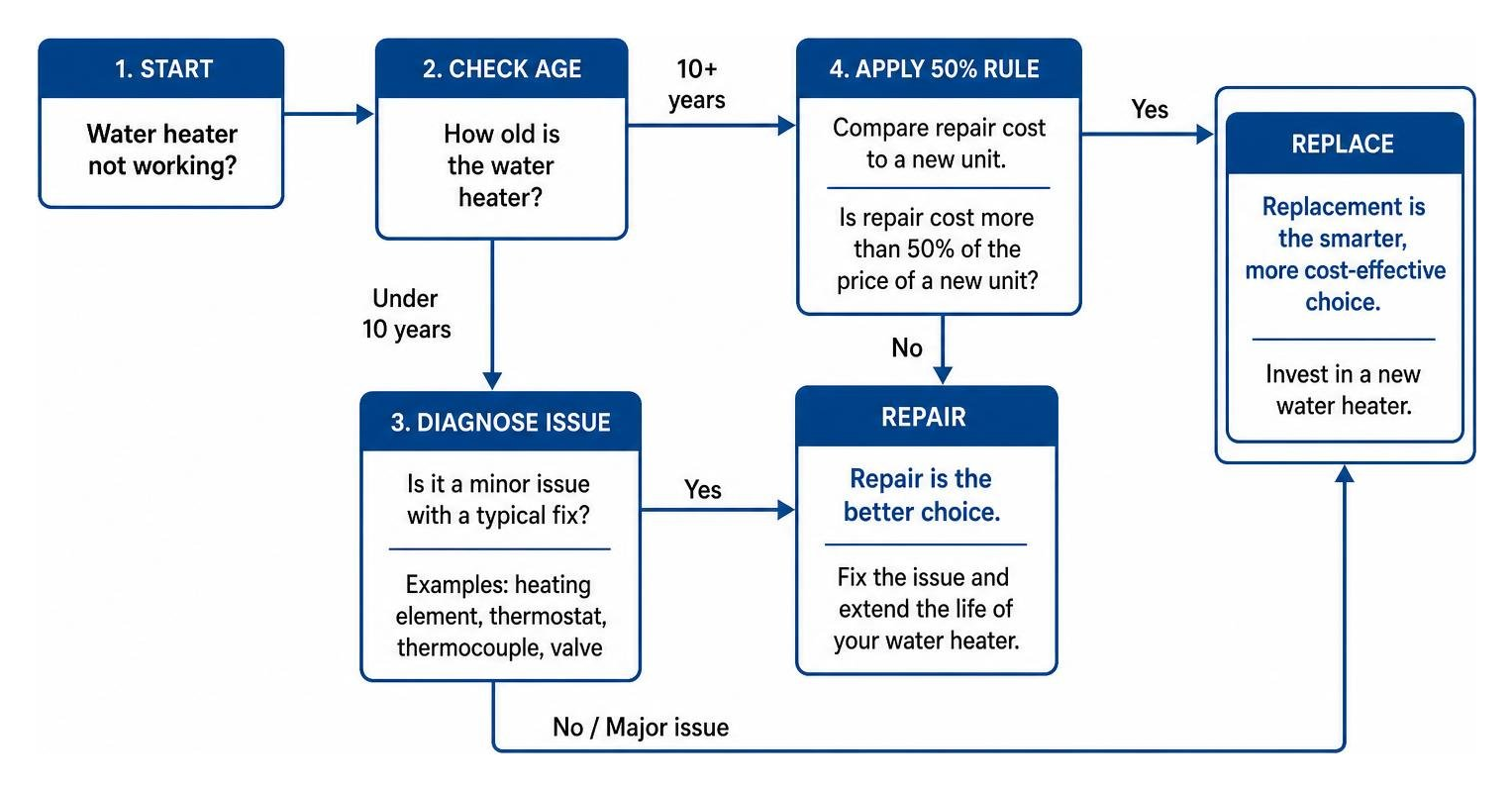
Traditional tank water heaters typically last between 8 to 12 years. If your tank is over a decade old and starts leaking from the base, it cannot be saved. The inner lining has corroded, and a full replacement is required. However, if your unit is only a few years old and simply needs a new heating element or a replacement thermocouple, a professional repair will easily extend its service life.
To explore your options and budget effectively, check out our comprehensive guide on water heater replacement and see how your wallet will love this affordable water heater replacement guide.
| Feature | Traditional Tank Water Heater | Tankless Water Heater |
|---|---|---|
| Average Lifespan | 8 to 12 Years | Up to 20 Years |
| Energy Efficiency | Standard | Up to 34% More Efficient |
| Space Requirements | Large footprint (takes up closet space) | Compact, wall-mounted design |
| Hot Water Supply | Limited by tank size (40–100 gallons) | Endless, on-demand supply |
| Upfront Cost | Lower initial cost | Higher initial installation/retrofit cost |
When to Choose Tankless Water Heater Upgrades
If you decide that a replacement is your best path forward, upgrading to a tankless water heater is an option well worth considering. Tankless water heaters heat water instantly on demand as it passes through the supply pipes, rather than continuously reheating a large, stored volume of water.
This on-demand heating translates to incredible energy savings of up to 34% compared to traditional tank models. Furthermore, because they do not store water, tankless units are incredibly compact and wall-mounted, freeing up valuable closet or basement space. They also boast an impressive lifespan of up to 20 years—double that of a traditional tank.
If you already own a tankless system and it is acting up, we can help! Learn more about troubleshooting these advanced systems by reading our guides on fixing your ecosmart tankless water heater or how to repair your electric tankless heater.
What to Expect During an Emergency Water Heater Service
When you call Plumbing Rescue for an emergency service, we do not leave you guessing. We understand that a plumbing crisis is highly stressful, which is why we focus on speed, professionalism, and absolute transparency.
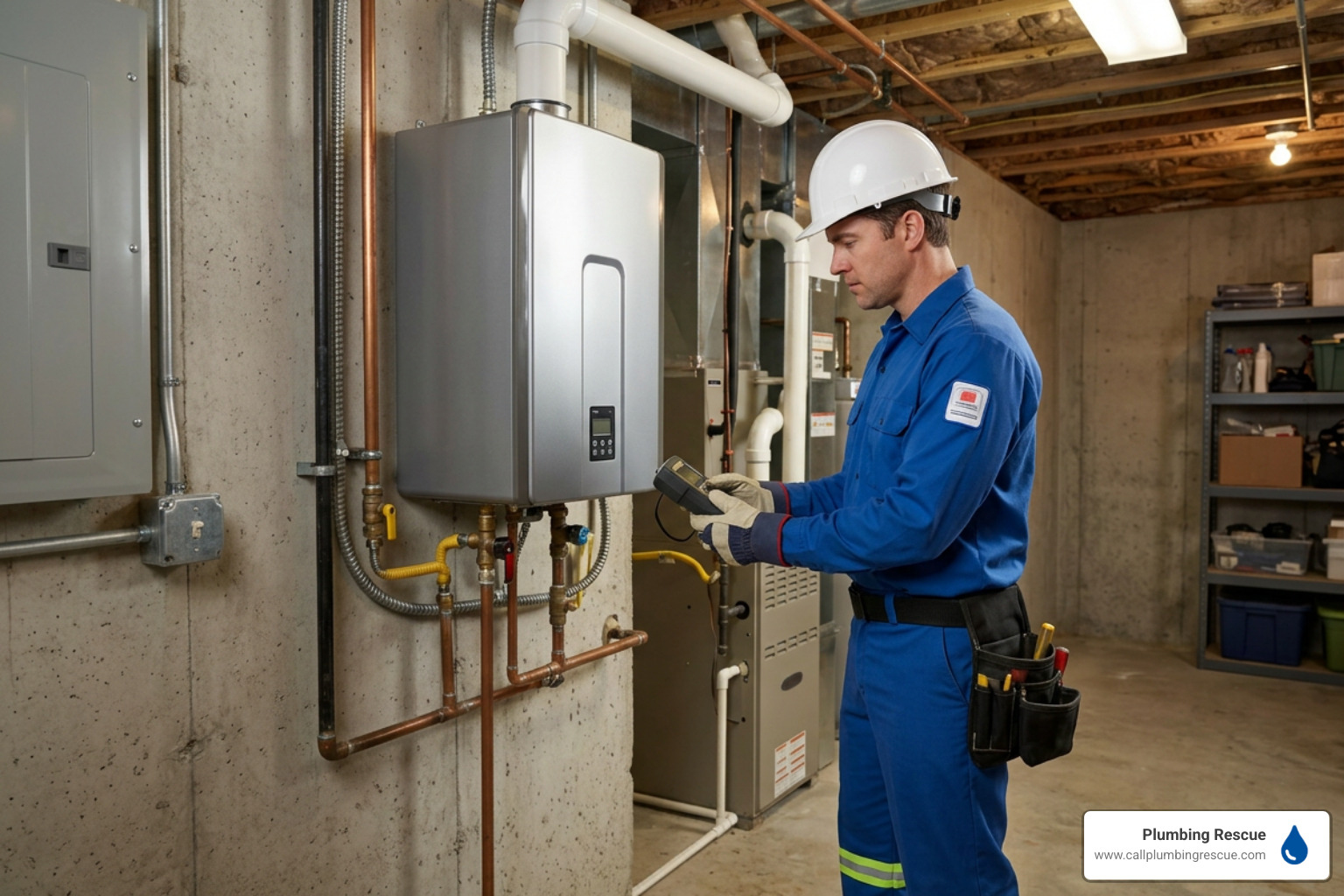
Our technicians are fully licensed, insured, and background-checked. We are available 24/7/365—which means we answer the phone on Christmas Eve, Thanksgiving, and at 3:00 AM on a Sunday. Once you contact us, we route your call immediately to a local technician in your area, enabling rapid response times.
If you want to know what to look for when hiring help, read our tips on how to hire the best electric heater repair pros nearby. For customers in Indiana, our local Indianapolis team is fully equipped to handle any emergency water heater service.
Do We Service Both Tank and Tankless Systems?
Yes! Our certified plumbers are fully trained to service all major types, brands, and models of water heaters. Whether your home uses a traditional gas water heater, an electric model, or an ultra-efficient hybrid heat pump water heater, we have the tools and parts on hand to perform the repair on the spot.
We also specialize in advanced tankless water heater maintenance, diagnostics, and repairs. If you have a Bosch system, you can learn more about keeping it in peak condition by visiting the ultimate bosch tankless water heater maintenance guide and the ultimate guide to bosch hot water service and support.
Upfront Pricing and Financing for 24 Hour Water Heater Repair
We believe that home emergencies shouldn’t lead to financial crises. That is why we offer no-guesswork, flat-rate pricing. Before our technician turns a single wrench, they will perform a complete inspection, diagnose the exact issue, and present you with a clear, upfront price quote. You will never have to worry about hidden fees or surprise hourly charges.
If your system requires a major replacement and you aren’t prepared for the upfront cost, we have you covered. We offer flexible payment plans and $0 down financing options to help you restore your hot water without breaking your budget.
To learn more about keeping costs manageable, read our guides on how to fix your tank for less with affordable water heater repair and how to find an affordable water heater for your home.
Frequently Asked Questions about Emergency Water Heater Services
How much does 24/7 emergency water heater repair typically cost?
The cost of emergency repair depends on several factors, including the time of the service call, the complexity of the repair, and the replacement parts required. Common repairs—such as replacing a burned-out heating element, swapping a bad thermocouple, or installing a new anode rod—typically cost a fraction of a full replacement.
To avoid surprises, we always provide a flat-rate estimate before starting any work.
How quickly can a technician arrive for an emergency water heater service?
At Plumbing Rescue, our primary goal is rapid dispatch. Because we route calls directly to local technicians nearest to your home, we can often have a licensed plumber at your door within an hour of your call.
If you are facing a severe plumbing emergency in Colorado, our local Denver dispatch network coordinates rapid same-day plumbing solutions to get your system back up and running quickly.
How long do water heaters typically last before needing replacement?
As a general rule, traditional storage tank water heaters last between 8 to 12 years, while tankless water heaters can last up to 20 years. You can significantly extend the lifespan of your unit by scheduling annual preventative maintenance, such as flushing the tank to remove sediment and replacing the sacrificial anode rod.
For a complete breakdown of troubleshooting older systems, read the complete dux hot water troubleshooting and repair manual.
Conclusion
A broken water heater is a major disruption, but it doesn’t have to ruin your week. By acting quickly, shutting off the water and power supply, and calling in professional help, you can protect your home from severe water damage.
According to the EPA’s WaterSense program, household leaks can waste nearly one trillion gallons of water annually nationwide. Taking care of leaks and maintaining your water heater doesn’t just save your sanity – it also protects our natural resources and lowers your energy bills. A well-maintained water heater operates 10-15% more efficiently, helping you cut down on utility costs year after year.
If you are currently dealing with cold water, a leaking tank, or a noisy system in Austin, TX; Denver, CO; Indianapolis, IN; or Phoenix, AZ, don’t wait for the problem to get worse.
Get immediate help from Plumbing Rescue and let our licensed, 24/7 emergency plumbers restore your home’s comfort and peace of mind today!
Dealing With This Yourself? Talk to a Licensed Plumber.
Skip the guesswork — get a straight answer from a local pro. Available 24/7, no forms, no waiting.
Call Now: (888) 686-0698