
How to Choose the Best Drain Cleaner for Dishwasher and Disposal Safety
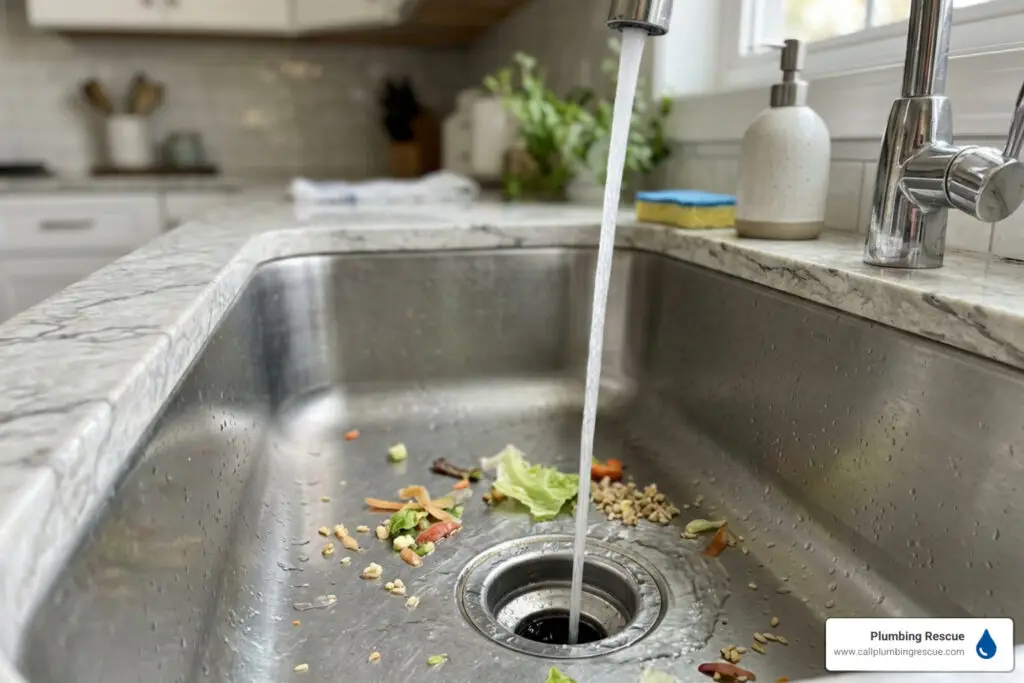
Choose a Disposal-Safe Cleaner Before Treating a Kitchen Clog
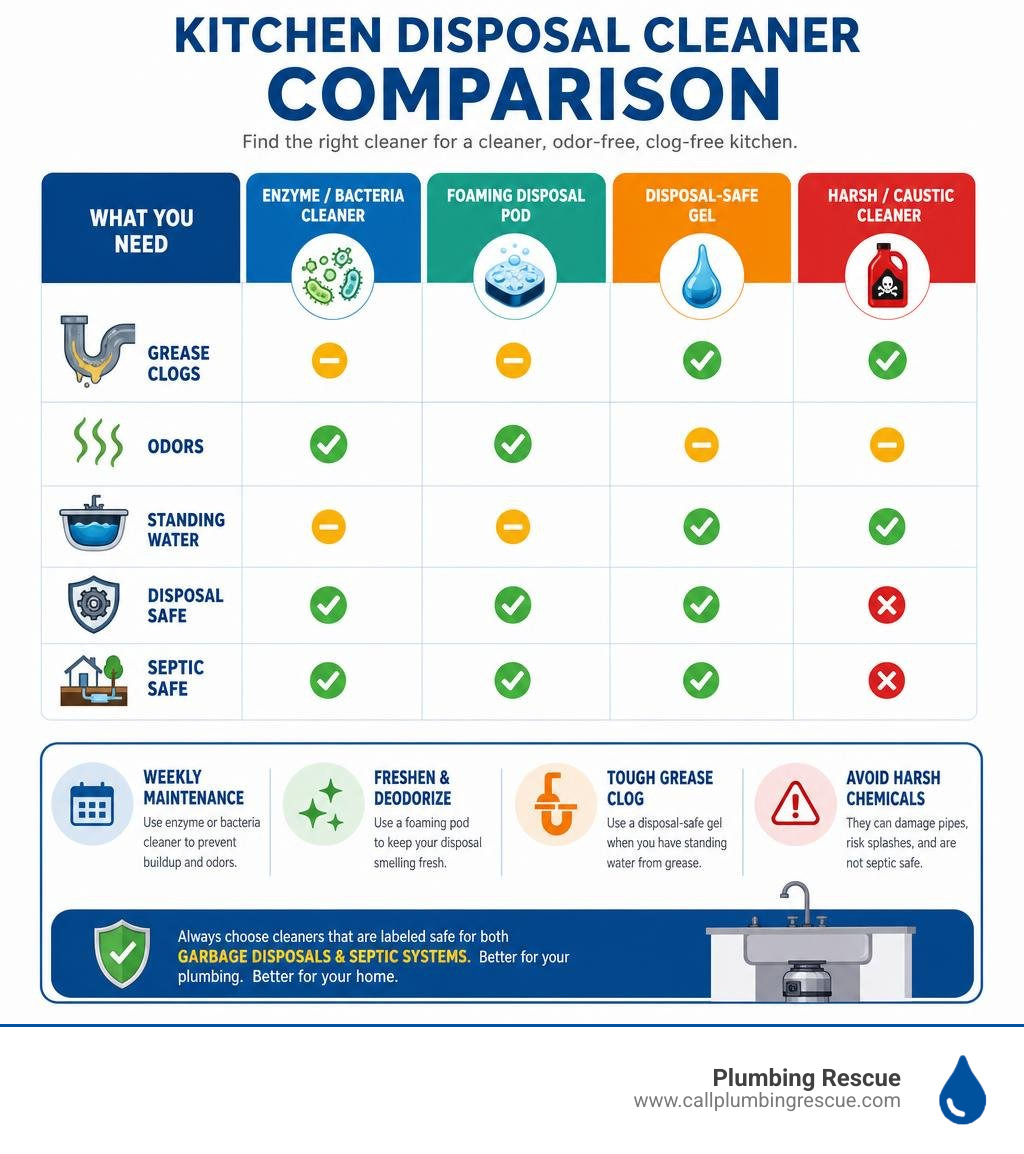
The best drain cleaner for kitchen sink with garbage disposal is usually an enzyme-based or bacteria-based formula for routine food residue, grease film, and odors. Choose a product clearly labeled safe for both garbage disposals and septic systems; use a foaming disposal pod for freshening, or a disposal-safe gel only when a grease clog is causing standing water.
Avoid harsh, unlabeled caustic cleaners. They can create heat, damage plumbing over time, and create a dangerous splash hazard if you plunge after using them. Your dishwasher and disposal often share drain plumbing, so a cleaner that is safe for one part of the kitchen system should not put the other at risk.
I’m Ben Smith, a digital marketing consultant with 25+ years of experience researching clear, practical solutions for service-business customers. In this guide, I will help you compare the best drain cleaner for kitchen sink with garbage disposal needs, from urgent grease clogs to simple weekly odor control.
Terms related to best drain cleaner for kitchen sink with garbage disposal:
- best way to unclog a kitchen sink with garbage disposal
- backed up sink and garbage disposal
- best drainage cleaner
Understanding How Kitchen Drains, Disposals, and Dishwashers Connect
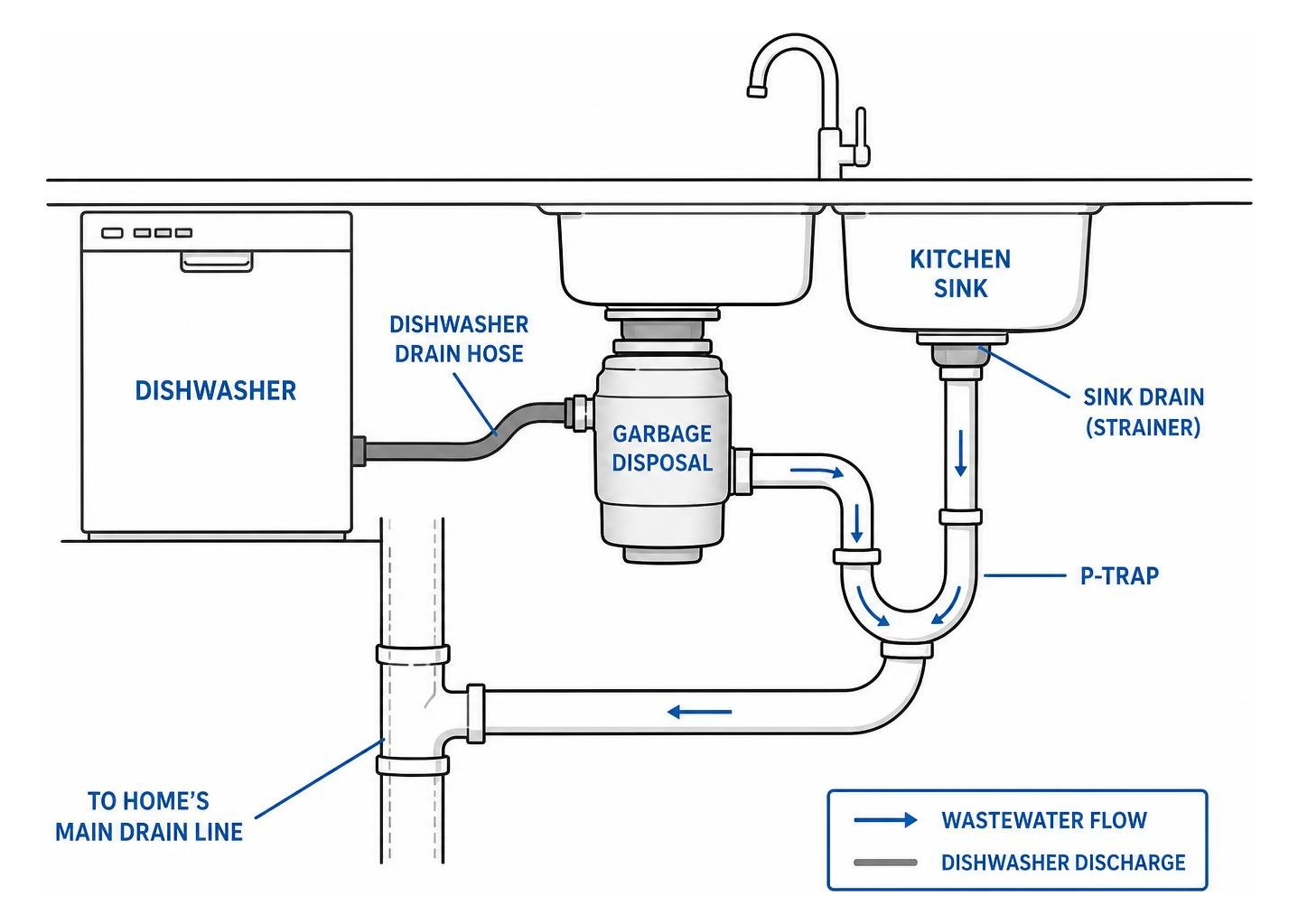
Your kitchen sink is not just a simple basin with a pipe underneath. It is an interconnected network of water feeds, electrical motors, mechanical grinding rings, and shared appliance discharge hoses. When you turn on your tap, run the dishwasher, or turn on the garbage disposal, everything relies on a single unified exit route through your kitchen P-trap and into your home’s main branch line.
Modern appliances like the Power 900, 3/4 HP Garbage Disposal | InSinkErator US use multi-stage grinding chambers to liquefy solid food scraps. However, if any segment of that connected drainage line narrows from grease or solid food buildup, you will experience a backup that affects every appliance attached to it. Understanding these connections is the first step toward figuring out why your garbage disposal is refusing to dispose.
Shared Drainage Lines and Backflow Risks
Most residential kitchens feature a small rubber discharge hose running straight from the dishwasher into a dedicated barbed inlet on the side of the garbage disposal housing.
When your dishwasher drains, it pumps hot, soapy, food-flecked water into the disposal chamber, which then flushes through the standard 1-1/2-inch slip joint connection down the P-trap. If a severe food sludge or congealed grease blockage occurs past the disposal discharge elbow:
- Wastewater from the disposal can back up into the bottom of the dishwasher tub.
- In a double-basin sink, dirty water and rotting food foam can shoot up into the adjacent, non-disposal basin.
- Vigorously running water or plunging the sink without clamping the dishwasher line risks forcing caustic clogs directly into your dishwasher’s internal wash pump.
Mechanical Vulnerabilities of Disposal Units
Unlike standard bathroom drains—which consist purely of smooth PVC or metal tubing—your disposal houses complex mechanical assemblies:
- Rubber Splash Guards and Baffles: Sitting at the neck of the drain, these rubber baffles prevent food from flying out of the chamber, but they also trap rotting fats and slimy bacteria on their undersides.
- Internal Impellers and Shredder Rings: A high-speed rotating flywheel (spinning at roughly 1,725 RPM) throws food scraps against a stationary shredder ring.
- Rubber Motor Seals: Beneath the grind chamber sits a delicate rubber gasket preventing wastewater from leaking down into the 120-volt electric motor.
Pouring standard industrial caustic drain openers containing high concentrations of sodium hydroxide (lye) or sulfuric acid directly into a disposal unit can degrade internal rubber motor seals, corrode the grinding flywheel, and warp adjacent thin-wall PVC pipes through exothermic heat reactions.
Top Criteria for the Best Drain Cleaner for Kitchen Sink with Garbage Disposal
Not all drain cleaning products accomplish the same goal. A foaming freshener will not clear a pipe blocked by bacon grease, and a chemical gel opener is overkill for minor sour odors.
| Feature / Criteria | Enzymatic Digesters | Foaming Disposal Pods | Clinging Chemical Gels |
|---|---|---|---|
| Primary Purpose | Dissolving organic food, oils, and sludge | Scrubbing impellers, baffles, and deodorizing | Breaking tough, emergency standing-water clogs |
| Disposal Safety | 100% Non-corrosive and safe | 100% Non-corrosive and safe | Safe only if explicitly labeled disposal-safe |
| Septic System Safe | Yes (nourishes bacteria) | Yes (plant-based / eco-safe) | Check label (avoid standard caustic lye) |
| Standing Water Action | Slow (requires flow) | Maintenance only (do not use in standing water) | Fast (dense formula cuts through water) |
| Active Ingredients | Natural bacteria / biological enzymes | Sodium bicarbonate, citric acid, surfactants | Specially buffered grease-cutting agents |
Enzyme vs. Chemical Formulations: Finding the Best Drain Cleaner for Kitchen Sink with Garbage Disposal
For routine maintenance and recurring sluggishness, biological enzyme cleaners are the superior choice. Products like the 22.5 oz Garbage Disposal and Drain Odor Eliminator and Enzymatic Drain Cleaner for Kitchen Garbage Disposals utilize living bacterial cultures that produce enzymes to digest organic matter, including food particles, fats, grease, and paper residue.
Unlike harsh chemical openers that dissolve clogs through corrosive chemical burns and intense heat, enzymatic solutions consume the organic film lining your pipes without degrading metal impellers or warping PVC joints. In our comprehensive breakdown in The Ultimate Guide to the Best Drain Cleaners on the Market, we consistently emphasize using non-caustic options for long-term plumbing health.
Grease-Cutting Power for Standing Water and Heavy Buildup
When you are faced with several inches of oily standing water that will not budge, biological cleaners work too slowly. In an emergency grease-clog scenario, you need a heavy, high-density gel engineered to penetrate standing water without floating on top or diluting immediately.
Two proven disposal-safe chemical options include:
- Drano Kitchen Gel: A thicker, disposal-safe gel that sinks through standing water to break down stubborn, greasy kitchen clogs within 15 to 30 minutes.
- Zep Advanced Kitchen Sink Drain Opener Gel – Works in Standing Water – Zep Inc.: A specialized formula developed specifically to emulsify kitchen fats and food sludge in standing water while remaining safe for disposal units and septic tanks.
Deodorizing and Foaming Appliance Fresheners
If your sink drains properly but releases a persistent sour odor, the problem is decomposing food film trapped on the underside of the splash baffle and upper grind plate—areas that standard running water never touches.
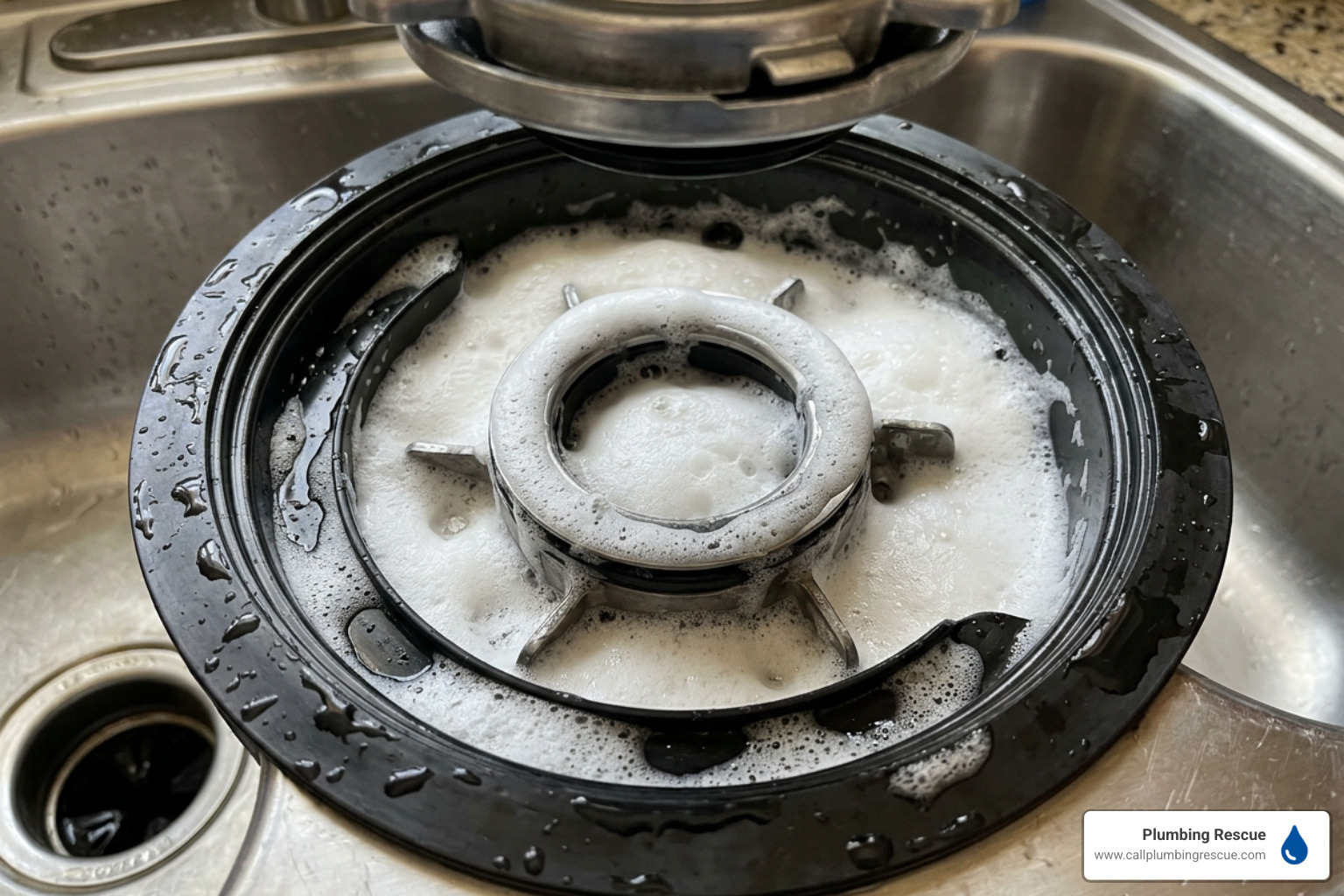
Foaming cleaners expand to fill the entire chamber:
- CLR Garbage Disposal Cleaner, Dissolving Pods | CLR Brands: EPA Safer Choice certified pods that use sodium bicarbonate, citric acid, and plant-based surfactants to create a thick white foam that scrubs internal metal components and connecting baffle lines.
- Garbage Disposal Cleaner | affresh: Formulated to scrub away stubborn residue and eliminate the bacteria responsible for foul smells and fruit flies.
Safe Application and Unclogging Methods
Applying drain cleaners to a garbage disposal requires a few specific precautions compared to a standard pipe. Because disposal chambers contain open grinding mechanisms, careless application can cause chemical splash-backs or premature drainage before the product has a chance to work.

Safe Application Steps for the Best Drain Cleaner for Kitchen Sink with Garbage Disposal
To get the most out of your cleaner while protecting your skin and plumbing, follow this application sequence:
- Put On Protective Gear: Always wear rubber utility gloves and safety glasses. Even eco-friendly cleaners can cause eye irritation.
- Clear Loose Debris: Turn off the disposal unit at the wall switch, shine a flashlight inside, and use kitchen tongs (never your bare hands) to remove any large trapped bones, cutlery, or fibrous materials.
- Apply the Measured Dose: Pour 6 to 8 ounces of clinging enzymatic cleaner or 16 ounces of disposal-safe gel directly into the disposal drain opening.
- Distribute Across the Blades (The 2-Second Rule): If using an enzymatic gel or deodorizer, turn the disposal on for exactly two seconds with the water turned off. This quick spin throws the cleaner across the internal flywheel, shredder ring, and side housing walls without expelling it down the drain line.
- Allow Dwell Time: Let enzyme cleaners sit undisturbed overnight (or 15 to 30 minutes for emergency chemical gels).
- Flush Thoroughly: Flush the system for 2 to 3 minutes using hot tap water to wash away loosened debris.
For a deeper dive on alternative techniques, check out The Secret to Unclogging a Kitchen Sink and Disposal Fast.
Mechanical Clearing Tools to Combine with Cleaners
Before turning to chemical solutions, or if a cleaner needs assistance to dislodge a stubborn blockage, you can use safe mechanical methods.

- The Kitchen Sink Plunger: Use a dedicated flat-cup sink plunger. If you have a double-basin sink, seal the opposite drain with a wet rag to maintain suction. Clamp the rubber dishwasher hose beneath the sink to prevent dirty water from forcing its way into the appliance. Fill the sink with 3 to 4 inches of water and plunge firmly. Crucial rule: Never plunge a sink after adding chemical drain openers, as caustic liquid can splash onto your face and skin.
- The Flywheel Hex Wrench (Jam-Busting Key): If your disposal hums but the blades do not spin, the unit is mechanically jammed rather than clogged with sludge. Look under the sink at the very bottom of the disposal unit for a small 1/4-inch hex socket. Insert an Allen wrench into the socket and manually turn it back and forth to dislodge trapped objects, then press the small red reset button on the bottom.
- Natural Home Remedies: If you prefer avoiding packaged chemicals, you can learn how to clean drains with baking soda and vinegar to clear minor organic build-up using natural effervescence. You can also consult manufacturer guides like How to Unclog a Garbage Disposal | Liquid-Plumr® for additional brand-specific tips.
Routine Maintenance to Prevent Kitchen Appliance Clogs
Preventing major backups is straightforward when you practice consistent kitchen drain habits. Incorporate these steps into your household routine:
- Weekly Foaming Pod Maintenance: Drop one pre-measured dissolving pod into your disposal once a week. Run a thin, pencil-width stream of hot water away from the drain opening, turn the unit on, and allow the foaming surfactants to clean the impellers and connecting dishwasher line.
- Always Run Cold Water During Grinding: When grinding food waste, always run a steady stream of cold water. Cold water solidifies fats and grease so the grinding impellers can chop them into fine particles. Hot water melts grease during grinding, allowing it to coat the downstream pipes where it cools into a thick, sticky blockage.
- Never Put Stringy or Expanding Foods Down the Drain: Keep celery stalks, artichoke leaves, corn husks, onion skins, raw potato peels, rice, pasta, and coffee grounds out of the disposal. Stringy fibers wrap around the impeller assembly, while starches expand inside the P-trap to create dense plugs.
- Never Pour Used Cooking Oils Down the Sink: Collect cooking oils, pan drippings, and bacon fat in a disposable can or jar and throw them into the trash once cooled.
- Apply Monthly Preventative Enzyme Doses: Pour 2 to 4 ounces of liquid biological enzyme cleaner into your kitchen drain once a month before going to bed. This maintains clear pipes by breaking down residual organic matter before it forms a complete blockage, providing smart solutions for every blocked drainage system.
Frequently Asked Questions About Kitchen Disposal Drain Cleaners
Can you use standard chemical drain cleaners in a garbage disposal?
No. Standard, non-buffered chemical drain cleaners—especially those containing concentrated sodium hydroxide (caustic lye) or sulfuric acid—should never be used in a garbage disposal. These chemicals generate intense heat through exothermic reactions that can soften PVC pipes, corrode metal impellers, break down internal rubber motor seals, and void your manufacturer’s warranty. If you must use a chemical cleaner for a standing-water emergency, choose a product explicitly formulated and labeled as safe for garbage disposals.
How often should you clean and deodorize a disposal connected to a dishwasher?
You should deodorize and freshen your disposal once a week using a foaming cleaner pod or a mixture of baking soda and citrus peels. For homes that cook heavily with oils and meats, applying a preventative dose of liquid enzymatic cleaner once every 3 to 4 weeks will prevent grease from building up along shared dishwasher discharge lines and downstream P-traps.
Will enzyme drain cleaners harm my home’s septic tank system?
Enzyme and bacterial drain cleaners are completely safe for septic systems. In fact, they benefit your septic tank. Caustic chemicals kill the beneficial bacteria needed to break down solid household waste in a septic tank, but enzymatic cleaners introduce active bacterial cultures that support organic bio-digestion.
Conclusion
Finding the right drain cleaning solution for your kitchen sink comes down to matching the product to your specific issue. For routine odors, reach for foaming cleaner pods. For recurring sluggishness, use non-corrosive, biological enzyme treatments that safely digest food waste and protect internal rubber seals. Keep heavy-duty disposal-safe chemical gels on hand solely for urgent standing-water grease clogs.
If your kitchen sink remains completely blocked, if wastewater continues to back up into your dishwasher, or if your disposal is leaking from the bottom motor casing, stop using the sink immediately. Our team at Plumbing Rescue is ready to help. We provide fast, reliable emergency plumbing and drain clearing services across our primary service hubs in Austin, TX, Denver, CO, Indianapolis, IN, and Phoenix, AZ.
When home remedies and DIY cleaners are not enough, turn to our licensed local technicians at Plumbing Rescue 24-hour drain cleaning service to clear tough line stoppages and restore your kitchen plumbing day or night.
Dealing With This Yourself? Get Connected With a Local Plumber.
Skip the guesswork — one call connects you with a local plumbing provider. Available 24/7, no forms.
Call Now: (888) 686-0698