
What to Do When Your Bathroom Floor Drain Is Blocked
When your bathroom floor drain is blocked, here’s how to fix it fast:
- Remove the drain grate with a screwdriver and pull out visible hair and debris by hand (wear gloves).
- Plunge the drain using a cup plunger pressed firmly over the opening.
- Snake the drain if plunging doesn’t work — feed a 25-foot cable in slowly and rotate to grab the clog.
- Use a wet/dry shop vac on liquid mode to suction out sediment or loose debris.
- Clean the P-trap by pouring a gallon of water down the drain to restore the water seal.
- Call a plumber if water backs up from other fixtures — that signals a main sewer line problem, not just a local clog.
Most simple clogs clear in 10 to 30 minutes using tools you already own.
Standing in a puddle of water while your bathroom floor drain refuses to drain is more than just annoying — it’s a sign that something is blocking the flow, and it won’t fix itself. The culprit is almost always a buildup of hair, soap scum, or body oils that have slowly narrowed the pipe until water has nowhere to go. In some cases, the problem runs deeper than the drain itself and points to a blockage further down in your home’s main sewer line.
The good news: most bathroom floor drain blocked situations can be resolved with a few simple tools and the right sequence of steps — no plumber required.
I’m Ben Smith, a digital marketing consultant with over 25 years of experience working alongside service-based businesses including plumbing companies, giving me deep insight into the most common causes and solutions for a bathroom floor drain blocked situation that homeowners face every day. This guide walks you through exactly what to do, step by step.
Bathroom floor drain blocked definitions:
Why Your Bathroom Floor Drain Blocked in the First Place
To fix a clogged drain permanently, we must first understand what caused the blockage. Unlike kitchen sinks, which primarily deal with food scraps and cooking grease, a bathroom floor drain faces a unique cocktail of organic and chemical materials.
When you shower, bathe, or wash your hands, several substances enter your drainage system:
- Hair: Human hair is incredibly strong and does not dissolve easily. It acts as a net, catching other particles as they pass.
- Soap Scum: Traditional soaps contain fats that mix with minerals in hard water. This chemical reaction forms a sticky, chalky film that coats the inside of your pipes.
- Personal Care Products: Heavy conditioners, body oils, moisturizers, and shaving creams are designed to coat surfaces. In your pipes, they do the exact same thing, binding with hair to form thick, water-resistant plugs.
- Hard Water Minerals: In areas like Phoenix, AZ, and Austin, TX, high concentrations of calcium and magnesium settle on pipe walls. This mineral scale narrows the pipe’s diameter, making it much easier for hair and soap to create a total blockage.
Identifying a Localized Bathroom Floor Drain Blocked Near the Surface
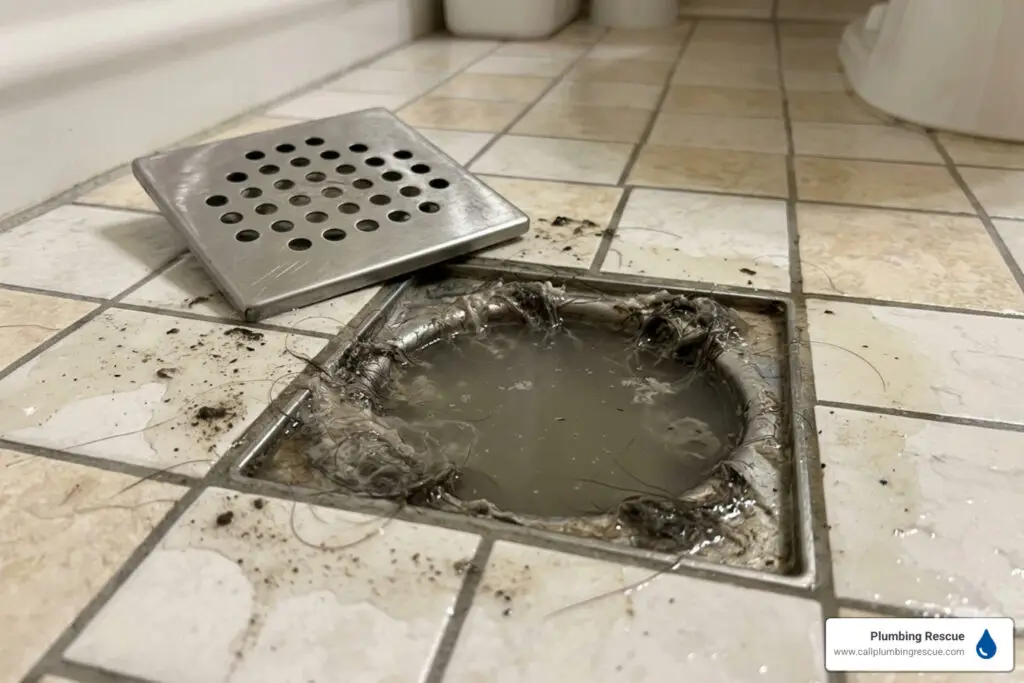
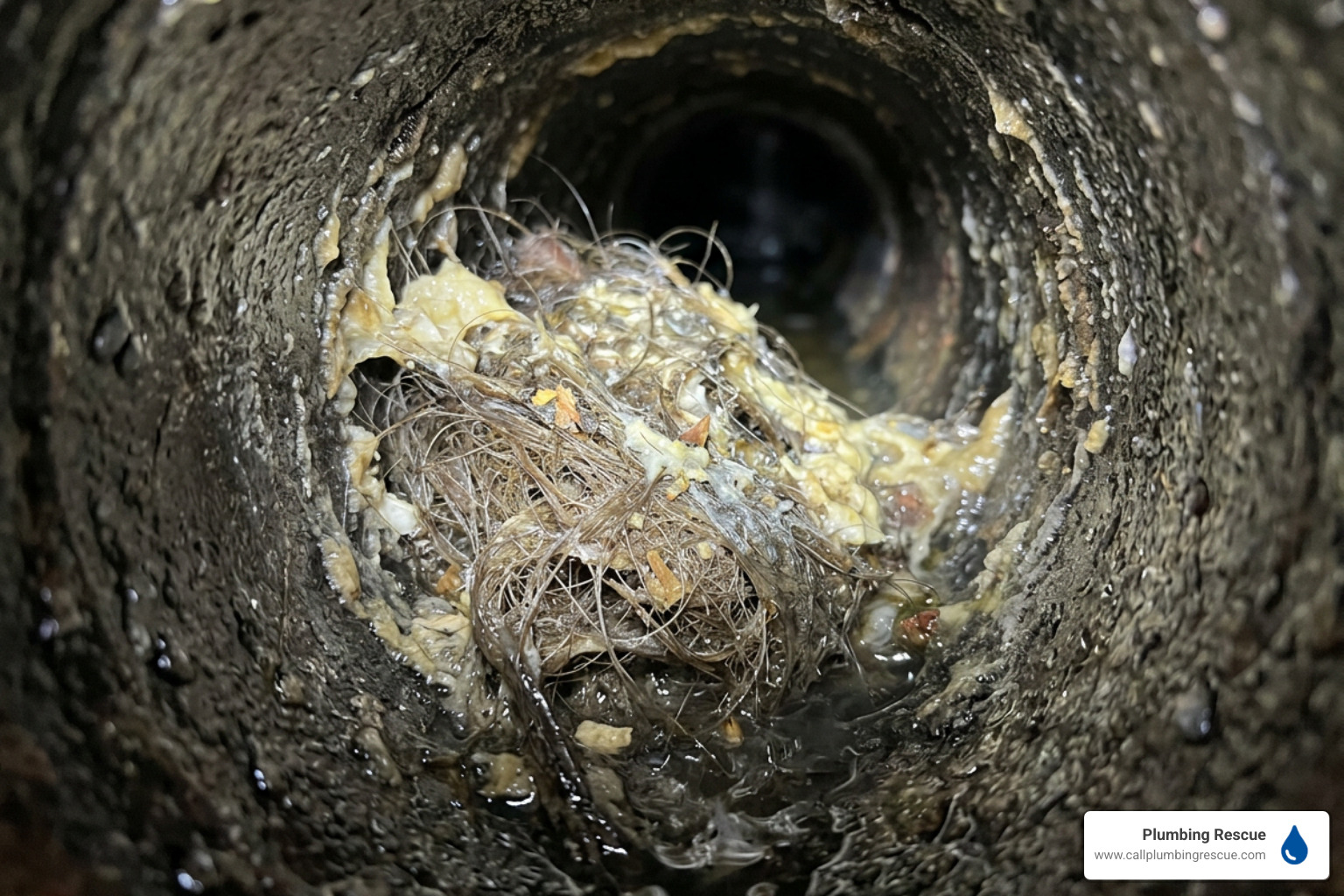
If you are lucky, the blockage is sitting right at the top of the drain. Surface clogs are typically composed of clumped hair and sticky soap residue that has gathered directly beneath the drain grate.
To check if the clog is near the surface, grab a flashlight and peer down into the drain. If you can see a dark mass of hair right below the metal grate, you are dealing with a localized clog. This is the easiest type of blockage to clear. You can find more details on handling these quick fixes in this guide on How to Unclog a Bathroom Floor Drain Fast Using Simple Tools.
Deep Pipe Obstructions and Product Buildup
If you look down the drain with a flashlight and see nothing but standing water, the obstruction is located deeper in the pipe network or inside the P-trap.
Deep clogs occur when greasy moisturizers, bath oils, and hair gels travel past the grate and solidify along the horizontal run of the pipe. Over months and years, this buildup forms a tough, waxy barrier. When this happens, simple surface cleaning will not work. You will need to use mechanical tools to break through the deep buildup. To understand how these deep blockages behave and how to tackle them, check out our guide on Bathroom Drain Clog Fixes That Actually Work.
Step-by-Step Guide: How to Clear a Blocked Floor Drain
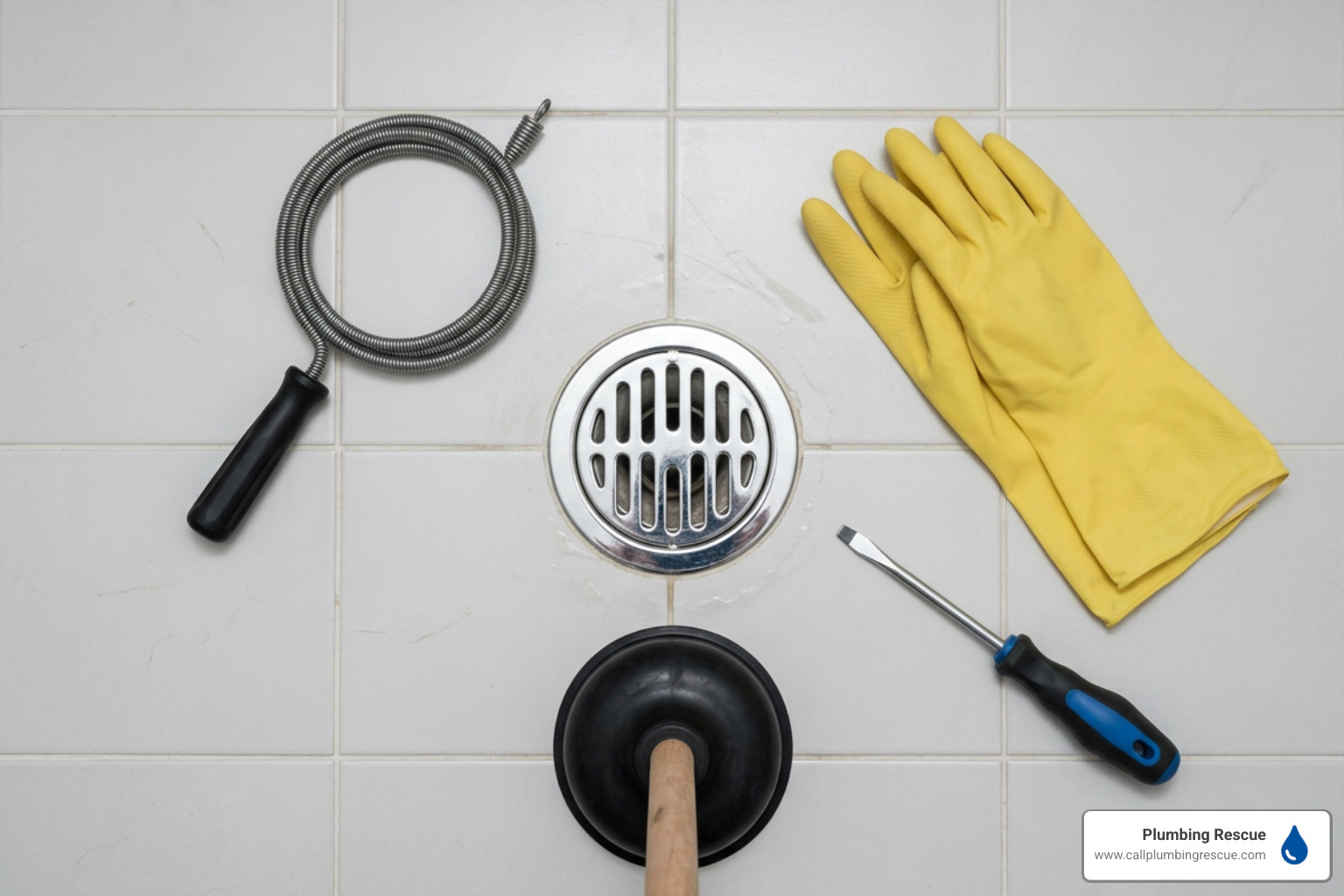
Before you start pulling apart your plumbing, gather the correct tools. Having everything ready will prevent you from tracking dirty drain water across your bathroom floor.
Essential DIY Tools:
- Flathead and Phillips screwdrivers (to remove the drain cover)
- Sturdy rubber utility gloves
- A flashlight
- A standard cup plunger (not a flange toilet plunger)
- A manual hand snake or zip-it tool (at least 25 feet of cable)
- A wet/dry shop vacuum
- Baking soda and white vinegar
- A bucket of hot tap water (120–140°F)
Safety Warning: Never use boiling water in PVC pipes. Boiling water can soften plastic joints, causing leaks behind your walls or under your floors. Stick to hot tap water instead.
Step 1: Manual Debris Removal and the Safest First Step
The safest and most effective first step is to physically extract whatever is blocking the grate.
- Put on your rubber gloves and safety glasses.
- Remove the drain grate. Most floor drain covers are held in place by one or two screws. If your cover doesn’t have screws, it may be a snap-in model that you can pry open gently with a flathead screwdriver.
- Use your flashlight to inspect the opening.
- Reach in and pull out the debris. Use your fingers or a straightened wire coat hanger with a small hook bent into the end.
- Do not push the clog deeper. If you feel resistance, pull upward. Pushing a solid hair mass down the pipe will only make it harder to reach.
Step 2: Plunging vs. Snaking the Drain
If manual extraction does not clear the standing water, you need to decide whether to use a plunger or a drain snake.
| Method | Best For | How It Works | Risk Level |
|---|---|---|---|
| Plunger | Shallow clogs, soap scum buildup, minor standing water | Uses air pressure and suction to dislodge loose blockages | Very Low (Safe for all pipes) |
| Drain Snake | Deep clogs, dense hair mats, physical objects | Physical steel cable cuts through and retrieves solid blockages | Low to Medium (Can scrape old pipes if forced) |
How to Plunge a Floor Drain:
- Ensure there is enough standing water in the bathroom to cover the rubber cup of your plunger. If the floor is dry, pour a few cups of water around the drain.
- Place the cup plunger directly over the drain opening to create a tight seal.
- Push down gently to release the air inside the cup, then plunge vigorously up and down for 15 to 30 seconds.
- Pull the plunger away quickly. If the water drains instantly, you have broken the clog.
If the plunger fails, it is time to use a drain snake. For detailed snaking techniques, refer to the How to Unclog a Basement Floor Drain (2026) guide.
- Feed the cable of your hand snake slowly into the drain.
- When you feel resistance, do not shove the cable aggressively. You have likely hit a bend in the pipe or the clog itself.
- Rotate the snake handle clockwise. This allows the corkscrew tip to hook onto the hair or chew through the soap mass.
- Keep rotating as you slowly pull the cable back out. Be prepared with a plastic bag to discard the wet, dirty hair mass immediately.
Step 3: Using a Wet/Dry Shop Vacuum for Sediment Extraction
If you are dealing with a drain that has accumulated heavy sediment, dirt, or sand, a snake will simply spin through the debris without clearing it. In this scenario, a wet/dry shop vacuum is your best tool.
- Remove the filter from your shop vacuum (running a shop vac in wet mode with a dry paper filter will ruin the motor).
- Insert the vacuum hose directly into the drain opening.
- Create a tight seal around the hose using a damp rag or duct tape. Suction only works if no outside air can enter.
- Turn the vacuum on high power. Hold the hose firmly for 1 to 2 minutes.
- Check the vacuum canister. You should see dirty water, hair, and sediment that has been pulled directly out of the trap.
Step 4: Cleaning the P-Trap and Restoring the Water Seal
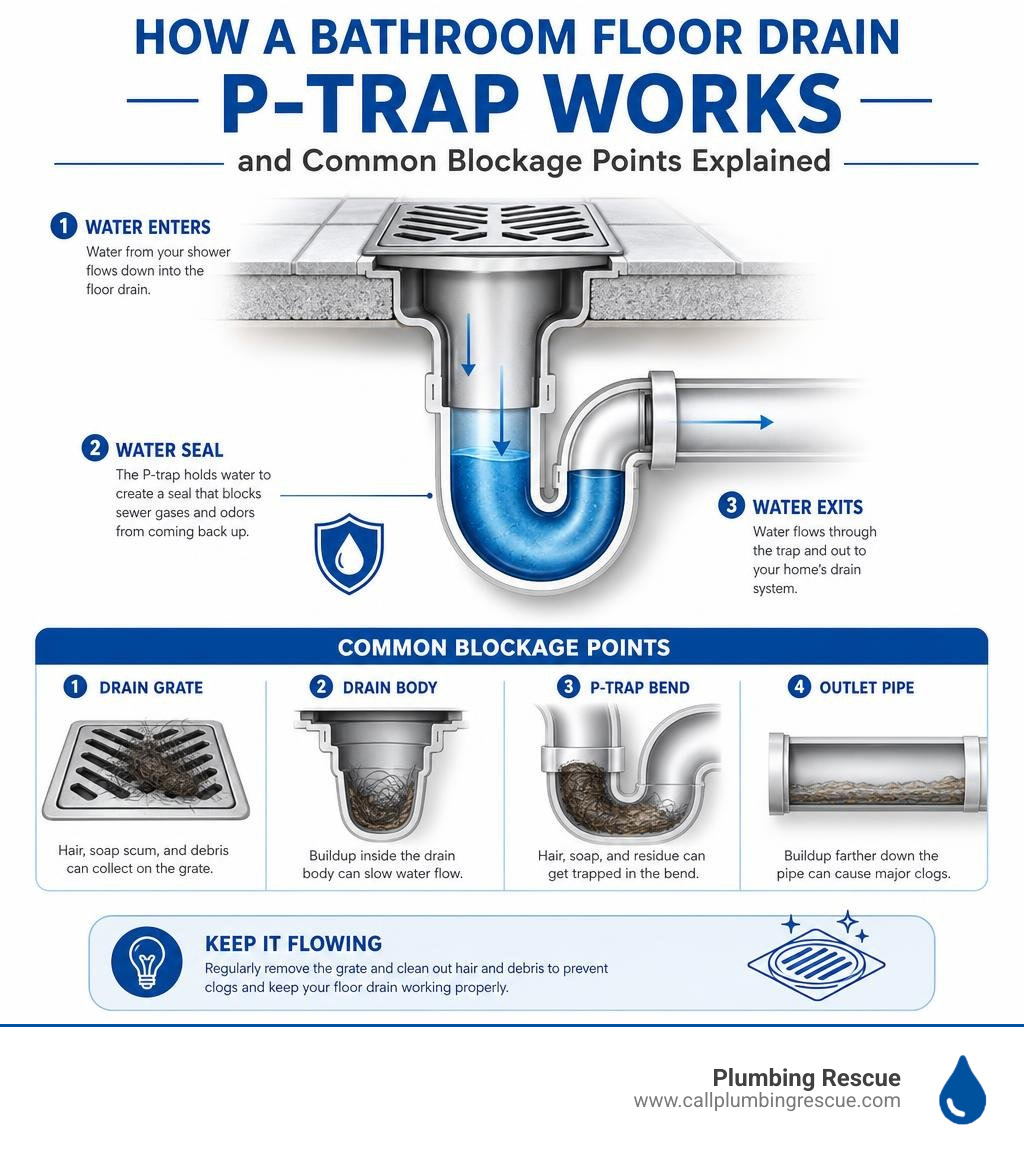
Every floor drain features a U-shaped pipe beneath the floor called a P-trap. This trap is designed to hold a constant pool of standing water. This water acts as a physical barrier, blocking toxic and foul-smelling sewer gases from rising into your bathroom.
If your bathroom floor drain is rarely used, the water inside the P-trap will eventually evaporate. This allows sewer gas to escape, creating a terrible smell even if there is no actual clog.
To clean the P-trap and restore this seal:
- After clearing any blockages, pour a gallon of warm water down the drain to flush out residual debris.
- Add one to two cups of mineral oil to the drain. The oil floats on top of the water, creating a protective layer that slows down evaporation, keeping your sewer gas seal intact for months.
Step 5: Preventative Maintenance and Regular Flushes
Preventing a bathroom floor drain blocked emergency is much easier than clearing one. By establishing a simple maintenance routine, you can keep your pipes clean year-round.
- Weekly Hot Water Flush: Once a week, pour a bucket of hot tap water down the floor drain. This melts away fresh soap scum before it has a chance to harden.
- Install a Mesh Strainer: Place a fine mesh strainer over the drain grate. This inexpensive screen catches hair, dental floss, and small plastic caps before they can enter your plumbing system.
- Use Natural Cleaners: Once a month, perform a deep clean using household pantry items. Learn the exact process in our guide on How to Clean Your Pipes Using Baking Soda and Hot Water.
Recognizing Main Sewer Line Blockages vs. Local Clogs
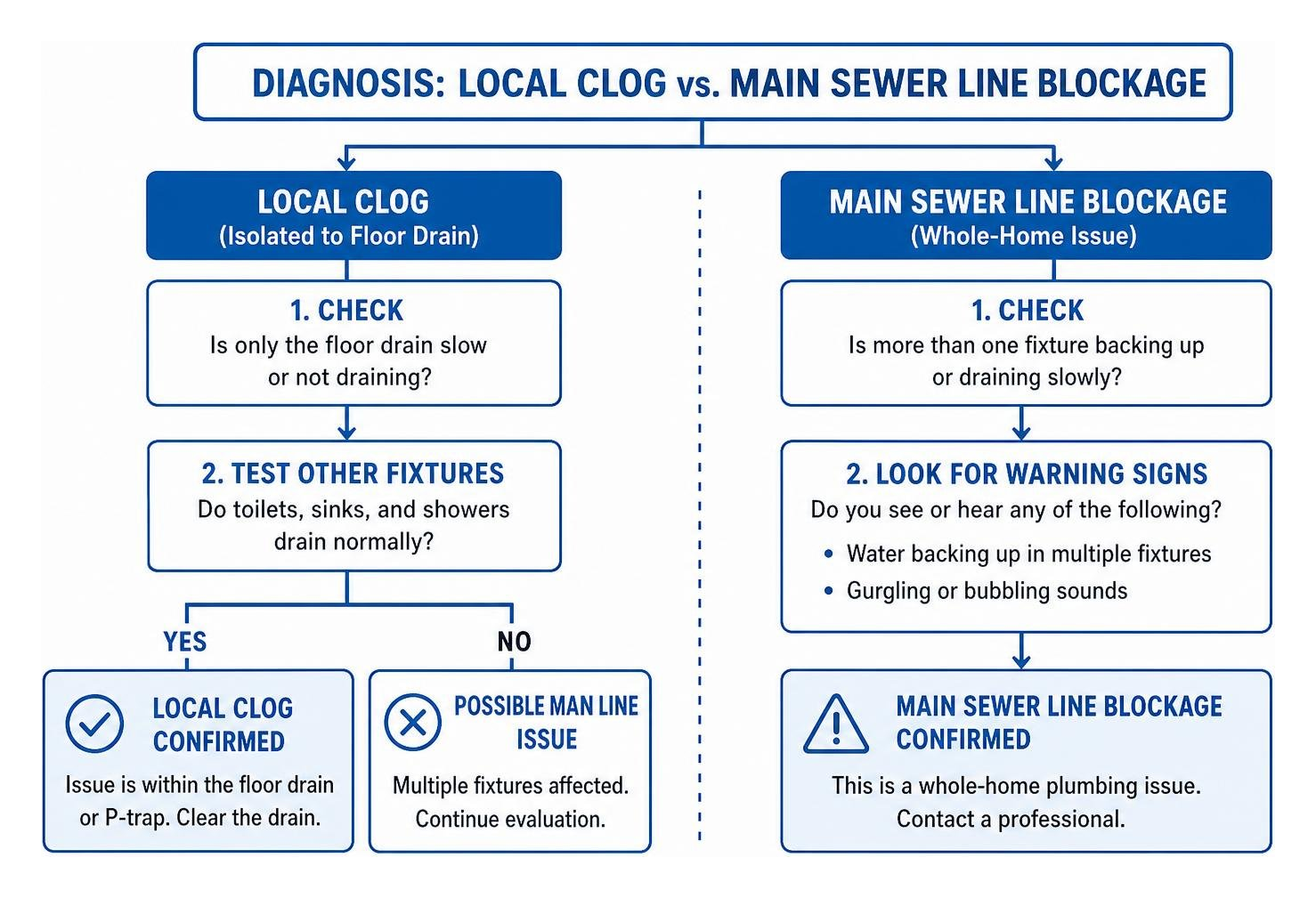
Sometimes, a blocked bathroom floor drain is not an isolated problem. Because floor drains sit at the lowest point of your home’s plumbing system, they are the first place water will back up when there is a major blockage deep in your main sewer line.
Signs of a Main Sewer Line Blockage
How do you know if you are dealing with a simple local clog or a whole-house plumbing emergency? Look for these classic warning signs:
- Multiple Fixture Backups: When you flush the toilet, water rises out of your bathroom floor drain. Or, when your washing machine drains, your shower starts filling with dirty water.
- Gurgling Sounds: You hear bubbling or gurgling noises coming from your toilets or floor drains when running water in the sink.
- Sewage Odors: A strong, persistent smell of raw sewage that does not go away after refilling the P-trap.
- Older Pipe Materials: If you live in an older historic neighborhood in Denver, CO, or Indianapolis, IN, your home may still have original clay or cast iron sewer lines. These materials are highly vulnerable to tree root intrusion and internal corrosion.
If you suspect your main line is compromised, read The Ultimate Guide to Clearing a Blockage in Your Main Sewer Line to understand your next steps.
What to Do When Water Backs Up from Other Fixtures
If dirty water or sewage begins rising out of your floor drain when you run other fixtures, you must act quickly to prevent serious water damage and mold growth.
- Stop running all water immediately. Do not flush toilets, run the shower, or use the washing machine.
- Locate your home’s main water shutoff valve and turn it off if the backup is continuous.
- Clean up standing water on your bathroom floor as quickly as possible to protect your tile, grout, and drywall.
- Call a professional plumber immediately. A main sewer line blockage cannot be resolved with DIY tools and requires professional hydro-jetting or sewer camera inspections.
Frequently Asked Questions About Blocked Floor Drains
Can I use chemical drain cleaners on a bathroom floor drain blocked with hair?
We strongly advise against using harsh chemical drain cleaners. These products contain acids or caustic chemicals that generate intense heat. In PVC pipes, this heat can warp plastic and melt glue joints. In older cast iron pipes, chemical cleaners accelerate corrosion, leading to pinhole leaks. Furthermore, chemical cleaners are highly toxic and create dangerous fumes in confined bathroom spaces. If the chemical fails to clear the clog, you will be left with a pool of highly corrosive, toxic water that makes mechanical snaking dangerous for whoever clears it. Stick to mechanical tools or safe, enzyme-based cleaners instead.
Why does my bathroom floor drain smell like sewage if it isn’t clogged?
This is almost always caused by a dry P-trap. If the floor drain is not used frequently, the water barrier inside the U-bend evaporates over time, allowing sewer gases to rise directly into your home. Simply pour a gallon of warm tap water down the drain to restore the water seal and eliminate the odor.
How often should I flush my bathroom floor drain to prevent clogs?
For high-use bathrooms, we recommend clearing the drain grate of hair once a week and flushing the drain with hot water monthly. For guest bathrooms or floor drains that rarely see water, pour a gallon of water down the drain every two to three months to ensure the P-trap remains filled.
Conclusion
A bathroom floor drain blocked with hair, soap scum, or sediment can quickly turn your daily routine upside down. Fortunately, by following these step-by-step DIY methods — from manual extraction and plunging to utilizing a wet/dry shop vacuum — you can resolve most minor blockages on your own.
However, if you are experiencing multiple backups, water rising from your floor drain when you use other fixtures, or recurring clogs that won’t go away, you are likely dealing with a deeper main sewer line issue.
Don’t let a clogged drain ruin your home. If you need fast, reliable help, we are here for you. We provide 24/7 emergency drain services across the United States, including local expert technicians in Austin, TX, Denver, CO, Indianapolis, IN, and Phoenix, AZ.
For professional, round-the-clock help, learn more about our 24-Hour Drain Cleaning services, or Get professional help from Plumbing Rescue today to restore your pipes to perfect working order.
Dealing With This Yourself? Talk to a Licensed Plumber.
Skip the guesswork — get a straight answer from a local pro. Available 24/7, no forms, no waiting.
Call Now: (888) 686-0698