

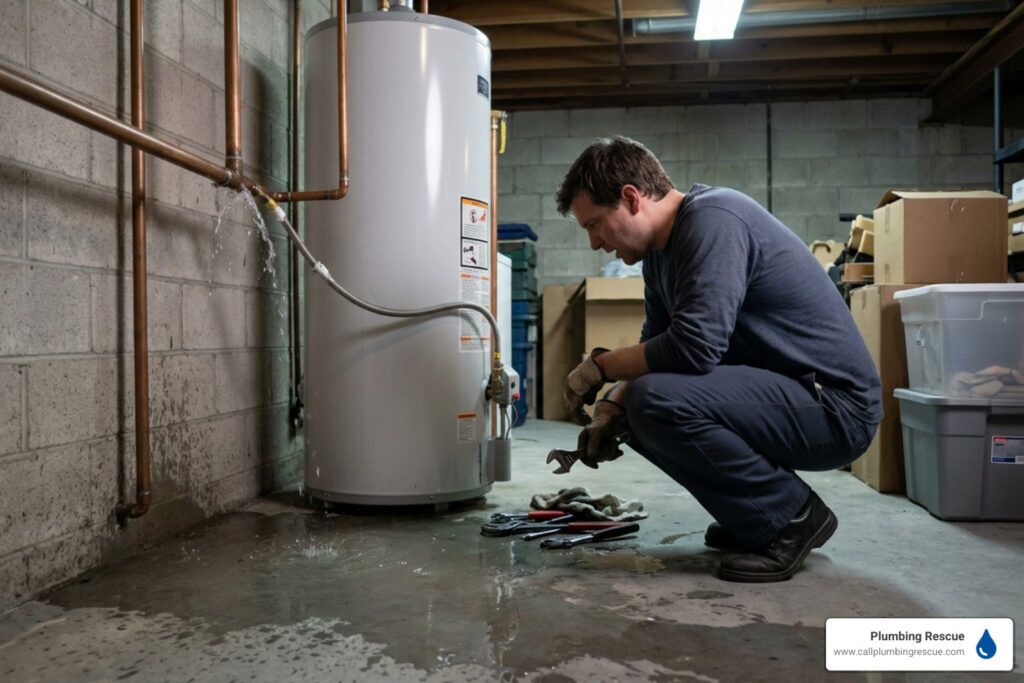
When Hot Water Becomes an Emergency: What You Need to Know
Emergency water heaters cover a surprisingly wide range of situations — from a burst tank flooding your basement at midnight, to an industrial worker needing tepid water after a chemical splash.
Here’s a quick look at the main types and what they’re used for:
| Type | Best For |
|---|---|
| Industrial tankless (e.g., Bradley SNA-Series) | Safety showers, eyewash stations, ANSI compliance |
| Portable propane heater | Disaster relief, off-grid, decontamination |
| Emergency tank shower (e.g., Hughes QS1200) | Unplumbed worksites, chemical plants |
| Heat pump water heater | Residential emergency replacement with rebates |
| Standard tank/tankless replacement | Home hot water restoration within 48 hours |
Whether you’re a homeowner with a leaking tank, a safety manager at an industrial facility, or someone preparing for a natural disaster, the right emergency water heating solution depends entirely on your situation.
Your home’s water heater alone can hold 30 to 80 gallons of drinkable water in a disaster. On the industrial side, a single compliance failure — like water that’s too hot or too cold during an emergency flush — can seriously injure a worker. The stakes are real in both cases.
I’m Ben Smith, a digital marketing strategist with over 25 years of experience helping service businesses — including plumbing and home services companies — communicate complex topics like emergency water heaters clearly and effectively. In this guide, I’ve pulled together the most practical, up-to-date information to help you find the right solution fast.

Basic emergency water heaters terms:
Understanding Emergency Water Heaters: Industrial Safety vs. Residential Systems
To understand emergency water heaters, we first have to separate them into two entirely different worlds: the industrial safety side and the residential replacement side.
In a residential home, an emergency water heater situation usually means your existing water heater has failed, leaked, or burst, and you need a fast replacement to restore basic sanitation and comfort. In an industrial facility, however, an emergency safety shower water heater is a highly specialized piece of safety equipment designed to save lives during chemical exposures or hazardous incidents.
The requirements for these two systems could not be more different. While your home water heater is built to store or heat water to a cozy 120°F (49°C) for showers and dishwashing, an industrial safety water heater is engineered to deliver high volumes of “tepid” water.
If water in an industrial safety shower is too hot (above 100°F or 38°C), it can cause scalding or accelerate chemical burns on a victim’s skin. If the water is too cold (below 60°F or 16°C), it can lead to thermal shock, hypothermia, or cause the victim to step out of the shower before the chemical is fully flushed away. Finding that perfect middle ground is the core job of industrial emergency heating systems.
Industrial Safety Showers vs. Standard Home Units
When we look at industrial safety showers versus standard home units, the differences in flow rates and heating speeds are massive. A standard household shower head flows at about 1.5 to 2.5 gallons per minute (GPM). An industrial emergency drench shower, by contrast, is required to deliver a minimum of 20 GPM of continuous water. An eye/face wash station requires an additional 3 GPM.
To heat that volume of water instantly without a storage tank requires immense heating capacity. Industrial tankless water heaters, such as the Emergency Safety Shower Tankless Water Heater – Bradley Corp, are specifically engineered for these heavy-duty demands.
These industrial systems feature specialized safety mechanisms to prevent overheating. While a home water heater relies on a basic thermostat, an industrial safety heater utilizes dual flow activation, auto-reset high limit switches, and manual cutoffs to ensure the water temperature never climbs into a dangerous range.
Key Standards and ANSI/ISEA Z358.1 Compliance
In any industrial setting, compliance isn’t just a legal recommendation — it is a strict requirement to keep workers safe. The primary standard governing emergency eyewash and drench shower equipment is ANSI/ISEA Z358.1.
Under this standard, emergency stations must meet several strict criteria:
- 15-Minute Flush: The system must be capable of delivering a continuous flow of water for a minimum of 15 minutes.
- Tepid Water Range: The water delivered must remain consistently between 60°F (16°C) and 100°F (38°C).
- Zero Recovery Time: The heating system must be able to handle back-to-back incidents or multiple stations running simultaneously without needing time to “recover” or reheat a tank.
To guarantee compliance, many facilities turn to pre-assembled systems like the Emergency Water Heating Skid – Bradley Corp. These skid systems are pre-piped and pre-wired, combining high-power electrical configurations (often up to 288 kW) with built-in safety bypasses.
A key safety feature in these systems is TepidGuard™ technology. If the water inside the heater ever overshoots a safe limit (typically 95°F or 35°C), the system automatically purges the hot water to prevent it from ever reaching the user, ensuring total peace of mind during a high-stress crisis.
The Hot List: Types of Systems and Their Best Applications
Choosing the right type of emergency water heater requires matching the technology to the specific environment. Whether you are running a chemical plant in Denver, managing an off-grid response camp, or replacing a failed residential tank in Indianapolis, there is a system tailored to your needs.
| System Type | Key Features | Best Application |
|---|---|---|
| Industrial Tankless | High BTU output, zero recovery time, precise tepid control | Indoor industrial facilities, factories, laboratories |
| Portable Propane | Off-grid operation, high mobility, electronic ignition | Disaster response, temporary decontamination, field hospitals |
| Emergency Tank Showers | Standalone water storage, integrated immersion heaters | Remote worksites, desert locations, unplumbed areas |
Industrial Tankless Emergency Water Heaters
For indoor industrial facilities with a reliable plumbed water supply, electric tankless heaters are the gold standard. They take up very little floor space and only consume energy when the safety shower is activated.
A premier example is the Stainless Steel Electric Water Heater for Safety Showers | Haws EMEA. This system completely eliminates the need for massive boilers or standing tepid water loops.
Keeping water standing in pipes at tepid temperatures (60°F to 100°F) is a major hazard because it creates the perfect breeding ground for dangerous Legionella bacteria. By heating the water instantly on demand, these tankless systems keep workers safe from chemical hazards and biological pathogens alike. Furthermore, they are housed in rugged NEMA 4 or stainless steel enclosures, allowing them to withstand harsh, corrosive industrial environments.
Portable and Off-Grid Emergency Water Heaters
When a disaster strikes, or when you are operating a temporary field site, you cannot rely on a plumbed water connection or a stable electrical grid. This is where portable, off-grid water heaters become essential.
Systems like the Propane Water Heater | Portable, Clean-Burn Hot Water System are built for rapid deployment. These systems deliver up to 150,000 BTUs of heating power and a continuous flow rate of up to 6.5 GPM.
Designed for quick-setup decontamination lines, hygiene stations, and emergency response camps, these portable systems utilize clean-burning propane. Instead of relying on a pilot light that can blow out in rough weather, they use electronic ignition systems powered by standard batteries or small generators. This ensures instant, reliable hot water whenever and wherever it is needed most.
Heavy-Duty Emergency Tank Showers
What happens if you have an industrial worksite with no mains water supply at all? In remote chemical storage areas, desert drilling sites, or outdoor construction zones, plumbed water is a luxury you simply do not have.
For these extreme scenarios, a self-contained tank shower is the only viable option. The 317 Gallon Steel Frame Emergency Tank Shower | QS1200 | Justrite is a heavy-duty, standalone safety station designed for these exact environments.
Holding 317 gallons of water, this unit features an integrated 1700W immersion heater controlled by a dual safety thermostat. The insulated tank keeps the water within the safe tepid range even in extreme outdoor conditions, ranging from freezing winter temperatures down to 14°F (-10°C) up to blistering summer heat. While it can run as a standalone unit for up to 13 minutes of continuous flow, connecting it to a low-pressure plumbed line ensures it meets the full ANSI 15-minute standard.
Propane vs. Electric: Choosing a Portable System
When choosing a portable emergency water heater for off-grid, field, or bypass use, the decision usually comes down to propane versus electricity. Both have distinct advantages depending on your operational setup.

High-capacity portable propane units, such as the Propane Instant Water Heater | Portable Air Group, deliver massive heating output — up to 199,000 BTUs per hour. Because propane is highly energy-dense, these units can heat incoming cold water much faster than portable electric units.
Additionally, they have incredibly low electrical requirements. The electricity is only used to power the control board and the digital ignition (drawing as little as 2.2A on a standard 120V line). This means you can easily run a high-output propane heater off a small portable generator or a vehicle inverter.
However, operating propane units in freezing winter climates presents a unique challenge: fuel freeze-up. As propane vaporizes from liquid to gas inside the tank, the temperature of the tank drops. In cold weather, this can cause the propane tank to freeze, choking off the fuel supply.
To prevent this, high-quality portable kits include integrated tank warmers (often around 800W) to keep the propane flowing smoothly. If you are operating in cold regions like Denver during the winter, a tank warmer is a non-negotiable accessory for your portable setup.
Residential Emergency Replacements and Heat Pump Rebates in 2026
Back on the home front, a failed water heater is one of the most stressful plumbing emergencies a homeowner can face. If you live in Austin, Denver, Indianapolis, or Phoenix, waking up to a freezing cold shower or a flooded utility closet means you need a solution immediately.
Fortunately, in July 2026, homeowners have incredible financial incentives to upgrade their systems during an emergency replacement. If you are looking at your California Water Heater Options (or comparing local standard and green options in your own state), transitioning from a traditional gas or electric tank to a modern heat pump water heater (HPWH) is highly beneficial.
According to our Your Wallet Will Love This Affordable Water Heater Replacement Guide, heat pump water heaters are up to 3 times more efficient than traditional electric water heaters and up to 50% more efficient than natural gas models. Because they move heat from the surrounding air into the water rather than generating heat directly, they can save a typical household $20 to $35 per month on utility bills.
While the average upfront cost to replace a standard gas water heater with a heat pump model is roughly $6,300, 2026 rebates and incentives can bring that cost down significantly. Total available rebates from federal programs, local utilities, and energy-efficiency initiatives can reach up to $8,950. After applying these incentives, the net cost of a heat pump installation can drop to between $0 and $4,300 — making it cheaper than a standard gas water heater replacement.
A common concern with heat pump water heaters is whether your home’s electrical panel can handle the load. Many homeowners worry they will need a costly 200-amp panel upgrade. However, studies of over 115,000 single-family homes show that 90% of homes can support heat pump appliances on a standard 100-amp panel using smart panel optimization strategies.
When you call us for an emergency replacement, we can often install a temporary loaner unit to restore your hot water instantly while we coordinate any quick electrical or venting upgrades needed for your permanent, ultra-efficient heat pump system.
Disaster Preparedness: Accessing Drinking Water and Shutting Down Your System
During a severe natural disaster — whether it’s a winter freeze in Denver, a severe storm in Indianapolis, or an infrastructure failure in Phoenix — municipal water services can be disrupted for days or even weeks. In these critical times, your home’s water heater becomes one of your most valuable survival assets.

Many people don’t realize that their standard home water heater is essentially a clean, glass-lined storage tank holding 30 to 80 gallons of pressurized, drinkable water. If you find yourself facing a prolonged water outage, knowing how to safely access this water can keep your family hydrated and safe.
However, before you touch your water heater during a disaster, you must understand how to handle it properly to prevent injury or damage to the unit. If you are dealing with everyday wear and tear, you can read our guide on Common Water Heater Problems And How To Solve Them, but for a true disaster scenario, follow the steps below.
How to Safely Drain Your Water Heater for Drinking Water
To safely extract drinking water from your tank, you must follow a specific sequence to prevent contamination and avoid burning yourself.

Here is how to do it safely, as detailed in The Easy Fix Hot Water Heater Manual:
- Turn Off the Power or Gas: This is the most critical step. If you drain a water heater while the power is still on, you will instantly burn out the electric heating elements or crack a gas unit’s tank. For electric heaters, flip the dedicated breaker in your main electrical panel. For natural gas heaters, turn the gas valve knob to the “Pilot” or “Off” position.
- Shut Off the Water Supply: Locate the cold water inlet valve at the top of the water heater and turn it completely off (clockwise). This prevents any contaminated municipal water from entering the tank once the system loses pressure.
- Vent the System: To get water to flow out of the bottom drain valve, you must let air into the plumbing system. Go to the highest faucet in your home (usually an upstairs shower or sink) and turn the hot water tap completely on.
- Drain the Water: Attach a standard garden hose to the drain valve spigot at the bottom of the water heater tank. Place the other end of the hose into a clean container, pot, or storage jug. Slowly turn the drain valve dial or screw to the left to start the flow of water.
Safety Note: The water inside the tank may still be scalding hot if the heater was running recently. Wear protective gloves and safety glasses, and let the water cool in your storage containers before consuming it.
How to Shut Off Your Water Heater in a Plumbing Emergency
If your water heater has developed a major leak, is making loud rumbling noises, or you suspect a gas leak, you need to shut it down immediately to mitigate water damage and safety hazards.
According to our guide on How To Find An Affordable Water Heater For Your Home, taking quick action can save you thousands of dollars in home repairs.
- For Electric Heaters: Go straight to your home’s electrical panel and switch off the double-pole circuit breaker labeled “Water Heater.” This completely cuts power to the unit, preventing electrical shorts and protecting the heating elements.
- For Gas Heaters: Locate the gas control valve on the front of the tank. Turn the dial to the “Off” position. Next, locate the manual gas shut-off valve on the incoming gas pipe and turn it perpendicular to the pipe to cut off the fuel supply entirely.
- Close the Cold Water Valve: Turn the valve on the cold water pipe leading into the top of the heater clockwise until it stops. If the valve is stuck or the leak is coming from before the valve, locate your home’s main water shut-off valve (usually near the street, in the basement, or in a utility closet) and turn off the water to the entire house.
Once the system is safely shut down and the water flow has stopped, call a professional team to assess the damage and discuss repair or replacement options.
Frequently Asked Questions
What is the ideal temperature for an emergency safety shower?
According to ANSI/ISEA Z358.1 standards, the ideal temperature for an emergency safety shower must be within the “tepid” range of 60°F to 100°F (16°C to 38°C). Keeping the water within this narrow window is critical. It must be warm enough to prevent hypothermia and thermal shock, yet cool enough to ensure it does not accelerate chemical reactions on the victim’s skin or cause scalding during the mandatory 15-minute flush.
Can you get emergency drinking water from a tankless water heater?
No. Tankless water heaters heat water instantly on demand as it flows through the unit; they do not store water. If municipal water services are cut off during a disaster, a tankless water heater will be completely dry and cannot be used as an emergency water source. Only traditional tank-style water heaters (which store 30 to 80 gallons of water) can be drained for emergency drinking water.
How much can I save by replacing a failed water heater with a heat pump model in 2026?
Switching to a heat pump water heater can save the average household $20 to $35 per month on their energy bills, resulting in thousands of dollars of savings over the unit’s lifespan. Additionally, with up to $8,950 in total rebates and incentives available in 2026, the upfront cost of purchasing and installing a heat pump model can actually end up being lower than replacing it with a standard natural gas model.
Conclusion
Whether you are managing safety compliance at an industrial facility or dealing with a flooded utility closet at home, emergency water heaters require fast action and expert knowledge. A failed water heater doesn’t have to ruin your week, and a safety compliance issue doesn’t have to put your workforce at risk.
At Plumbing Rescue, we provide 24/7 emergency plumbing services across the United States, with local, highly trained technicians ready to assist you day or night in Austin, TX; Denver, CO; Indianapolis, IN; and Phoenix, AZ.
Our unique rapid-routing system connects you directly to a local technician in your area for immediate, hassle-free service when you need it most. If you are facing a water heater emergency or want to discuss upgrading to an energy-efficient heat pump model, visit our Emergency Plumbing Services page or give us a call. We are here to rescue your plumbing and restore your peace of mind!
Dealing With This Yourself? Talk to a Licensed Plumber.
Skip the guesswork — get a straight answer from a local pro. Available 24/7, no forms, no waiting.
Call Now: (888) 686-0698