
Choose a Toilet-Safe Unblocker First
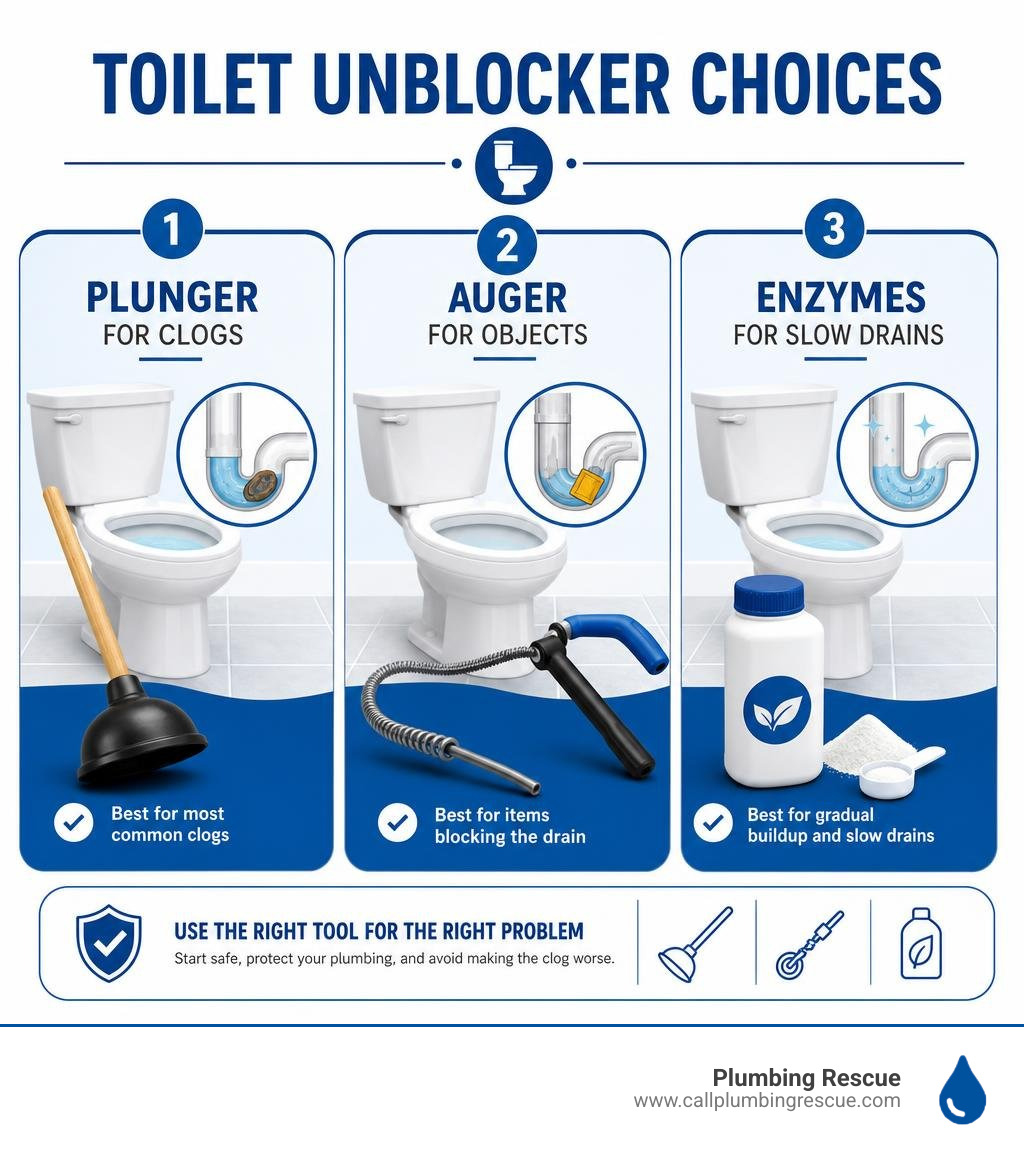
For most toilet clogs, the best toilet drain unblocker is a flange plunger or a toilet closet auger. These tools remove or break up the blockage without putting corrosive chemicals in the bowl. For a slow-flushing toilet rather than a full blockage, a toilet-safe enzyme treatment can help digest organic buildup over time.
Avoid pouring standard caustic drain gels, including products labeled for sinks or showers, into a toilet unless the label specifically says they are toilet-safe. Some can create heat, harm plastic plumbing, and make plunging or later professional work dangerous due to chemical splashback.
If water is rising, turn off the shutoff valve behind the toilet first. Then use a flange plunger with steady push-pull strokes. If that fails, use a rubber-protected closet auger gently. A clog that keeps returning, affects more than one drain, or causes sewage to back up needs a plumber, not more cleaner.
I am Ben Smith, a digital marketing strategist with 25-plus years of experience researching how homeowners find clear, safe answers during urgent service problems. In this guide to the best toilet drain unblocker, I focus on practical options that help you clear a clog while reducing the risk of damage, mess, and costly escalation.
Best toilet drain unblocker word roundup:
- best way to unclog a toilet drain pipe
- baking soda for unclogging toilets
- blocked drain plumber near me
Types of Toilet Drain Unblockers: Chemical, Enzyme, and Mechanical
When dealing with a stubborn toilet backup, understanding what is happening inside your plumbing lines is critical. A toilet contains an integrated porcelain trapway (an S-bend or P-trap) designed to hold standing water that blocks sewer gases from entering your home. However, this curved design makes clearing obstructions tricky compared to a straight sink drop. Exploring bathroom drain clog fixes that actually work starts with knowing how different unblockers interact with your pipes.
| Unblocker Type | Active Mechanism | Best For | Risks & Drawbacks |
|---|---|---|---|
| Mechanical Tools (Flange Plungers, Closet Augers) | Direct kinetic force, physical retrieval, and suction vacuum | Immediate, complete blockages, foreign objects, paper clogs | Requires manual effort; improper snake use can scratch porcelain |
| Enzyme / Biological Cleaners | Live bacteria and enzymes digesting proteins, fats, and starches | Slow-running toilets, organic wall buildup, routine prevention | Takes 6 to 8 hours; cannot penetrate standing-water full blockages |
| Caustic Chemical Gels (Lye, Bleach, Sulfuric Acid) | Exothermic chemical burning of hair, grease, and cellulose | Straight sink and tub drains ONLY (Never use in toilets) | Generates extreme heat; cracks porcelain, melts ABS, severe burn hazards |
Enzyme vs Mechanical: Which is the Best Toilet Drain Unblocker for Homeowners?
Mechanical tools provide immediate results. A heavy-duty flange plunger uses hydraulic pressure to displace standing water and dislodge obstructions caught in the trapway. For solid clogs resting deeper in the bend, a manual closet auger hooks and extracts the debris directly.
Enzymatic cleaners rely on natural biological action rather than brute force. Products using active enzymes and bacteria break down organic waste, toilet paper residue, and sludge without degrading PVC or cast iron. While enzymes will not punch an immediate hole through a totally stopped toilet, they excel at clearing pipe walls and restoring optimal flush velocity over time.
The Dangers of Caustic Chemical Cleaners in Toilet Bowls
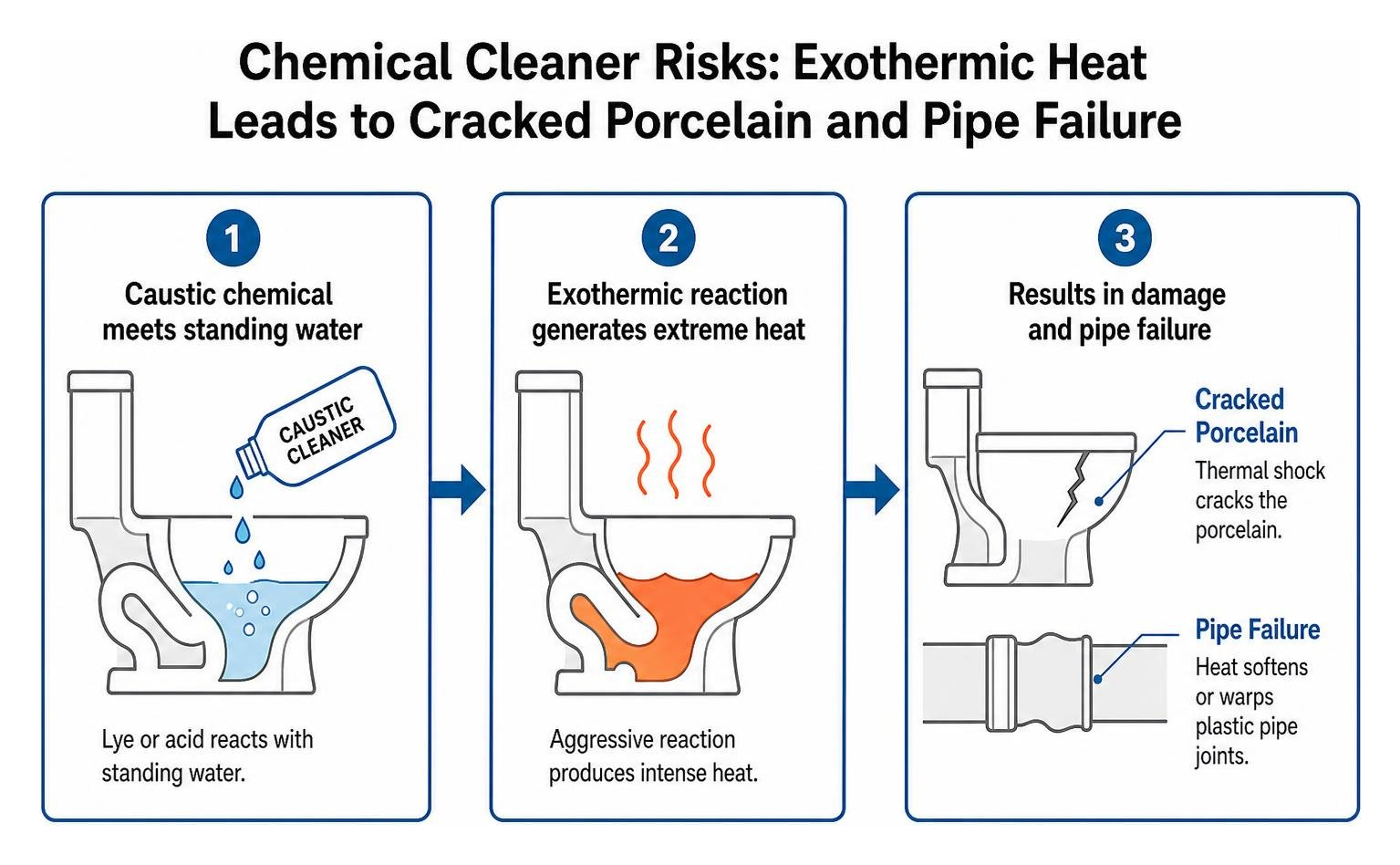
Traditional caustic chemical drain openers often contain high concentrations of sodium hydroxide (lye) or sulfuric acid. When these chemicals meet standing water, an aggressive exothermic reaction occurs, generating intense heat. In a toilet bowl, this localized thermal shock can crack the porcelain fixture along the waterline, causing expensive water damage.
Furthermore, leaving caustic chemicals sitting overnight can soften or warp residential ABS plastic pipe joints. According to safety guidance like the Universal Unblocker safety guidelines, standard chemical cleaners are strictly contraindicated for toilets due to severe splashback burn risks. If an emergency plumber must snake or dismantle your toilet later, trapped chemicals present a direct danger of blindness or skin burns.
Top Product Roundup: Choosing the Best Toilet Drain Unblocker for Every Clog
Finding the right solution requires matching your specific clog type to the right tool or formula. Here are smart solutions for every blocked drainage system based on real-world performance, safety, and lab evaluations.

Green Gobbler Drain Clog Dissolver
For those who want a liquid solution that avoids harsh caustic soda, Green Gobbler Drain Clog Dissolver offers a dense, bleach-free formula. It is engineered to sink through standing bowl water directly to the trapway to dissolve toilet paper, organic matter, and personal care wipes. Holding a 4.3 out of 5-star rating across 5,928 customer reviews, it is backed by a 30-day hassle-free money-back guarantee and is completely safe for plumbing pipes and septic systems.
Drano Max Build-Up Remover
When you are fighting a sluggish flush rather than a standing-water emergency, Drano Max Build-Up Remover uses natural enzymes and bacteria to eat away residue along pipe walls. This phosphate-free formula does not generate heat, making it safe for all toilet fixtures. For slow-running bowls, applying 4 ounces for three consecutive nights digests organic build-up safely.
Korky Beehive Max Flange Plunger and Toilet Closet Augers
A dedicated flange plunger—such as the Korky Beehive Max—features an extended rubber neck that locks into the curved drain contour of modern low-flow and standard toilet bowls. For stubborn physical blockages located 2 to 6 feet down the line, a professional 3-to-6-foot toilet closet auger features a protective rubber boot that guides a flexible steel cable through the trapway without scratching delicate porcelain.
Drano Snake Plus and Specialized Hybrid Tools
Hybrid systems like the Snake Plus Tool + Gel System pair a 23-inch barbed mechanical tool with a concentrated residue-clearing gel. While formulated primarily for bathroom sinks and shower drains rather than toilet bowls, it highlights the benefit of physical extraction followed by residue cleaning. Similarly, liquid formulas like HG drain and plug unblocker effectively clear connected bathroom sink traps without generating the undissolved granular blockages caused by cheap powders.
Safe DIY Methods and Mechanical Clearing Techniques
Before calling for backup, simple mechanical steps combined with basic household physics can resolve over 80% of common toilet clogs safely. Remember to stop the overflow with these pro toilet unclogging tips as soon as you notice standing water.
Step-by-Step Flange Plunging and Toilet Snake Operation
- Locate the Shutoff Valve: Turn the oval valve behind the toilet clockwise to cut off the water supply and prevent bowl overflow.
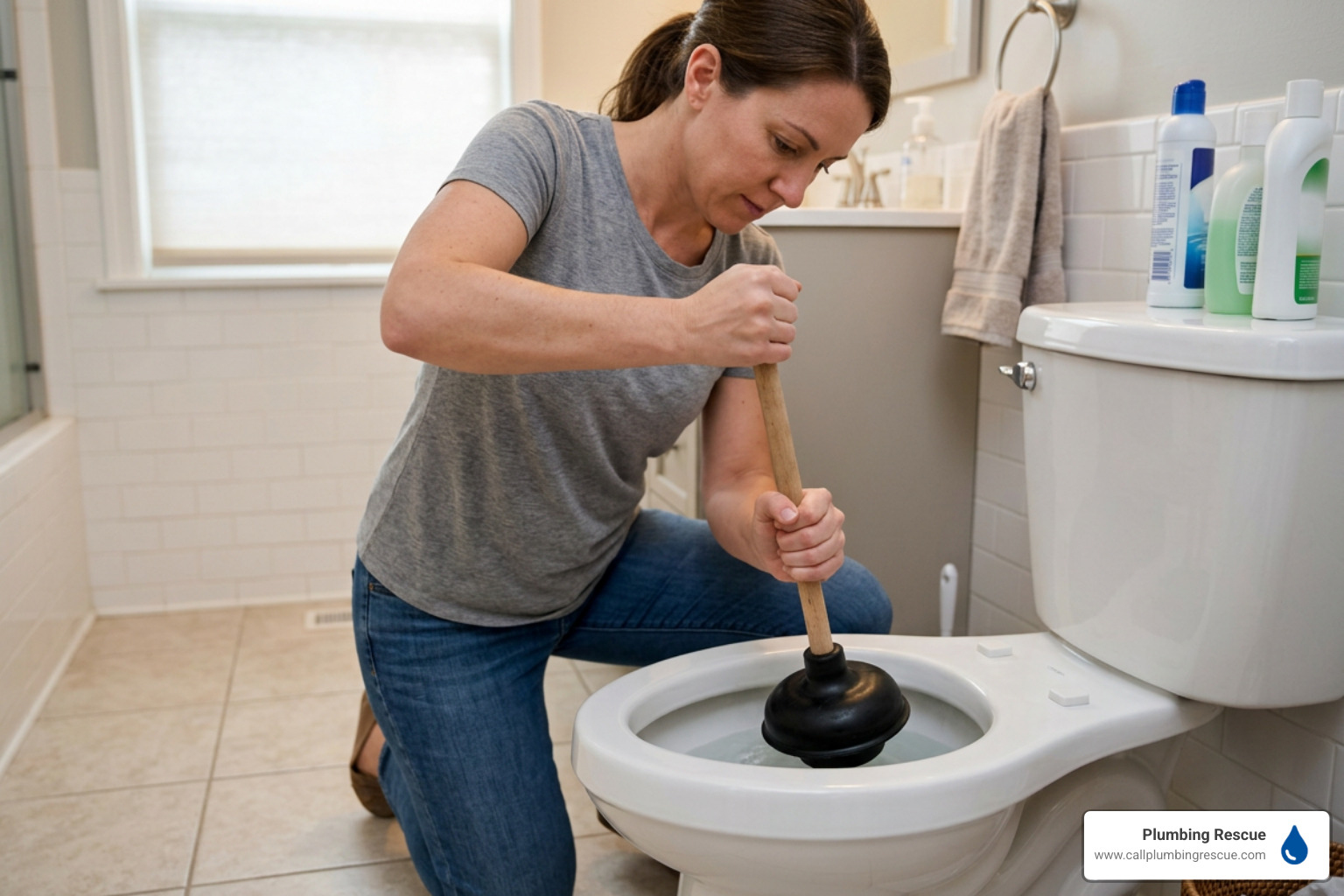
- Prep the Plunger: Ensure the rubber flange extension is pulled out from the plunger cup. Submerge the head completely in bowl water (add a bucket of tap water if the bowl is dry).
- Establish a Vacuum Seal: Position the flange squarely over the drain hole. Press down gently on your first stroke to expel trapped air.
- Apply Kinetic Force: Pump vigorously up and down 10 to 15 times, maintaining the seal. The upward pull is just as important as the downward push for breaking up the clog.
- Use a Closet Auger if Plunging Fails: Insert the rubber-sheathed end of a toilet auger into the drain opening. Slowly crank the handle clockwise while pushing forward to navigate the trapway bend. When you feel resistance, rotate the auger to snag the blockage, then retrieve it gently.
Natural Household Remedies: Dish Soap, Baking Soda, and Warm Water
If you do not have a plunger on hand, household ingredients can lubricate and break down soft organic blockages:
- Dish Soap Lubrication: Pour 1/2 cup of standard liquid dish soap or liquid laundry detergent into the bowl. The dense soap sinks to the bottom, lubricating the trapway walls so the blockage slides through. Let it sit for 20 minutes, then pour a bucket of hot (not boiling) tap water from waist height.
- Baking Soda and Vinegar: Learn how to unblock a toilet using baking soda and vinegar by pouring 1 cup of baking soda followed by 2 cups of white vinegar into the bowl. Allow the effervescent foaming reaction to work on the organic matter for 30 minutes before following with warm water.
Preventing Severe Toilet Blockages and When to Call a Pro
The best approach to plumbing maintenance is keeping foreign materials out of your drainage system entirely. In severe cases, an isolated toilet issue may actually be an early warning of a main line blockage. Consult the ultimate guide to clearing a blockage in your main sewer line if multiple drains in your home are misbehaving.
The Myth of Flushable Wipes and Routine Monthly Maintenance
Despite manufacturer packaging claims, “flushable” wipes do not disintegrate like standard toilet paper. They remain intact as they travel through plumbing lines, binding with fats and mineral deposits to create massive clogs. Follow a strict “Three Ps” rule: only flush pee, poop, and toilet paper. To maintain clear pipe walls, check out how to stop the sludge with the best sewer line cleaners of 2026 using preventative enzyme treatments once a month.
What Makes a Formula the Best Toilet Drain Unblocker for Septic Systems?
Caustic chemical cleaners kill the beneficial anaerobic bacteria inside septic tanks, disrupting the natural biological breakdown process and leading to solid waste backups in your drain field. A septic-safe unblocker relies on non-corrosive enzymes, bacteria, or biodegradable plant surfactants that actively support your tank’s biological ecosystem while clearing organic sludge.
Recognizing Main Sewer Line Backups
If using a plunger or closet auger fails to restore drainage, you may be facing a mainline sewer blockage caused by tree roots or broken pipes. Review the ultimate guide to blocked pipes and what a plumber should actually cost to understand standard service benchmarks. Look out for these warning signs:
- Water bubbling up into your bathtub or shower when you flush the toilet.
- Multiple plumbing fixtures backing up simultaneously across lower levels.
- Gurgling sounds coming from sink drains when the toilet runs.
- Persistent sewage odors near basement or yard cleanouts.
Frequently Asked Questions About Toilet Unblockers
Can you put standard chemical drain cleaner in a toilet?
No. Standard chemical drain cleaners like traditional lye or bleach gels are not designed for toilets. The standing water in the bowl dilutes the chemical, reducing its effectiveness while the resulting exothermic reaction generates heat that can crack the porcelain trapway.
What should you do if a drain unblocker fails to clear the toilet?
If a chemical or enzyme treatment fails, do not pour a different chemical product into the bowl. Mixing different chemicals (like bleach and ammonia) produces deadly chlorine gas. Flush several gallons of cold water into the fixture if possible, avoid plunging to prevent chemical splashback, and contact a licensed plumbing professional. Always tell the visiting technician if chemicals were poured into the bowl.
Is boiling water safe to pour into a porcelain toilet bowl?
Never pour boiling water into a porcelain toilet. The sudden extreme temperature shift causes thermal shock, which will crack the porcelain bowl or melt the wax ring seal beneath the base. Always use hot tap water instead.
Conclusion
When a toilet stops up, choosing the safest and most effective clearing method protects your plumbing fixtures and wallet. For immediate, full blockages, heavy-duty flange plungers and protective closet augers remain the gold standard. For slow drains, biological enzyme cleaners break down organic sludge safely without damaging pipes, seals, or septic systems.
If DIY efforts fail, your toilet repeatedly clogs, or water backs up into adjacent fixtures, the problem lies deeper in your sewer line. At Plumbing Rescue, our licensed technicians provide rapid dispatch across Austin, TX, Denver, CO, Indianapolis, IN, and Phoenix, AZ. When you need urgent, day-or-night help, turn to our 24-hour drain cleaning services to get your home flowing smoothly again.
Dealing With This Yourself? Talk to a Licensed Plumber.
Skip the guesswork — get a straight answer from a local pro. Available 24/7, no forms, no waiting.
Call Now: (888) 686-0698