
Fast Bajaj Majesty Geyser Repair Steps for a Cold Morning
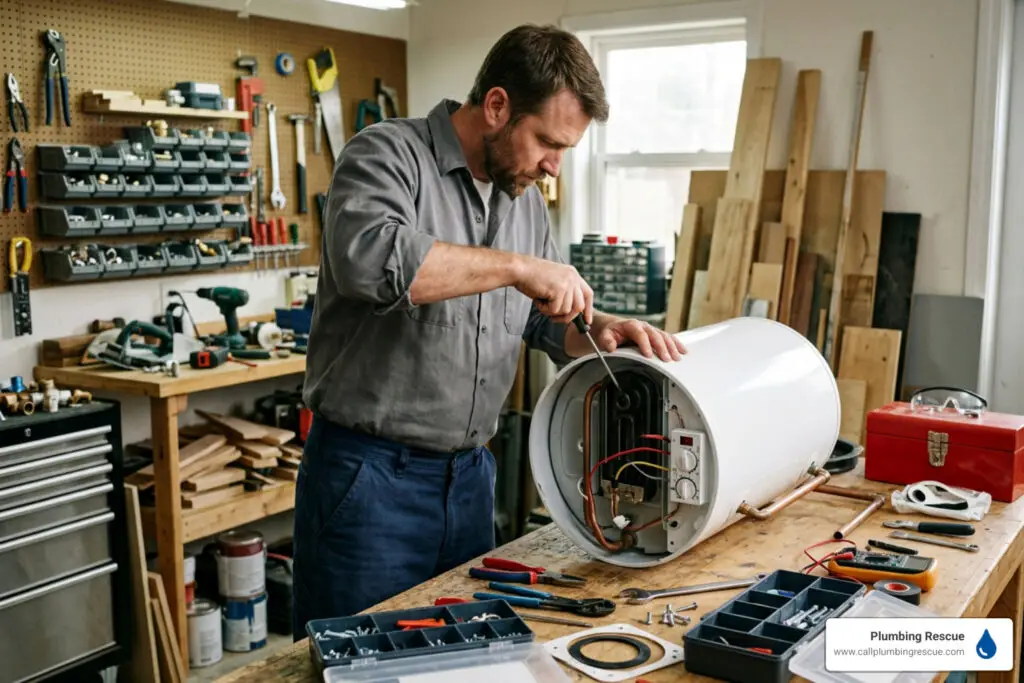
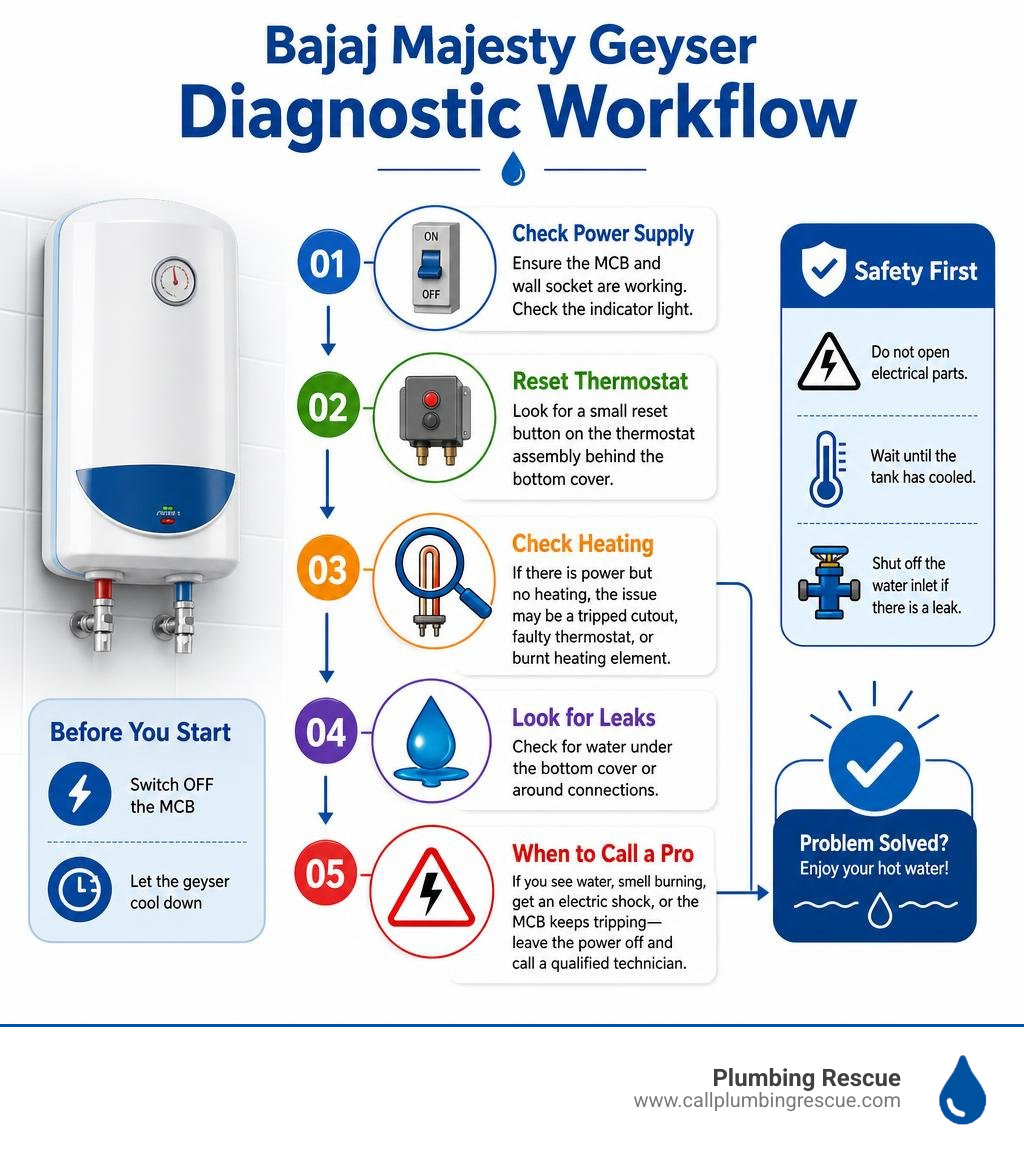
For bajaj majesty geyser repair, start by switching off the dedicated MCB and letting the unit cool. Check the power supply and indicator light first. If the geyser has power but does not heat, the likely causes are a tripped thermal cutout, a faulty thermostat, or a burnt heating element. If you see water under the bottom cover, smell burning, get an electric shock, or the MCB keeps tripping, leave the power off and call a qualified technician.
A safe first check:
- Confirm the MCB and wall socket are working.
- Look for a small reset button on the thermostat assembly behind the bottom cover.
- Do not open electrical parts until power is isolated and the tank has cooled.
- Shut off the water inlet as well if the geyser is leaking.
Hard-water scale can also make a Majesty or Platini geyser heat slowly, rumble, and eventually damage its element. Regular descaling, generally every 12 to 18 months in hard-water areas, helps prevent that failure.
I am Ben Smith, a digital marketing strategist with 25+ years of experience creating clear, practical service content for homeowners and service businesses. While my specialty is helping people find trustworthy solutions quickly, this bajaj majesty geyser repair guide focuses on the safe checks to make before a small problem becomes a cold shower, a leak, or an electrical hazard.
Bajaj majesty geyser repair terms made easy:
Common Issues and Bajaj Majesty Geyser Repair Basics
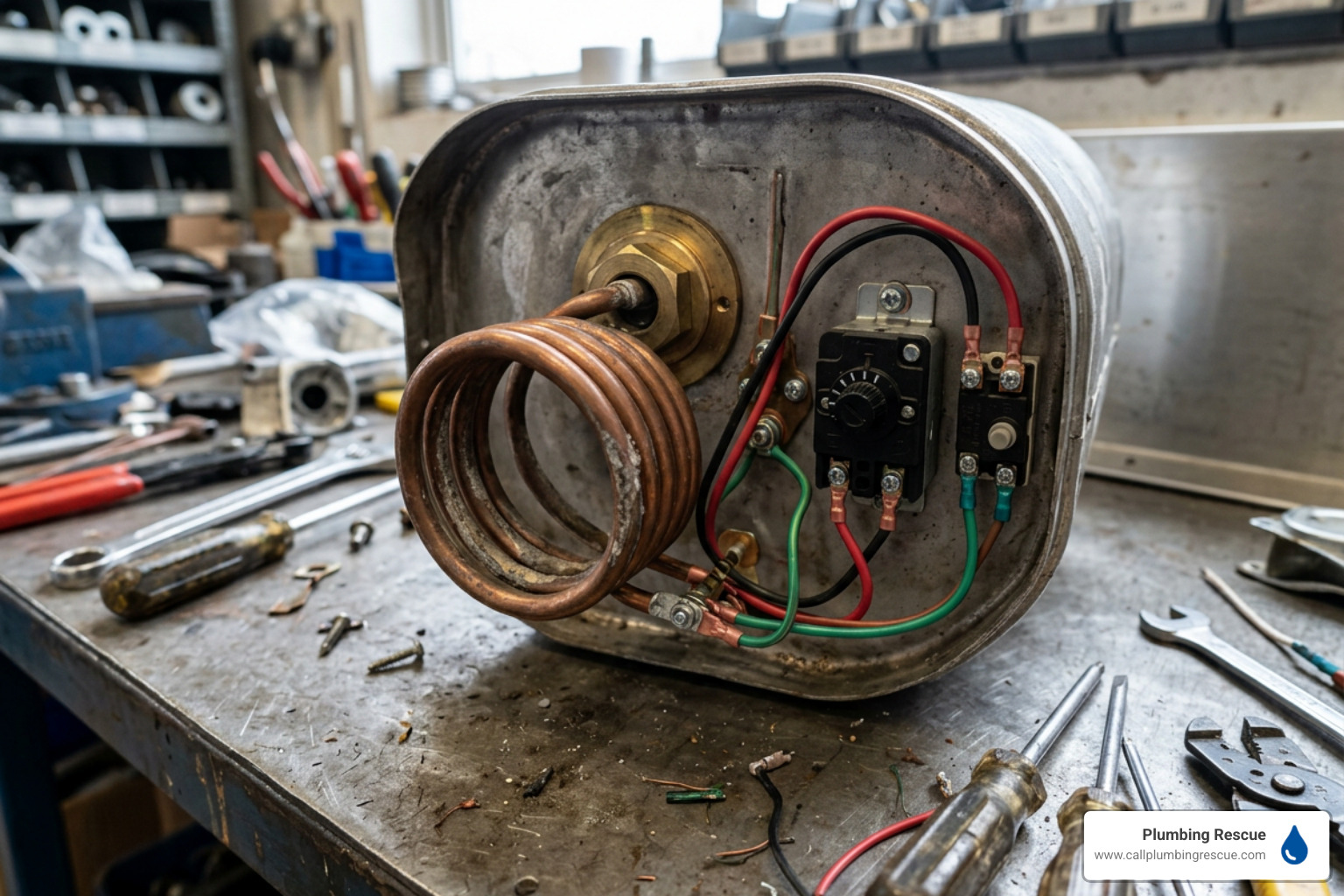
Waking up ready for a warm bath only to be greeted by icy water is an unpleasant surprise. When dealing with water heaters, identifying the root cause quickly saves time and prevents further damage. We often see homeowners dealing with Common Water Heater Problems and How to Solve Them, ranging from simple power tripping to worn-out heating elements.
The most frequent issues affecting the Bajaj Majesty and Platini storage series include:
- No Hot Water / Indicator Off: Typically caused by an unseated power plug, a tripped miniature circuit breaker (MCB), or an activated high-limit thermal cutout.
- Power On but No Heating: The indicator light illuminates, but the water remains stone cold. This points directly to a burnt-out immersion heating element or a stuck thermostat.
- Insufficient or Slow Heating: Mineral scale accumulates around the heating coil over 12 to 18 months, creating an insulating blanket that blocks heat transfer.
- Water Dripping from the Base: Loose internal fittings, a compromised flange rubber gasket, or corrosion in the inner tank.
- Popping and Rumbling Sounds: Heavy sediment build-up at the bottom of the storage tank trapping pockets of boiling water and steam.
Essential Tools and Safety Precautions for Bajaj Majesty Geyser Repair
Working on electrical water heaters requires caution. Water and electricity are a hazardous combination. Before removing any cover or touching wiring, ensure the dedicated 15A wall switch is off and the MCB at your main breaker panel is switched off. If you are learning how to handle water heater repairs safely, consulting The Easy Fix Hot Water Heater Manual provides great foundational insight on electrical isolation.
For testing and minor part replacements, gather these essential tools:
- Digital Multimeter: For measuring resistance (ohms), verifying voltage, and checking electrical continuity.
- Insulated Screwdrivers (Flathead and Phillips): To remove the bottom panel screws and terminal connections safely.
- Adjustable Spanner / Wrench Set: For loosening inlet/outlet flexible pipes and heating element flange nuts.
- Thread Seal Tape (Teflon Tape): Essential for resealing plumbing connections and avoiding moisture leaks.
- Non-Contact Voltage Tester: To double-check that no stray electrical current reaches the unit before you start.
Locating and Using the Thermal Cutout Reset Button
One of the most common reasons a Bajaj Majesty geyser goes completely unresponsive is the thermal safety cutout switch. This safety feature is designed to disconnect power if the internal water temperature exceeds safe operational limits (usually above 75°C to 85°C), preventing the tank from boiling dry or bursting under excessive steam pressure.
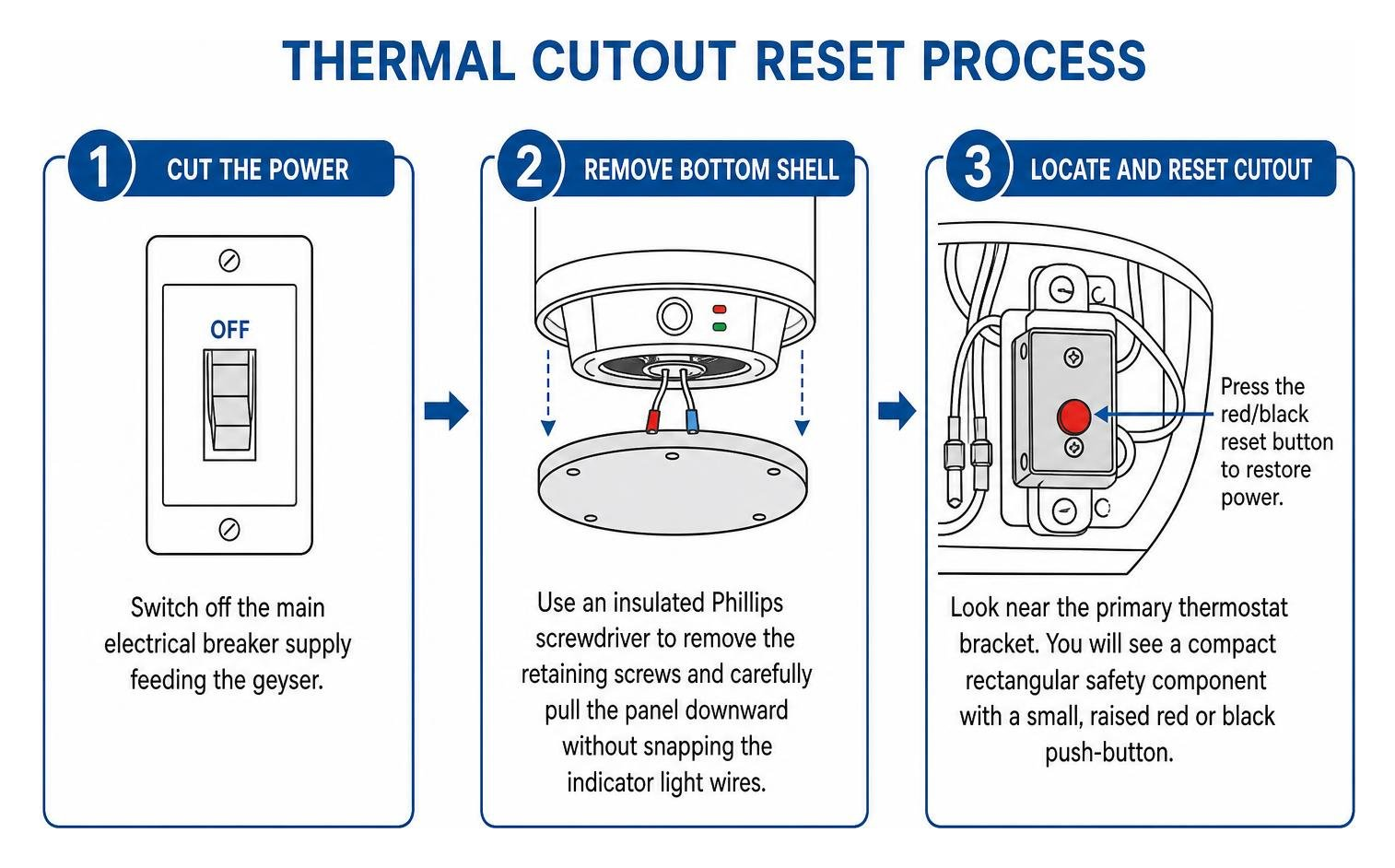
To access and reset this switch:
- Cut the Power: Switch off the main electrical breaker supply feeding the bathroom geyser.
- Remove the Bottom Shell: Use an insulated Phillips screwdriver to remove the retaining screws from the bottom plastic cover of the Bajaj Majesty. Carefully pull the panel downward without snapping the indicator light wires.
- Locate the Cutout: Look near the primary thermostat bracket. You will see a compact rectangular safety component equipped with a small, raised red or black push-button.
- Press the Button: Firmly press the reset button until you hear or feel a distinct click.
- Reassemble and Test: Reattach the cover, restore the water supply, make sure the tank is filled, and turn the MCB back on. If the geyser powers up and begins heating, the high-limit thermal cutout was simply tripped.
Step-by-Step Electrical Troubleshooting and Component Testing
When resetting the thermal switch does not resolve the issue, systematic electrical testing with a digital multimeter will pinpoint whether the thermostat or the heating element has failed.
Testing and Replacing the Thermostat Assembly
The thermostat in a Bajaj Majesty regulates water temperature between 30°C and 75°C. If the sensing probe or internal contact points corrode, the unit will fail to energize the heating element. While AO Smith designs differ slightly in layout, the diagnostic approach is very similar to what is outlined in The Quick Guide to AO Smith Lower Thermostat Replacement.
- Isolate Power: Confirm no electricity is flowing using your voltage tester.
- Disconnect Wires: Label and photograph the wiring connections leading to the thermostat terminals, then loosen the screw clamps to free the wires.
- Slide Out the Stem: Carefully pull the long copper capillary sensing stem straight out of its immersion pocket sleeve inside the tank flange.
- Continuity Check: Set your multimeter to the lowest resistance (ohms) or continuity buzzer setting. Place the probes across the thermostat input and output terminals. Rotate the temperature dial up and down. You should hear a distinct click, and the meter should show continuity (near 0 ohms) when set to maximum temperature, and an open circuit (OL) when turned down. If it remains open at all settings, the thermostat is defective and must be swapped with a genuine Bajaj replacement.
Step-by-Step Heating Element Replacement for Bajaj Majesty Geyser Repair
If your thermostat tests fine but the geyser still will not heat, the immersion heating element is likely burnt out. A properly functioning Bajaj Majesty heating element should display a resistance reading between 20 and 40 ohms on a multimeter. A reading of ‘OL’ (Open Loop) confirms the internal filament is severed. For comprehensive visual references, you can read How to Repair Bajaj Geyser [Complete DIY Guide] – RapidRepair.blog .
Follow these steps to replace the element:
- Drain the Tank: Shut off the cold water inlet valve. Disconnect the hot water outlet pipe and attach a drain hose or place a bucket beneath the inlet to empty the 10L, 15L, or 25L tank completely. Open nearby hot water taps to release vacuum pressure.
- Expose the Flange: Remove the bottom cover and disconnect the electrical wiring from the heating element studs.
- Unbolt the Flange: Use an adjustable socket wrench to loosen the retaining nuts securing the circular metal element flange. Remove the nuts gradually.
- Extract the Burnt Element: Gently pull the heating assembly straight down out of the tank collar. Expect some accumulated sediment, lime scale, and residual water to drop out.
- Fit the New Gasket: Always discard the old rubber seal and fit a fresh, high-temperature rubber flange gasket. Clean the mating surfaces of the tank collar with a dry cloth.
- Bolt in Star Pattern: Slide the new heating element into the tank opening. Tighten the flange nuts progressively in a crisscross or star pattern. This applies uniform clamping force across the gasket, preventing localized pinching and future water leaks.
- Refill Before Powering On: Turn the cold water supply back on and let hot water flow steadily from your bathroom taps before reconnecting power. Powering on an empty tank will immediately destroy the new element due to dry firing.
Fixing Leaks, Tripping MCBs, and Tank Maintenance
Plumbing leaks and electrical shorts require prompt attention to protect your home’s structural integrity and your electrical system. Knowing the right actions for Shutting Down Your Water Heater in an Emergency ensures safety during active leaks or electrical shorts.
Resolving MCB Tripping and Electrical Ground Faults
If your geyser immediately trips the miniature circuit breaker (MCB) or safety switch the second it is turned on, do not repeatedly force the breaker back up. Constant tripping indicates a severe short circuit or a ground fault.
- Cracked Element Sheath: Over time, scale accumulation causes hot spots on the heating element casing, resulting in tiny fractures. Water enters the casing, touches the live electrical filament, and creates an instant path to ground.
- Testing Ground Faults: Place one probe of your multimeter on an element electrical terminal and the other probe firmly against the bare metal flange or earth grounding terminal. If the meter registers any continuity reading instead of remaining at infinite resistance (OL), current is leaking to earth. The element must be replaced.
- Moisture in the Terminal Box: Water leaking from an inlet pipe or faulty gasket can drip directly into the wiring block beneath the geyser, shorting the 15A live connection to the metal chassis.
Descaling the Tank and Servicing the Safety Valve
In areas with hard ground water, minerals settle at the bottom of the storage chamber and calcify around moving parts. Descaling the tank every 12 to 18 months preserves heating efficiency and prevents inner tank corrosion. Proactive care advice like How to Maintain Your AO Smith Water Heater for Years underscores how vital routine flushing is across all storage geyser brands.
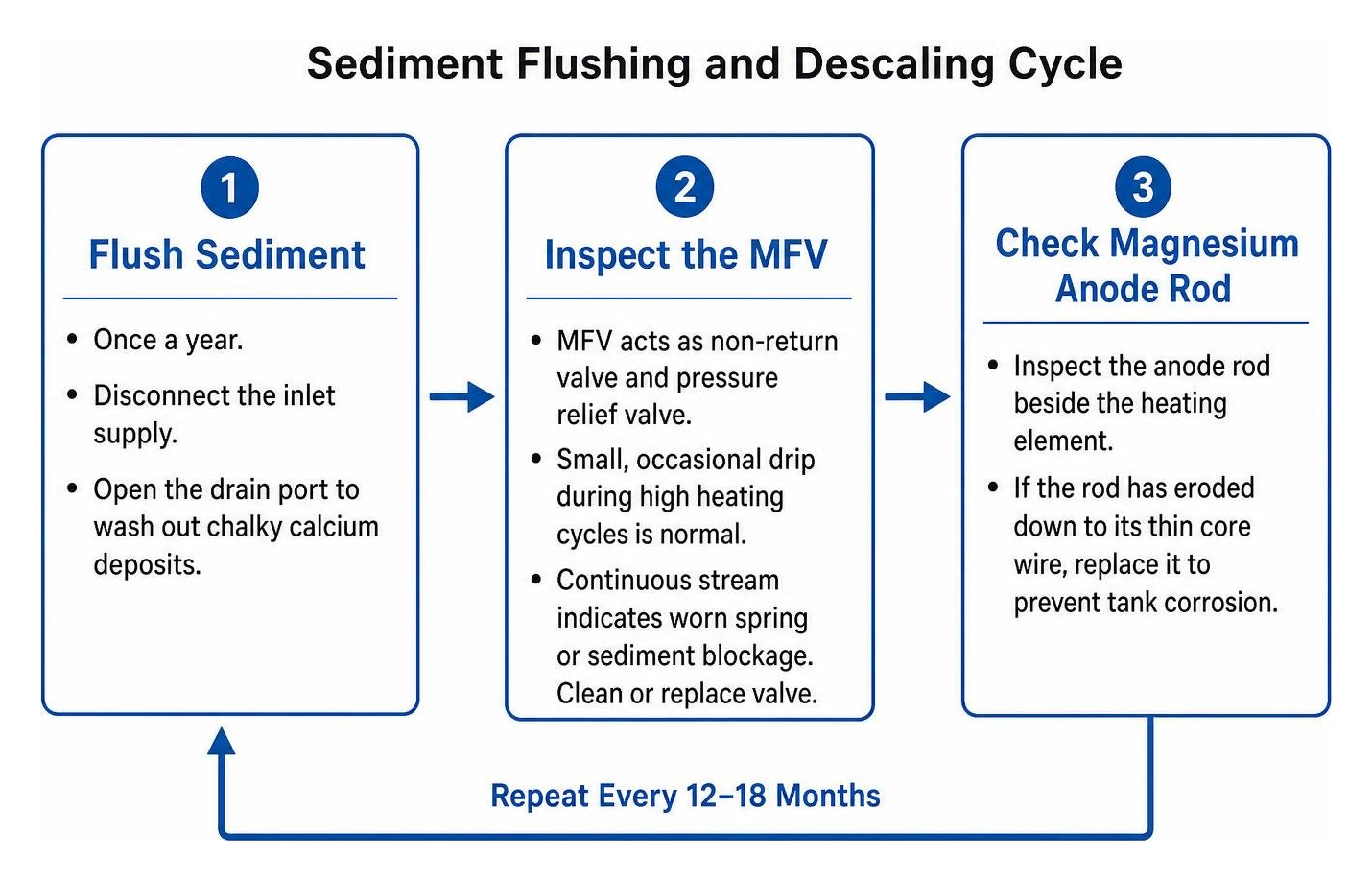
- Flush Sediment: Once a year, disconnect the inlet supply and open the drain port to wash out chalky calcium deposits.
- Inspect the Multi-Function Valve (MFV): The MFV installed on the cold inlet pipe serves as both a non-return valve and a pressure relief valve. A small, occasional drip from the discharge spout during high heating cycles is normal pressure relief. However, a continuous stream indicates a worn spring or sediment obstruction inside the valve seat that requires clearing or valve replacement.
- Check the Magnesium Anode Rod: Inspect the sacrificial anode rod mounted beside the heating element. If the rod has eroded down to its thin core wire, replace it promptly to prevent corrosion from attacking the steel tank lining.
Professional Servicing, Warranty Claims, and Installation Standards
While minor issues like resetting a safety switch can be handled at home, inner tank leaks and major electrical overhauls often call for certified service. If your water heater is relatively new, you should review your warranty terms before disassembling the unit to avoid voiding coverage.
Consumer experiences detailed on Bajaj Electricals — bajaj geyser majesty 15 ltr. tank is under warranty period, but not getting repaired or replaced highlight the importance of understanding coverage specifics. Water heater storage tanks typically come with a 5-year warranty against leakage, whereas heating elements, thermostats, and electrical parts carry a separate 2-year warranty window.
To schedule official warranty repairs or log service tickets with Bajaj Customer Support:
- Customer Care Phone Line: 022-4128 0000 (Available 9:00 AM to 9:00 PM)
- Official WhatsApp Support: 70399 20000
- Support Email: [email protected]
- Escalations: [email protected]
| Repair / Service Job | Estimated Cost Range | Common Requirements |
|---|---|---|
| Minor Repair & Diagnostics | ₹300 – ₹500 | Fuse replacement, wire reconnect, thermal reset |
| Element or Thermostat Replacement | ₹400 – ₹900 | Multimeter verification, gasket replacement |
| Tank Cleaning & Descaling | ₹250 – ₹450 | Sediment flush, MFV clearance, scale removal |
| New Geyser Installation | ₹350 – ₹600 | Heavy wall brackets, pipe plumbing, MCB wiring |
Understanding Service Charges and Finding Service Centers
Standard minor repair rates across metro regions typically run between ₹300 and ₹500, while replacing critical components like the thermostat or heating element averages between ₹400 and ₹900 (plus parts). If your unit has served you for more than 8 to 10 years and suffers from an inner tank fracture, investing in repairs is often inefficient compared to full replacement.
When booking a professional technician, always verify that they utilize authentic OEM spare parts and test the unit under water pressure before completing the visit.
Proper Geyser Installation Guidelines
Faulty installation is a leading contributor to premature geyser breakdown. When hanging or re-installing a Bajaj Majesty storage water heater, follow these essential mechanical and plumbing rules:
- Mounting Height: Mount the base of the water heater at least 1.8 meters (6 feet) above the finished floor level to guarantee safe clearance and stable water pressure.
- Dedicated Electrical Point: Always plug the geyser into a dedicated 16-amp grounded socket wired through an independent MCB. Avoid multi-plug adapters.
- Piping Distance: If connecting a single high-efficiency storage geyser to serve two points (e.g., adjacent bathroom or kitchen sink), ensure the total pipe run remains under 8 meters to prevent severe thermal delivery loss.
- Wall Anchors: Use heavy-duty metal expansion anchor bolts capable of supporting at least triple the combined weight of the geyser filled with water (a full 25L geyser weighs over 35 kg).
Frequently Asked Questions About Bajaj Geysers
Why is my Bajaj Majesty geyser not heating water?
The most common causes are a tripped thermal cutout switch, a burnt heating element (reading ‘OL’ on a multimeter instead of 20-40 ohms), or a faulty thermostat. Check if the power socket has electricity and ensure the safety reset button on the thermostat assembly has been pressed.
Where is the reset button located on a Bajaj geyser?
The reset button is located behind the bottom plastic access panel on the main thermostat housing. It is a small red or black push-button. You must disconnect the electrical supply and remove the lower cover screws to access and press it.
How much does it cost to repair a Bajaj geyser?
Minor electrical repairs and diagnostics generally cost between ₹300 and ₹500. Replacing an immersion heating element or thermostat ranges from ₹400 to ₹900 depending on the model capacity and spare parts required.
Conclusion
Understanding how your Bajaj Majesty geyser operates makes troubleshooting straightforward. By systematically testing the power supply, resetting tripped safety cutouts, and verifying heating element resistance with a multimeter, you can quickly address heating failures and minor leaks. Maintaining a regular descaling schedule every 12 to 18 months will further extend your appliance’s operational life.
When an aging water heater develops an internal tank rupture, recurring electrical shorts, or severe scale damage, replacing the unit is often the safest and most cost-effective path forward. If you need professional advice or complete water heater replacement, our team at Plumbing Rescue provides 24/7 emergency diagnostics, rapid call routing, and reliable water heater solutions day or night.
Dealing With This Yourself? Talk to a Licensed Plumber.
Skip the guesswork — get a straight answer from a local pro. Available 24/7, no forms, no waiting.
Call Now: (888) 686-0698