

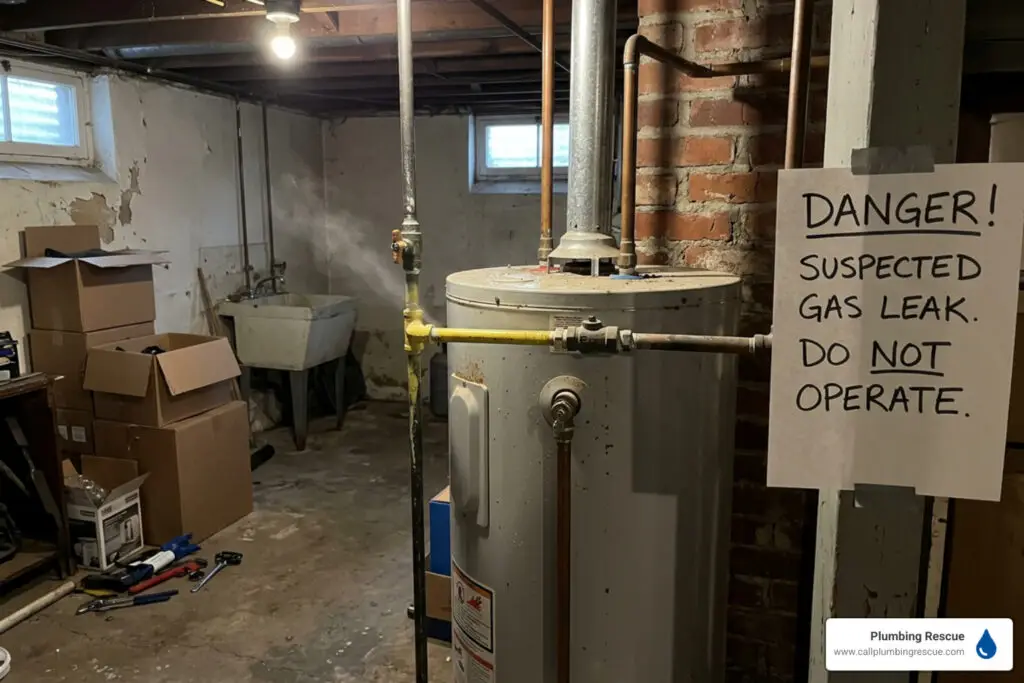
Gas Water Heater Gas Leak: Treat It as an Emergency
A gas water heater gas leak can create a fire or explosion risk, even when the odor seems faint. If you smell rotten eggs or sulfur near the water heater, hear hissing, or suspect leaking gas, get everyone and pets outside immediately. Do not use lights, phones, switches, matches, or appliances inside the building. From a safe location, call your gas utility, 911, or the fire department.
Natural gas is odorless, so utilities add a strong sulfur-like odorant to make leaks easier to notice. Propane also has an added warning smell and can collect in low spaces, such as basements. A persistent gas odor near a water heater is never normal and should not be ignored.
This guide explains how to spot warning signs, understand likely causes, and know when a qualified gas professional must take over. It also separates a fuel-gas leak from other water heater problems, including combustion and carbon monoxide concerns.
I am Ben Smith, a digital marketing consultant with more than 25 years of experience helping service businesses communicate urgent, high-intent problems clearly online, including gas water heater gas leak safety concerns. The goal here is simple: help you recognize the risk quickly and make the safest next decision.

Gas water heater gas leak terms explained:
Recognizing Critical Signs of a Water Heater Leak
Spotting a gas water heater gas leak early can protect your home and family from dangerous gas accumulation. Fuel gas leaks rarely happen out of nowhere without leaving a trail of physical, auditory, or visual clues. Natural gas and liquefied petroleum (LP/propane) suppliers inject a chemical compound called mercaptan into utility lines. Mercaptan produces a pungent sulfur or rotten egg smell that human noses can easily identify even at very low concentrations.
However, you should never rely strictly on your sense of smell. Over time, an odorant can fade inside steel piping or become absorbed by concrete walls and drywall—a phenomenon known in the plumbing industry as “odor fade.” Furthermore, if you suffer from allergies, sinus congestion, or reduced olfactory sensitivity, you might miss a faint odor entirely. That is why observing the physical space around your gas water heater and listening for subtle environmental changes is so vital.

Auditory and Visual Indicators Around the Unit
If gas is escaping under pressure, you will often hear it before you see any damage. A high-pitched whistling or low hissing sound coming from the base of your water heater, the gas supply line, or the gas control valve indicates escaping gas. Even if the room is quiet and the noise is faint, a hissing gas fitting should always trigger immediate concern.
Visually, there are several key indicators of an active leak or improper combustion:
- Soot Accumulation and Discoloration: Dark, powdery soot building up around the burner access door, draft hood, or control valve indicates incomplete fuel combustion, often caused by gas pressure imbalances or obstructed gas orifices.
- Burner Flame Color: A healthy gas water heater burner produces a steady, crisp blue flame with slight yellow tips. If you see a large, floppy orange or yellow flame, gas is not burning completely, which frequently accompanies internal control valve failures or gas line obstructions.
- Corrosion and Rust on Gas Fittings: Excess moisture paired with escaping natural gas can accelerate oxidation on iron pipe joints and brass flex connections, leaving flaky rust, white mineral crusts, or green corrosion rings.
- Drying Vegetation Nearby: If your water heater is in a garage or utility room adjacent to an exterior wall, buried gas lines feeding the unit may leak underground. Escaping natural gas displaces oxygen in soil, causing nearby lawn patches or garden plants to turn yellow and die suddenly.
- Frequent Pilot Light Outages: While a dirty thermocouple can cause a pilot flame to go out, sudden pressure drops from an active upstream leak can also repeatedly extinguish the pilot light.
Physical Exposure Symptoms in Humans and Pets
Natural gas and propane displace oxygen in enclosed spaces. As gas accumulates, household members and domestic pets will suffer from physiological oxygen deprivation. Pets are often affected first due to their smaller body mass and proximity to floor level, where heavier propane gas tends to settle.
Watch closely for these physical symptoms among household members when spending time near utility spaces:
- Unexplained, persistent headaches or pressure around the temples
- Sudden dizziness, lightheadedness, or loss of coordination
- Unexplained nausea, vomiting, or stomach distress
- General lethargy, drowsiness, or sudden weakness
- Eye and throat irritation or sudden difficulty breathing
- Disorientation or confusion in otherwise healthy individuals
It is equally critical to distinguish a combustible gas leak from carbon monoxide (CO) exposure. Carbon monoxide is an odorless, colorless byproduct of incomplete combustion. While a gas water heater gas leak introduces explosive fuel gas into your air, faulty flue venting or backdrafting sends toxic CO back into your living spaces. Both scenarios are life-threatening emergencies that require immediate evacuation.
To keep your household educated on pipeline safety standards, you can review how state authorities recommend homeowners Recognize the Signs of a Gas Leak.
Immediate Emergency Safety Steps
When you suspect an active gas water heater gas leak, your top priority is personal safety. Do not waste precious seconds searching for the exact source of the leak, attempting to tighten fittings, or gathering personal belongings. Natural gas fills rooms from the ceiling downward, while LP gas settles into low areas and basement floor drains. An accidental spark from an everyday device can ignite accumulated gas instantly.

Follow this immediate safety protocol the moment you smell gas or suspect a leak:
- Evacuate Everyone Immediately: Get all family members, visitors, and pets out of the house right away.
- Leave Doors Open: As you exit, leave entrance doors and exterior garage doors open to help exhaust gas naturally, provided doing so does not delay your escape.
- Avoid All Ignition Sources: Do NOT flip electrical light switches on or off, plug or unplug appliances, or open electronic garage doors. Do not use flashlights, light matches, or ignite lighters. Static electricity from turning on a ceiling fan or flipping a wall switch is enough to ignite volatile gas.
- Do Not Use Phones Inside: Do not use landlines or cellular phones inside the building or near the utility room.
- Establish a Safe Distance: Move at least 330 feet away from the structure—roughly the length of a football field—before making emergency phone calls.
- Call for Help: From your safe location outside, call 911, your local fire department, or your gas utility provider’s emergency dispatch center immediately.
Safe Manual Gas Shut-Off Valve Operation
If the manual gas shut-off valve is located outside or in an easily accessible location along your route of escape, you may safely isolate the line only if you can do so in seconds without exposing yourself to heavy gas concentrations.
Every gas water heater installation features a dedicated manual shut-off valve located on the rigid gas drop line within six feet of the appliance.
- Identify the Valve Lever: Modern installations feature a bright red or yellow lever handle attached to a ball valve. Older homes may feature an iron square-head plug valve that requires a wrench.
- Turn Perpendicular: To stop the flow of gas, turn the handle 90 degrees until the lever sits perpendicular (at a right angle) to the direction of the gas pipe. When the handle is parallel to the pipe, the valve is open; when it forms a cross with the pipe, the gas supply is shut off.
- Do Not Force Stuck Valves: If the valve lever is corroded, frozen, or stiff, do not hammer or force it. Exit immediately and let emergency responders isolate the line at the main meter outside.
To learn more about managing home plumbing and gas emergencies safely, review our comprehensive guide on How to Act During Emergency Water Leaks and Gas Leaks.
Actions When a Landlord or Relative Ignores the Hazard
It can be incredibly frustrating and dangerous when a family member, roommate, or landlord downplays a suspected gas water heater gas leak. Minor gas leaks often produce intermittent smells depending on utility pressure changes or furnace airflow, leading skeptical property owners to assume the smell is harmless.
If a landlord or family member refuses to address a gas leak:
- Contact the Gas Company Directly: Gas utilities do not require property owner permission to investigate a reported gas leak. When you call their emergency hotline, utility technicians respond rapidly to perform leak detection tests at no cost to you.
- Utility Gas Lockout: If the utility technician detects even a minor leak, they will immediately lock out the gas meter or shut off supply to the water heater, tagging it red (“red-tagging”). Property owners cannot legally restore service until a licensed plumber repairs the issue and passes inspection.
- Notify Local Housing Authorities and Code Enforcement: Landlords are legally obligated under residential warranty of habitability laws to provide safe living environments free from gas hazards. If a landlord ignores red tags or refuses repairs, contact local municipal code enforcement officers.
- Contact the Fire Department: If you smell strong gas odors and someone prevents you from shutting off the line, dial 911. Fire department crews possess specialized combustible gas indicators and have legal authority to enter buildings to eliminate public safety hazards.
Diagnosing Common Causes of a Gas Water Heater Gas Leak
Gas supply systems on water heaters are subject to constant thermal expansion, mechanical vibration, and aging chemical seals. Over years of routine operation, subtle mechanical wear can break airtight seals on pipe threads, burner valves, and supply hoses.
Common causes of a gas water heater gas leak include:
- Operational Vibration: As the main burner ignites and extinguishes hundreds of times a month, thermal shock and micro-vibrations travel through the steel chassis. Over time, these vibrations can back off compression nuts and loosen threaded pipe unions.
- Aging Gas Control Valves: The primary gas control thermostat valve regulates pilot fuel and main burner combustion. Internal rubber gaskets and diaphragm seals inside aging control valves dry out, harden, and crack—allowing gas to seep out around the temperature control dial or internal body seams.
- Corroded Pipe Threads: Moisture from basement dampness, atmospheric venting condensation, or small water leaks from the tank above can drip down onto black iron gas pipes, causing thread corrosion and gas weeping.
- Damaged Brass Flex Lines: Older brass gas flex connectors are highly vulnerable to stress corrosion cracking. Moving a water heater during maintenance or bumping against flexible lines can fracture brittle metal walls. Modern building codes require yellow-coated stainless steel flex connectors for this exact reason.
- Improper Use of Thread Sealants: Installing gas lines with standard white Teflon tape (meant for water pipes) instead of yellow gas-rated PTFE tape or approved pipe joint compound leads to gas breakdown and eventual thread leaks.
Soapy Water Test for a Gas Water Heater Gas Leak
If you or a technician need to verify whether a faint, non-emergency scent originates from a specific pipe fitting after shutting down the unit, the soapy water bubble test is a classic diagnostic tool.
Safety Note: Never perform a soapy water test if you smell strong gas, if gas has accumulated in an enclosed space, or if open flames are present. Always ensure the utility space is well-ventilated before checking connections.

- Prepare the Solution: Mix 1 part liquid dishwashing soap with 15 parts clean water in a small container (or roughly 1 tablespoon of soap per 1 cup of water).
- Apply to Fittings: Using a soft-bristled paint brush, sponge, or spray bottle, apply the soapy mixture generously onto every gas connection point. Pay close attention to pipe unions, flex line flare nuts, manual shut-off valve stems, and control valve threaded inlets.
- Observe Bubble Formation: Watch each fitting carefully for 1 to 2 minutes. If gas is escaping, the escaping pressure will expand the soap film, creating growing, cluster-like bubbles or continuous foam at the leak site.
- Wipe Clean: Once testing is complete, wipe all fittings thoroughly with a damp cloth to remove soap residue, which can cause mild surface corrosion over time if left on metal pipes.
For precise manufacturer recommendations regarding safe appliance operation and component layout, refer to the official American Residential Gas Water Heater Use & Care Guide.
Identifying Component Failure vs. Loose Fitting Leaks
When investigating a gas water heater gas leak, pinpointing the exact origin point helps determine whether a simple connection tightening will suffice or if complete valve replacement is required.

Key leak origin points on residential gas water heaters include:
- The Rigid Pipe Union: Located on the drop leg above the heater, this two-piece iron fitting allows servicing. Leaks here usually stem from dry threads or insufficient torque during installation.
- Flex Line Flare Nuts: The compression connections joining the yellow stainless steel line to the shut-off valve and control box. Over-tightening or under-tightening these soft metal flares causes gas weeping.
- Gas Control Valve Body: If soap bubbles form around the plastic temperature dial, internal control shafts, or thermowell threads, the internal valve seals have failed.
- Manifold Tube and Pilot Tube Connections: Located beneath the control box, these small copper and aluminum tubes feed gas to the pilot assembly and main burner orifices. Loose compression nuts here leak gas directly into the combustion chamber.
- Sediment Trap (Drip Leg): A capped pipe stub located below the gas control inlet designed to catch debris. Thread leaks occur if the bottom cap was installed without adequate pipe dope.
Professional Repair Standards and Hazard Prevention
When our licensed emergency plumbers arrive to resolve a gas water heater gas leak, we follow strict industry protocols to guarantee your system is completely sealed and code-compliant. Gas line repairs are regulated by the International Fuel Gas Code (IFGC) and local municipal building standards in all major metropolitan areas, including Austin, TX, Denver, CO, Indianapolis, IN, and Phoenix, AZ.

Our professional repair protocol involves:
- Electronic Gas Detection: Technicians map the entire gas line using digital combustible gas detectors capable of sensing methane and propane down to parts-per-million levels.
- Digital Pressure Drop Testing: We isolate the gas section and attach a digital manometer or pressure gauge to perform a high-precision static pressure test. If the system loses even a fraction of an inch of water column pressure over a 15-minute window, a leak is present.
- Disassembly and Pipe Preparation: Damaged fittings are completely taken apart, cleaned of old thread sealants with wire brushes, and inspected for microscopic hairline cracks.
- Code-Approved Sealants: We apply yellow PTFE thread tape double-wrapped over approved gas pipe joint compound (pipe dope) to create a dual-barrier, gas-impermeable seal on all male pipe threads.
- Two-Wrench Torque Technique: Plumbers always use two pipe wrenches simultaneously—one to hold the stationary pipe body and the other to turn the fitting—preventing applied torque from loosening adjacent pipe connections inside your walls.
Dangers of DIY Gas Line Repairs
Attempting to fix a gas water heater gas leak yourself using improper tools or DIY videos poses extreme safety hazards. Fuel gas lines operate under continuous pressure, and minor mistakes can lead to catastrophic property damage or severe physical injury.
Key dangers of DIY gas line work include:
- Explosion and Fire Hazards: Using unapproved materials like standard plumber’s putty, white Teflon tape, or silicone sealant will cause gas to degrade the seal within weeks, leading to sudden high-volume leaks.
- Warping Cast Iron and Brass Joints: Over-tightening gas unions or flare fittings with mismatched pliers can warp soft brass seats or split cast-iron valve bodies, causing hidden leaks beneath thread covers.
- Invalidating Homeowner Insurance and Warranties: Gas appliance work performed without required permits or licensed oversight can void your home insurance coverage in the event of a fire. Appliance manufacturers will also automatically void equipment warranties if untrained individuals tamper with gas valves.
- Improper Combustion Calibration: Dismantling pilot tubes or burner manifolds without measuring gas manifold pressure can cause dangerous backfiring, delayed ignition, or rapid carbon monoxide accumulation.
Before attempting dangerous self-repairs, read why homeowners trust professional rescue teams in Don’t Wait for a Spark to Find a 24-Hour Gas Plumber.
Replacing Gas Valves vs. Repairing Threaded Connections
Determining whether to repair a fitting or replace an entire gas control valve depends on the precise point of failure. Threaded pipe connections outside the control body can almost always be disassembled, resealed, and re-torqued. However, internal control components cannot be safely disassembled or rebuilt in the field.
| Repair Scenario | Component Affected | Recommended Professional Action | Primary Cause of Issue |
|---|---|---|---|
| Loose Thread Joint | External Pipe Union / Sediment Cap | Reseal threads with yellow PTFE tape & pipe dope; re-torque with two wrenches | Thermal expansion, vibration, dry joint compound |
| Leaking Control Valve Dial | Thermostat Control Shaft / Dial Housing | Replace entire gas control valve assembly | Hardened internal diaphragm, worn rubber O-rings |
| Fractured Supply Hose | Brass or Stainless Flex Line | Replace with new yellow stainless steel flex line | Stress corrosion cracking, physical impact, metal fatigue |
| Pilot/Manifold Tube Leak | Burner Orifice Compression Nuts | Replace brass ferrule compression fittings or clean tube flares | Cross-threading, over-tightening ferrule nut |
| Tripped ECO / Sensor | Internal Energy Cut-Off Switch | Replace entire gas control valve assembly | Overheating, water damage, internal electrical short |
If your water heater is over 10 to 12 years old and develops a leaking control valve or corroded gas line, complete water heater replacement is often the most cost-effective long-term option. Older units suffer from sediment accumulation that reduces heat transfer, straining gas valves and increasing risk for tank ruptures.
To explore broader unit performance issues, check out our guide on Common Water Heater Problems and How to Solve Them.
Frequently Asked Questions About Gas Water Heater Leaks
Can a small gas leak from a water heater be safely ignored?
No, a small gas leak can never be safely ignored. Even a microscopic gas leak weeping a tiny amount of natural gas or propane into an enclosed utility closet, basement, or garage will gradually build up over time.
Once gas concentrations in a room reach the Lower Explosive Limit (LEL)—which is just 5% volume for natural gas and 2.1% for LP gas—any minor electrical arc can trigger a catastrophic explosion. Everyday ignition sources include:
- The water heater’s own thermostat relay or electronic igniter
- Refrigerator compressor motors cycling on
- HVAC furnace relays or ceiling fan switches
- Garage door openers or battery chargers
Even if a smell comes and goes, treat every suspected leak as an immediate priority. Turn off the supply line if safe to do so, evacuate the home, and request immediate professional gas service.
What to Do If a Landlord Ignores a Gas Water Heater Gas Leak?
If your landlord fails to act immediately when you report a gas water heater gas leak, take these steps to protect your health and legal tenant rights:
- Document the Danger: Send a written report via email or tenant portal documenting the exact date, time, and physical symptoms or odors observed.
- Contact Your Local Gas Utility: Call the emergency utility hotline (such as CenterPoint Energy, Xcel Energy, Citizens Gas, or Southwest Gas depending on your location). The utility will send a field technician to test the line.
- Obtain the Inspection Tag: If the utility technician detects gas, they will red-tag the water heater and shut off the meter. Keep a copy of the official red-tag report.
- Notify Code Enforcement: Provide the red-tag documentation to your city’s tenant housing authority or municipal building inspector. Cities enforce strict deadlines for landlords to restore essential gas services.
- Emergency Relocation: If the gas utility shuts off gas service due to dangerous conditions, tenants in most jurisdictions have legal rights to withhold rent or seek temporary housing compensation until repairs are completed by a licensed plumber.
How often should gas water heaters be inspected to prevent gas leaks?
Gas water heaters should receive a comprehensive professional plumbing inspection at least once every 12 months. Annual preventative maintenance stops micro-leaks and combustion hazards before they threaten your home.
During an annual gas water heater inspection, a certified plumber will:
- Test all gas fittings, flex line connections, and control valves with electronic gas detectors
- Inspect the burner assembly, pilot light, and thermocouple voltage outputs
- Perform a flue draft spillage test at the draft hood to ensure carbon monoxide exhausts cleanly
- Clean dust, lint, and sediment from base air filters and flame arrestors
- Flush the water storage tank to eliminate sediment build-up that causes bottom tank overheating
- Inspect the sacrificial anode rod to prevent internal tank corrosion
Regular annual inspections prevent 90% of leak-related plumbing emergencies and significantly extend the operating lifespan of your water heating equipment.
Conclusion
A gas water heater gas leak is a critical emergency that demands swift, decisive action. Whether you notice a faint rotten egg smell near your utility room, hear a strange hissing sound along the gas drop line, or observe household members experiencing unexplained headaches and dizziness, never take chances with volatile fuel gas. Evacuate your property immediately, refrain from using electrical switches, and call emergency utility dispatches from a safe outdoor distance.
When you need trusted, licensed professionals to isolate and repair gas line hazards, Plumbing Rescue is ready to help 24 hours a day, 7 days a week, 365 days a year. Our rapid call-routing network connects you directly with certified local plumbing technicians in Austin, TX, Denver, CO, Indianapolis, IN, and Phoenix, AZ. From emergency gas leak containment and control valve replacements to complete code-compliant water heater installations, we bring peace of mind back to your home.
Don’t wait for a small leak to become a major hazard. If you suspect a gas issue or need emergency repairs, Contact Plumbing Rescue Network immediately for rapid, expert service day or night!
Dealing With This Yourself? Talk to a Licensed Plumber.
Skip the guesswork — get a straight answer from a local pro. Available 24/7, no forms, no waiting.
Call Now: (888) 686-0698
