
The DIY Guide to Bajaj Water Heater Repairing and Safety
Start Bajaj Immersion Water Heater Repair With Safety
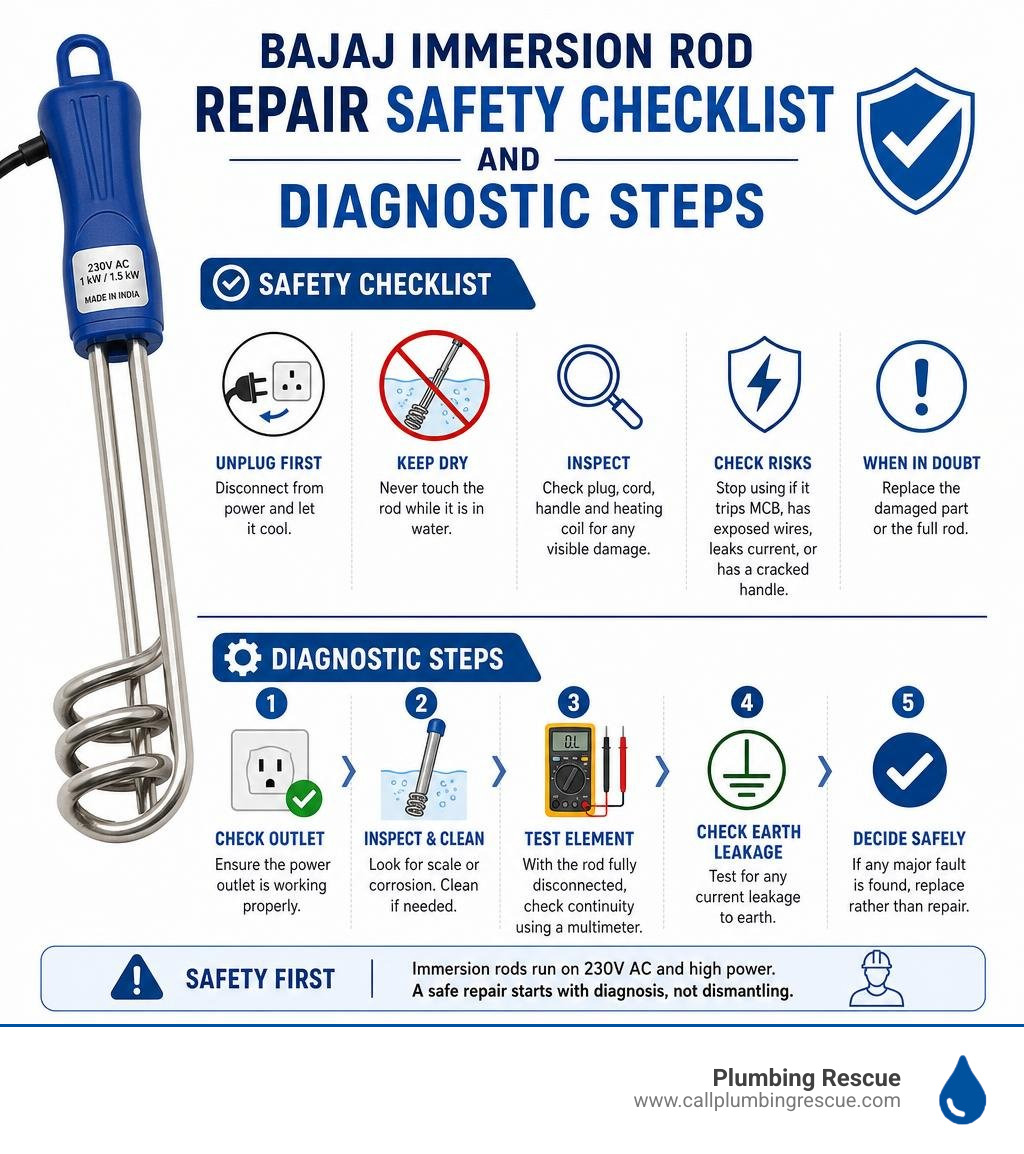
For safe Bajaj immersion water heater repair, unplug the rod first, let it cool, and never touch it while it is in water. Check the plug, cord, handle, and heating coil for visible damage. If it has power but does not heat, test the element with a multimeter. If it trips the MCB, shows exposed wires, leaks current, or has a cracked handle, stop using it and replace the damaged part or the full rod.
Most Bajaj immersion rods run on 230V AC and are commonly rated at 1 kW or 1.5 kW. That is enough power to create a serious shock or fire risk when insulation, earthing, or the element sheath fails. A safe repair starts with diagnosis, not dismantling: confirm the outlet works, inspect for scale or corrosion, then test continuity only with the rod fully disconnected from power.
This guide explains how to find common faults, clean mineral buildup, check for earth leakage, and decide when replacement is safer than repair. If a cord is frayed, the handle is loose, or the rod trips protection devices, do not attempt a temporary tape-and-use fix.
I am Ben Smith, a digital marketing consultant focused on clear, practical service information for homeowners. My work on bajaj immersion water heater repair content emphasizes simple fault checks, safety-first decisions, and knowing when a qualified repair professional is the right next step.
Bajaj immersion water heater repair helpful reading:
Step-by-Step Bajaj Immersion Water Heater Repair and Diagnostics
When tackling portable water heating issues, proper diagnosis prevents unnecessary replacements and keeps your home safe. Bajaj immersion rods are engineered for high-demand, rapid water heating, drawing between 1000W (1.0 kW) and 1500W (1.5 kW) on a standard 230V AC line. Understanding common water heater problems starts with a systematic visual and electrical inspection.
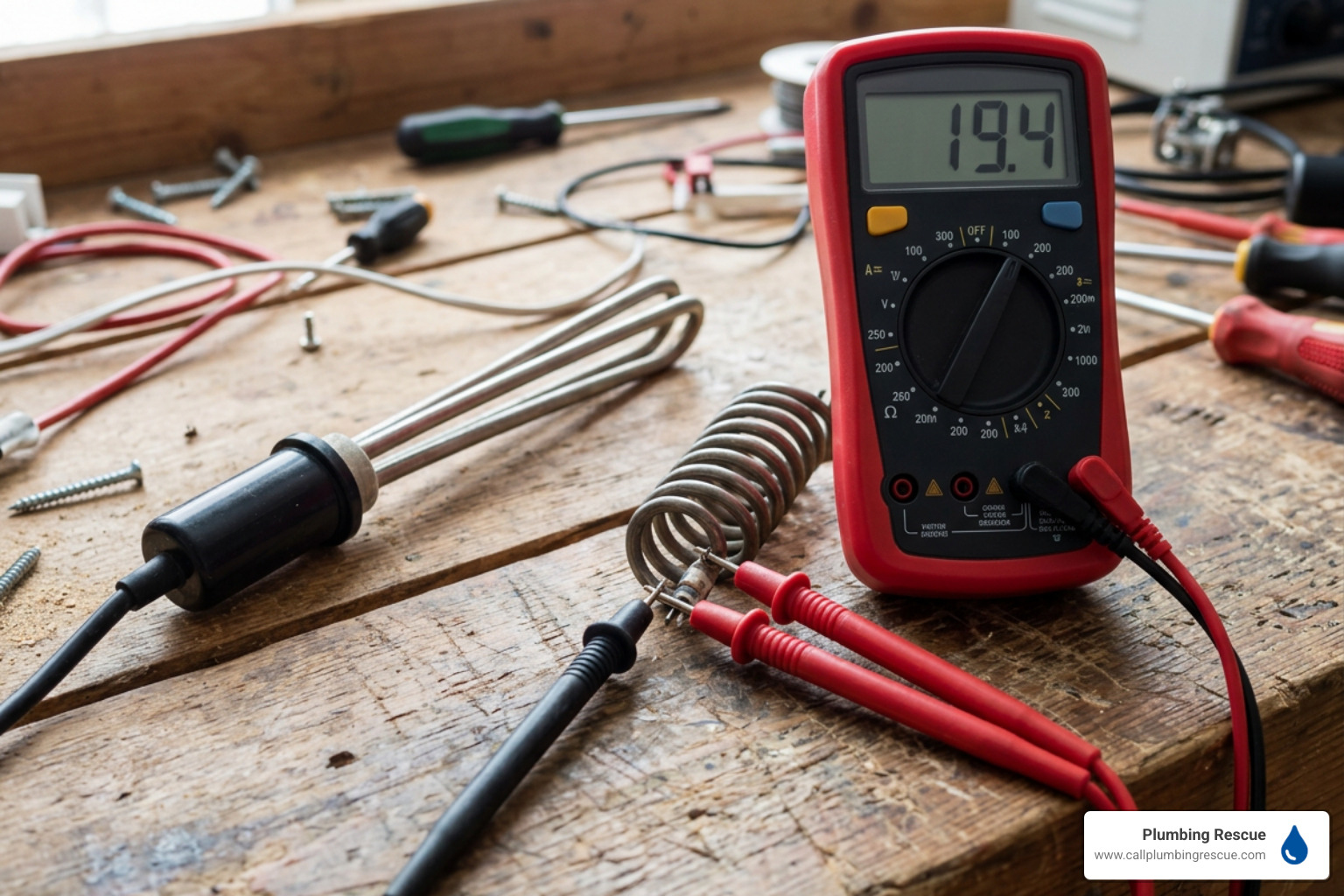
Follow this diagnostic checklist before disassembling any housing:
- Verify the Wall Outlet: Plug a working table lamp or small appliance into the same 16-Amp socket to confirm the electrical receptacle supplies proper voltage.
- Visual Inspection: Examine the entire nickel-plated or copper heating loop. Look for pinhole perforations, deep pitting, dark carbon scoring, or severe crusty white mineral scaling.
- Inspect the Handle and Grommet: Check the thermoplastic handle for hairline fractures, burn marks around the wire entry point, or loose structural screws.
- Cord Flex Test: With the unit completely unplugged, run your fingers along the 3-core cable to feel for internal kinks, stiff spots, or torn insulation jackets.

Electrical Testing for Bajaj Immersion Water Heater Repair
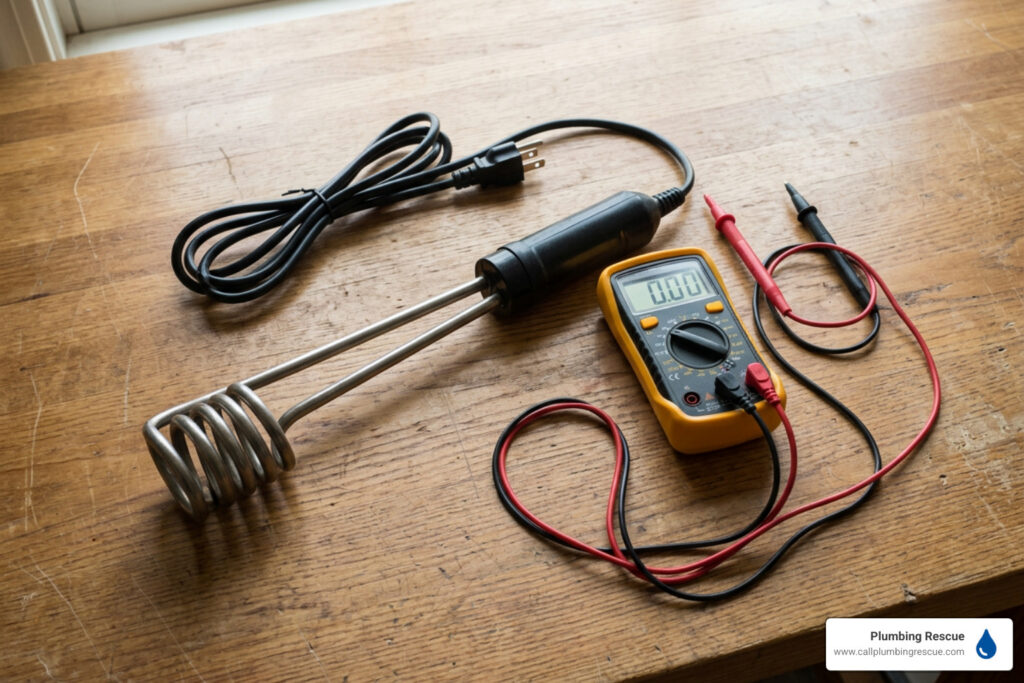
To verify whether the internal filament inside the tubular sheath has burned out, use a digital multimeter. Testing electrical continuity provides conclusive proof of whether the heating element is viable or broken. Knowing how to fix a broken electric heater begins with precise resistance measurements.
- Isolate the Appliance: Unplug the immersion rod from the wall and place it on a dry, non-conductive wooden or plastic workbench.
- Set the Multimeter: Turn your digital multimeter dial to the lowest resistance setting (typically 200 Ohms).
- Calibrate the Probes: Touch the black and red probe tips together; the display should read 0.0 to 0.2 ohms.
- Test the Live and Neutral Pins: Place one probe on the Live pin and the other on the Neutral pin of the 3-pin plug. A functioning 1000W to 1500W Bajaj immersion rod will yield a continuous resistance reading between 20 and 40 ohms.
- Identify Open Circuits: If the screen displays “OL” (Open Loop) or infinite resistance, the heating filament has severed internally due to dry boiling or thermal stress. The element is irreparable and must be replaced.
- Check for Ground Faults (Current Leakage): Move one multimeter probe to the Earth (top, larger) pin and place the other probe directly against the bare metal surface of the heating coil. The display must read “OL” (infinite resistance). Any numerical reading indicates a dangerous short circuit where current is leaking to the outer metal tube.
Fixing MCB Tripping and Thermal Safety Cutout Issues
If inserting your immersion heater instantly trips the Miniature Circuit Breaker (MCB) or Residual Current Device (RCD), an immediate electrical hazard exists.
Current leakage occurs when the protective outer nickel/copper sheath develops micro-fissures from mineral corrosion or thermal expansion. Water seeps into the magnesium oxide insulation powder inside the tube, bridging the gap between the live internal filament and the grounded water bath. When energized, current flows into the water and trips the household breaker.
On advanced or hybrid models referencing the Bajaj IWH-Mark II User manual, high-limit safety cutouts are engineered to disconnect power at 90°C to prevent catastrophic dry-heating. If a thermal cutout switch fails to deliver power:
- Disconnect the appliance entirely from the mains supply.
- Allow the entire heating assembly to cool to ambient room temperature.
- Inspect the handle base for a recessed manual reset push-button.
- Press the button firmly until a mechanical click is felt and heard.
- Retest terminal continuity before placing the unit back into water.
Resolving Physical Damage, Frayed Cords, and Broken Handles
Because immersion rods undergo repeated thermal cycling and constant exposure to wet environments, physical degradation of the exterior casing is common. Handling these issues immediately is vital for shutting down your water heater in an emergency and preventing electrical fire hazards.
Common structural failures include:
- Exposed copper conductor strands near the cable entry strain-relief sleeve.
- Loose terminal clamping screws inside the handle, generating localized high-resistance heat that melts plastic housing components.
- Cracks across the shock-resistant thermoplastic handle, which compromise electrical isolation.
Best Practices for Bajaj Immersion Water Heater Repair and Cord Replacement
Replacing a frayed or scorched power cord restores device safety, provided you follow rigorous appliance wiring standards outlined in the easy fix hot water heater manual.
- Cable Specifications: Use a heavy-duty, heat-resistant 3-core flexible copper cable rated for at least 16 Amperes with an integrated ground conductor.
- Plug Top Rating: Terminate the replacement wire using a molded or heavy-duty 16-Amp 3-pin plug equipped with solid brass pins.
- Internal Termination: Unscrew the handle shell. Cut away scorched wiring and strip the conductors cleanly. Crimp insulated ring or spade terminals onto the wire ends rather than wrapping bare stranded wire around screw posts.
- Insulation Integrity: Slide marine-grade, adhesive-lined heat shrink tubing over internal splice joints to seal against steam condensation.
- Strain Relief: Securely fasten the cord grip clamp within the handle base so mechanical tugs do not transfer tension to the terminal blocks.
Handling Handle Insulation and Waterproof Sealing
Bajaj immersion rods feature shock-resistant, rust-proof engineering thermoplastic handles designed in compliance with Bureau of Indian Standards (BIS) and ISI safety specifications.
If the handle halves separate or crack, moisture from boiling steam can enter the internal electrical junction. Never rely on household electrical tape to repair a fractured handle. Moisture penetrates vinyl tape easily, creating shock risks. If the handle structure is compromised, replace the complete handle assembly using OEM-specified flame-retardant housings sealed with high-temperature silicone gaskets.
Cleaning and Descaling Your Bajaj Immersion Heating Element
Hard water contains elevated concentrations of dissolved calcium and magnesium carbonates. When heated, these minerals precipitate out of solution and form a chalky, crystalline crust across the heating tube.
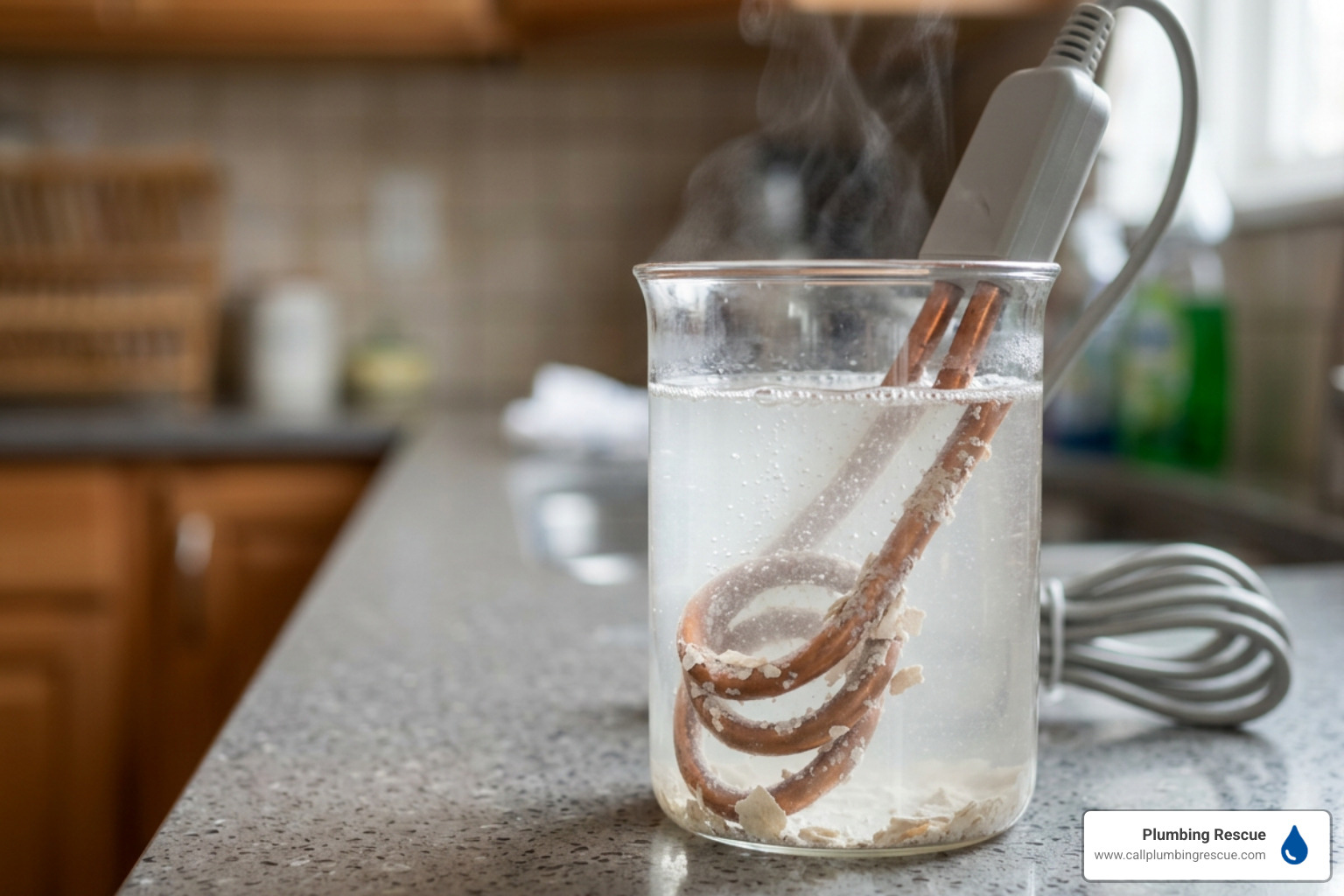
Scale acts as a thermal insulator. It traps heat within the copper tube, preventing efficient transfer into the surrounding water. This causes the internal filament to overheat, drastically increases boiling times, and accelerates sheath burnout.
Removing Mineral Scale with Vinegar Solutions
Chemical descaling using mild, food-safe acids is the safest method to restore thermal efficiency without scratching protective metal platings:
- Prepare the Descaling Solution: Mix a 50/50 solution of warm water and distilled white vinegar (or dissolve 50 grams of food-grade citric acid powder in two liters of warm water) in a deep, heat-safe plastic bucket.
- Position the Element: Submerge the metal heating coil completely into the solution. Crucial: Keep the water level at least 2 inches below the plastic handle assembly.
- Soak Duration: Allow the rod to soak undisturbed for 30 to 45 minutes. The acidic solution will react with the calcium carbonate, producing effervescent carbon dioxide bubbles as the crust dissolves.
- Scrub and Rinse: Remove the rod and scrub the softened residue using a medium-bristled nylon brush or non-scratch scouring pad. Never use steel wool, wire brushes, or screwdrivers, as mechanical gouging strips protective nickel plating and causes rapid pinhole corrosion.
- Neutralize and Dry: Wipe the metal tube with a damp cloth soaked in clean freshwater, then wipe dry with a microfiber towel.
Preventing Corrosion and Element Sheath Rupture
To preserve structural integrity as highlighted in the Bajaj Storage Water Heater Operation Manual, avoid running the element dry. Direct immersion heating elements rely on surrounding water to dissipate heat rapidly. Energizing the unit even for 30 seconds out of water causes temperatures to spike past 500°C, warping the metal sheath and melting internal insulation.
Safe Installation and When to Replace vs. Repair
Knowing when to fix a component versus when to discard the appliance protects both your wallet and your safety. Evaluating repair feasibility is an essential part of affordable water heater repair.
| Fault Characteristic | Feasible DIY Repair Action | Recommended Action | Safety Risk Level |
|---|---|---|---|
| Loose Handle Screws | Tighten fastening hardware | DIY Repair | Low |
| Damaged 16A Plug Top | Replace with new 16A ISI plug | DIY Repair | Moderate |
| Frayed Power Cable | Wire new 3-core 16A heat-rated cord | DIY Repair | Moderate |
| Heavy Mineral Scale | Soak in vinegar/citric acid bath | DIY Maintenance | Low |
| Cracked Thermoplastic Handle | Replace housing shell or replace unit | Replace Preferred | High |
| Element Filament Burnout (OL) | Cannot be internally rewired | Full Unit Replacement | High |
| MCB Tripping / Sheath Rupture | Insulation compromised by water | Full Unit Replacement | Critical |
Proper Immersion Rod Mounting and Water Level Rules
To operate an immersion water heater safely, always follow these rules:
- Use Non-Metallic Buckets: Always heat water in heavy-duty plastic, polypropylene, or thermoplastic buckets. Metal buckets conduct electricity and pose extreme electrocution hazards if current leakage occurs.
- Observe Water Level Markings: Keep the water level strictly between the embossed “MIN” and “MAX” water level indicators on the metal stem. Submerging past the MAX mark floods the handle, while dropping below the MIN mark causes dry-burning element failure.
- Secure the Hanging Hook: Clip the integrated bucket hook firmly over the bucket rim before plugging the unit into the wall. Ensure the rod hangs vertically without touching the bottom or sides of the container.
- Operating Sequence: Always place the rod in water first, then insert the plug and switch the wall socket on. When finished, switch the wall socket off first, unplug the unit, wait 15–20 seconds for residual heat to dissipate, and then remove the rod from the water.
Evaluating Repair Feasibility and 2-Year Warranty Options
Standard Bajaj immersion rods retail at accessible price points and include a 2-year replacement warranty.
If your appliance stops working within the 24-month warranty window, do not break factory handle seals or attempt internal rewiring. Doing so voids coverage. Instead, present your purchase invoice to an authorized service center for a warranty replacement. If the rod is out of warranty and exhibits a ruptured sheath or failed internal filament, buying a new replacement unit is significantly safer and more economical than custom machining new elements.
Frequently Asked Questions About Bajaj Immersion Heaters
How do I safely test an immersion rod with a multimeter?
Set your digital multimeter to the lowest resistance (Ohms) setting. With the appliance unplugged, place one probe on the Live pin and the other on the Neutral pin of the plug. A healthy element reads between 20 and 40 ohms. If the meter reads “OL” (Open Loop), the internal filament is broken. Next, place one probe on the top Earth pin and the second probe on the bare metal heating tube. The meter must read “OL”; any numerical reading indicates hazardous ground leakage.
Why does my Bajaj immersion heater trip the MCB instantly?
Instant breaker tripping is caused by a ground fault or short circuit. Over time, hard water mineral deposits corrode the protective copper or nickel sheath, causing micro-perforations. Water enters the tube and contacts the live electrical element, creating an immediate path to ground that triggers your home’s circuit breaker or RCD safety switch.
Can I reset the thermal cutout if my heater stops working?
If your model incorporates an integrated high-limit safety cutout, it is engineered to trip at 90°C to protect against dry-boiling. Unplug the unit completely and let it cool in air for 15 minutes. Locate the small manual reset button on the handle or lower housing, press it firmly until it clicks, and retest the unit’s resistance before placing it back in water.
Conclusion
Carrying out a Bajaj immersion water heater repair involves systematic diagnostic checks: verifying supply voltage, testing element continuity with a multimeter, descaling mineral deposits, and maintaining electrical insulation. Regular descaling with white vinegar prevents element overheating, while adhering to MIN/MAX immersion levels ensures safe, long-lasting performance.
When portable heaters reach the end of their operational lifespan or show signs of physical sheath rupture, full unit replacement is the safest course of action. For whole-home water heating systems, complex electrical issues, or major plumbing fixture upgrades, work with certified professionals. Plumbing Rescue provides 24/7 emergency services across Austin, TX, Denver, CO, Indianapolis, IN, and Phoenix, AZ. When you need comprehensive home plumbing maintenance or whole-home water heater replacement, our experienced technicians are ready to help day or night.
Dealing With This Yourself? Get Connected With a Local Plumber.
Skip the guesswork — one call connects you with a local plumbing provider. Available 24/7, no forms.
Call Now: (888) 686-0698